
Managing accounting functions effectively is critical to maintaining financial health, ensuring compliance, and supporting business growth. As companies seek ways to reduce costs and improve efficiency, many turn to outsourced accounting services for bookkeeping, payroll, tax preparation, and financial reporting.
While outsourcing accounting can offer significant benefits, it is not without risks. Many businesses focus heavily on the potential cost savings while overlooking the operational, financial, and compliance challenges that can emerge over time.
Understanding the disadvantages of outsourcing accounting services is essential before deciding whether it is the right strategy for your business. In this guide, we explore the most common risks, how they impact organizations, and practical ways to avoid costly mistakes.
Content Outline
Key Summary
Outsourcing Can Reduce Costs but Not Always
While outsourcing often lowers staffing expenses, hidden fees, transition costs, and service limitations can reduce the expected savings.
Loss of Control Is a Common Concern
Businesses may experience reduced visibility into financial processes, reporting timelines, and decision-making when accounting functions are handled externally.
Security Risks Require Careful Evaluation
Sharing sensitive financial data with third-party providers introduces cybersecurity and confidentiality concerns.
Communication Can Impact Accuracy
Time zone differences, delayed responses, and misunderstandings can lead to accounting errors and missed deadlines.
Not Every Provider Delivers the Same Quality
The expertise, experience, and industry knowledge of outsourced accounting firms vary significantly.
Dedicated Accounting Talent Can Be a Better Alternative
Many growing companies achieve better long-term results by hiring dedicated accounting professionals who become integrated into their business operations.
What Is Accounting Outsourcing?
Accounting outsourcing refers to the practice of hiring an external service provider to manage some or all accounting functions rather than maintaining an internal accounting team.
Commonly outsourced accounting tasks include:
- Bookkeeping
- Payroll processing
- Accounts payable and receivable
- Financial reporting
- Tax preparation
- Compliance management
- Audit support
- Budgeting and forecasting
Businesses often outsource accounting to reduce costs, access specialized expertise, and improve operational efficiency.
However, outsourcing accounting services also introduces several challenges that should be carefully evaluated before making a decision.
Why Do Companies Outsource Accounting Services?
Before discussing the disadvantages, it is important to understand why outsourcing has become popular.
Businesses typically outsource accounting to:
- Lower overhead costs
- Reduce recruitment and training expenses
- Access specialized accounting expertise
- Improve scalability
- Gain access to advanced accounting technologies
- Focus internal resources on core business activities
For startups and small businesses, outsourcing can provide access to professional accounting support without the expense of building a full finance department.
However, these benefits must be weighed against the potential risks.
Also Read: Top Providers of Outsourced Accounting Services for CPA Firms in 2026
The Hidden Disadvantages of Outsourcing Accounting Services
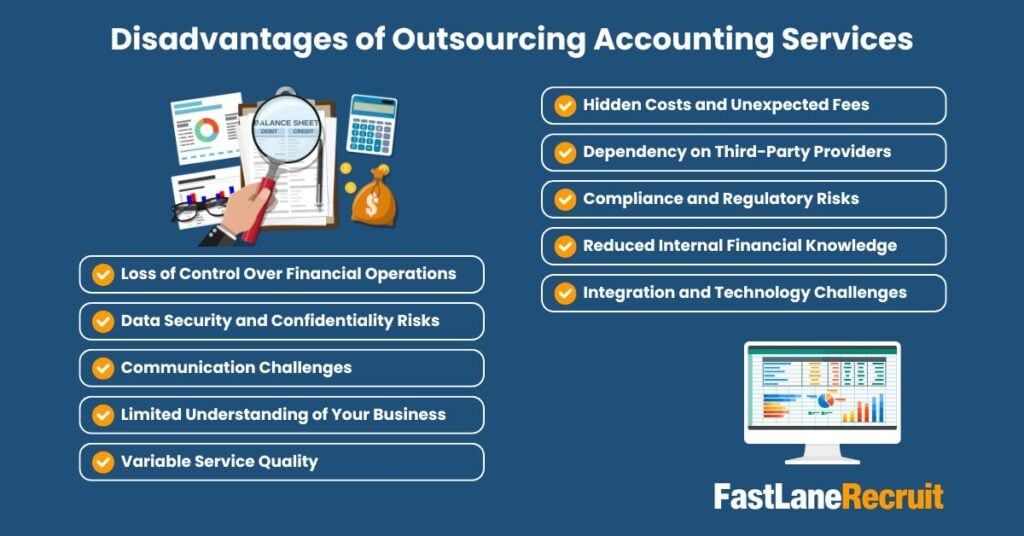
1. Loss of Control Over Financial Operations
One of the most frequently cited disadvantages of outsourcing accounting services is the loss of direct control over critical financial functions.
When accounting processes are handled externally, business owners may no longer have immediate visibility into:
- Daily transactions
- Cash flow management
- Financial reporting timelines
- Expense monitoring
- Payroll processing
This lack of oversight can create delays in decision-making and make it harder to respond quickly to financial issues.
Why It Matters
Financial data drives strategic decisions. Delayed or incomplete information can affect:
- Budget planning
- Growth initiatives
- Hiring decisions
- Investment strategies
How to Avoid It
- Establish clear reporting schedules
- Request real-time dashboard access
- Schedule regular financial review meetings
- Maintain internal oversight of key financial metrics
2. Data Security and Confidentiality Risks
Accounting providers require access to some of the most sensitive information within an organization.
This includes:
- Bank account information
- Payroll records
- Employee data
- Tax documents
- Financial statements
- Customer payment information
Any security breach can result in financial losses, legal liabilities, and reputational damage.
Potential Risks
- Unauthorized access
- Data breaches
- Identity theft
- Regulatory penalties
- Loss of confidential business information
How to Avoid It
- Verify cybersecurity certifications
- Use encrypted communication channels
- Conduct vendor security audits
- Implement strict access controls
- Sign comprehensive confidentiality agreements
3. Communication Challenges
Successful accounting requires ongoing communication between finance teams and business stakeholders.
Outsourcing can create communication barriers due to:
- Different time zones
- Language differences
- Delayed responses
- Limited availability
- Misunderstood business requirements
Impact on Businesses
Communication issues can lead to:
- Reporting errors
- Payroll mistakes
- Missed filing deadlines
- Incorrect financial records
How to Avoid It
- Define communication protocols
- Establish response-time expectations
- Use collaborative accounting platforms
- Assign dedicated account managers
4. Limited Understanding of Your Business
An outsourced accounting provider may understand accounting principles but lack a deep understanding of your business operations.
They may not fully understand:
- Industry-specific regulations
- Revenue models
- Internal workflows
- Strategic objectives
- Customer relationships
This knowledge gap can affect the quality of financial advice and reporting.
How to Avoid It
- Conduct thorough onboarding
- Share operational documentation
- Schedule regular strategy meetings
- Choose providers with industry experience
5. Variable Service Quality
Not all accounting outsourcing providers deliver the same level of expertise.
Businesses may encounter:
- Inexperienced staff
- High employee turnover
- Inconsistent reporting standards
- Limited technical knowledge
- Poor customer service
Warning Signs
- Frequent errors
- Delayed reports
- Lack of proactive communication
- Inconsistent accounting practices
How to Avoid It
- Check references and testimonials
- Verify certifications and qualifications
- Review service-level agreements
- Request sample reports
6. Hidden Costs and Unexpected Fees
Many businesses choose outsourcing to save money. However, outsourcing costs are not always as straightforward as they appear.
Additional expenses may include:
- Setup fees
- Software subscriptions
- Custom reporting charges
- Audit support fees
- Emergency support costs
Over time, these charges can significantly increase the total cost of outsourcing.
How to Avoid It
- Review contracts carefully
- Clarify pricing structures
- Understand additional service fees
- Request transparent cost breakdowns
7. Dependency on Third-Party Providers
Outsourcing creates reliance on an external organization for essential financial functions.
Problems can arise if:
- The provider experiences operational issues
- Key staff leave the provider
- Service quality declines
- The provider changes pricing models
Switching providers can be disruptive and time-consuming.
How to Avoid It
- Maintain internal financial documentation
- Keep access to accounting systems
- Develop contingency plans
- Avoid relying on a single point of contact
8. Compliance and Regulatory Risks
Businesses remain legally responsible for their financial compliance obligations even when accounting functions are outsourced.
Errors can lead to:
- Tax penalties
- Regulatory investigations
- Financial reporting issues
- Audit complications
How to Avoid It
- Conduct compliance reviews
- Verify provider expertise
- Stay informed about regulations
- Maintain oversight of filing deadlines
9. Reduced Internal Financial Knowledge
When accounting functions are entirely outsourced, internal teams may gradually lose financial expertise.
This can create challenges when:
- Evaluating financial performance
- Planning growth strategies
- Managing budgets
- Switching service providers
How to Avoid It
Maintain at least some internal accounting knowledge and financial leadership within the organization.
10. Integration and Technology Challenges
Many outsourced accounting providers use their own systems and processes.
This can create difficulties when integrating with:
- ERP systems
- Payroll software
- CRM platforms
- Internal reporting tools
Technology misalignment can reduce efficiency and create data inconsistencies.
How to Avoid It
- Assess software compatibility
- Establish integration requirements early
- Test systems before implementation
What Are the Risks of Outsourcing Accounting?
The most significant risks include:
- Loss of financial control
- Data security concerns
- Communication breakdowns
- Service quality inconsistencies
- Compliance issues
- Hidden costs
- Dependency on external providers
These risks do not necessarily mean outsourcing is a poor decision, but they highlight the importance of selecting the right partner and implementing proper oversight.
Is Outsourcing Accounting Always a Bad Idea?
Not necessarily.
Outsourcing can be highly effective for:
- Small businesses
- Startups
- Seasonal operations
- Companies requiring specialized expertise
However, as organizations grow, they often need more control, deeper business understanding, and stronger collaboration than traditional outsourcing models can provide.
Outsourcing Accounting vs Hiring Dedicated Accounting Professionals
Many businesses eventually face a critical decision:
Should they continue outsourcing accounting or build a dedicated accounting team?
Outsourced Accounting
Advantages:
- Lower initial costs
- Quick implementation
- Access to specialists
Disadvantages:
- Limited control
- Communication barriers
- Reduced business familiarity
- Dependency on external providers
Dedicated Accounting Professionals
Advantages:
- Greater operational control
- Better alignment with company goals
- Improved communication
- Stronger business understanding
- Long-term knowledge retention
Disadvantages:
- Recruitment costs
- Onboarding requirements
- Salary commitments
For many growing organizations, hiring dedicated accounting talent provides a stronger long-term solution than relying entirely on outsourced services.
Why More Companies Are Hiring Accounting Talent in Malaysia
Malaysia has become a leading destination for accounting and finance talent due to:
- Strong English proficiency
- Competitive labor costs
- Highly educated workforce
- International accounting expertise
- Business-friendly environment
Companies can significantly reduce costs while maintaining quality by building dedicated accounting teams in Malaysia.
Get Expert Accounting and Payroll Support Through FastLaneRecruit
If your business is concerned about the disadvantages of outsourcing accounting services but still wants a cost-effective solution, FastLaneRecruit can help.
FastLaneRecruit specializes in connecting companies with highly qualified accounting, finance, and payroll professionals in Malaysia.
Recruitment Services
FastLaneRecruit helps businesses hire:
- Accountants
- Financial analysts
- Payroll specialists
- Bookkeepers
- Finance managers
- Tax professionals
Rather than outsourcing critical accounting functions to an external firm, you can build a dedicated team that works exclusively for your business.
Payroll Services
Managing payroll accurately and compliantly can be complex.
FastLaneRecruit’s payroll solutions help businesses:
- Process payroll accurately
- Ensure regulatory compliance
- Reduce administrative workload
- Improve employee satisfaction
Why Choose FastLaneRecruit?
- Deep expertise in accounting recruitment
- Access to Malaysia’s top finance talent
- Faster hiring processes
- Cost-effective staffing solutions
- Ongoing support throughout the hiring journey
Whether you need one accountant or an entire finance team, FastLaneRecruit can help you find the right professionals to support your business growth.
Conclusion
Outsourcing accounting services can provide valuable benefits, including cost savings, scalability, and access to expertise. However, understanding the disadvantages of outsourcing accounting services is essential before making a decision.
Loss of control, communication challenges, data security risks, hidden costs, and compliance concerns can significantly impact business performance if not managed properly.
For companies seeking greater control, stronger collaboration, and long-term financial stability, hiring dedicated accounting professionals may be a more effective alternative. By partnering with FastLaneRecruit, businesses can access experienced accounting and payroll talent in Malaysia while maintaining direct oversight of their financial operations and supporting sustainable growth.
Get in touch with us today to boost your business to its full potential.
Frequently Asked Questions
What are the risks of outsourcing accounting?
The primary risks include loss of control, data security concerns, communication issues, hidden costs, compliance challenges, and dependency on third-party providers.
What is the main disadvantage of outsourcing?
The main disadvantage is the reduced control over critical business functions. Companies may have limited visibility into financial operations and less flexibility when addressing urgent issues.
Is it better to outsource accounting?
It depends on your business size, budget, and growth stage. Small businesses may benefit from outsourcing, while growing companies often achieve better long-term outcomes through dedicated accounting professionals.
Is it cheaper to outsource accounting?
In many cases, outsourcing reduces upfront costs. However, hidden fees, service limitations, and long-term dependency can reduce overall savings.
How can I reduce the risks of outsourcing accounting?
Businesses can reduce risks by selecting reputable providers, establishing clear communication processes, conducting regular audits, implementing security controls, and maintaining internal financial oversight.
Should startups outsource accounting?
Many startups outsource accounting initially to conserve resources. However, as the business grows, hiring dedicated finance professionals often becomes a more strategic solution.
What should I look for in an accounting outsourcing provider?
Look for proven experience, industry expertise, strong cybersecurity measures, transparent pricing, responsive communication, and positive client references.