

Hiring remote assistants has become an essential strategy for global businesses seeking skilled, reliable support without the overhead of traditional in-house teams. Malaysia, with its well-educated and multilingual workforce and robust digital infrastructure, has emerged as a top destination for remote hiring. In this guide, we’ll explore why Malaysia is an ideal choice, how to hire and manage offshore remote assistants effectively, and practical tips to maximize success.
Content Outline
Key Summary
Malaysia’s Skilled Workforce
Malaysia offers highly educated professionals in IT, marketing, finance, design, and customer support, making it easy to hire talent across roles.
Strong English Proficiency
English is widely spoken in business settings, minimizing communication barriers and enabling smooth collaboration with international teams.
Strategic Time Zone
Malaysia’s GMT+8 time zone aligns with Asia-Pacific markets, facilitating real-time collaboration while offering manageable overlap with Europe and the Americas.
Cost-Effective Hiring
Employing remote assistants in Malaysia reduces costs on salaries, office space, equipment, and benefits, helping businesses optimize operational budgets.
Access to Specialized Skills
Remote assistants can provide expertise in SEO, content creation, IT support, and customer service without the need for full-time hires.
Flexible and Scalable Workforce
Remote assistants allow companies to adjust workloads based on projects or seasonal demands, offering flexibility without long-term commitments.
Compliance Made Easy with EOR
FastLaneRecruit’s EOR handles contracts, payroll, taxes, and statutory benefits, ensuring foreign companies hire legally and efficiently in Malaysia.
Why Malaysia Is an Attractive Destination
Malaysia has quickly become one of the most appealing countries for hiring remote assistants, and several key factors make it stand out as a top choice for global employers:
| Factor | What It Means for Employers | Explanation |
| Skilled Workforce | Access to talented professionals across industries | Malaysia has a highly educated workforce with expertise in areas such as IT, software development, digital marketing, design, finance, and customer support. This means you can hire someone with the right skills for almost any role without spending months training them. |
| English Proficiency | Smooth communication with your remote team | English is widely spoken in professional settings in Malaysia, making it easier for international companies to work with remote assistants without language barriers. Clear communication ensures tasks are completed accurately and efficiently. |
| Strategic Time Zone | Convenient collaboration across the Asia-Pacific region | Malaysia operates on GMT+8, which overlaps with major markets like Singapore, Hong Kong, and parts of China. This makes real-time communication easy for teams working in these regions. Even for teams in Europe or the Americas, scheduling meetings is manageable with a little planning. |
| Digital Infrastructure | Reliable connectivity and technology support | Malaysia has strong internet coverage, modern office tools, and government initiatives like MyDIGITAL to support remote work. This ensures that remote assistants can work efficiently from home or co-working spaces. |
| Cost-Effectiveness | Competitive salaries with lower overheads | While Malaysia offers high-quality talent, the overall cost of hiring remote assistants is lower compared to many Western countries. Businesses can save on salaries, office space, and employee benefits while still accessing skilled professionals. |
Taken together, Malaysia offers a strong combination of talent quality, technological readiness, and convenient time-zone alignment. Whether your business needs help with administrative tasks, customer support, marketing, or technical work, Malaysia provides a reliable and professional pool of remote assistants to support your operations effectively.
Also Read: How to Build an Offshore Data Entry Team in Malaysia
Key Benefits of Hiring Remote Assistants in Malaysia
Hiring remote assistants in Malaysia offers a wide range of advantages for global companies. From cost savings to improved productivity, here’s why many businesses are turning to Malaysian talent for support:
1. Cost Efficiency
One of the most immediate benefits of hiring remote assistants is the reduction in costs. You can save on office space, equipment, employee benefits, and even training, while still getting high-quality support.
For example:
| Role | In-House Cost (MYR/month) | Remote Assistant Cost (MYR/month) | Potential Savings |
| Administrative Support | 5,000–7,000 | 2,000–3,000 | 2,000–5,000 |
| Digital Marketing Specialist | 8,000–12,000 | 4,000–6,000 | 4,000–6,000 |
Example in practice:
A Malaysian e-commerce company needed support for scheduling, email management, and basic administrative tasks. Hiring a full-time assistant would have cost them around MYR 6,000 per month. By engaging a remote assistant instead, they reduced the cost to MYR 2,500 per month without compromising on quality, saving over 50% in operational expenses.
2. Access to Specialized Skills
Remote assistants often bring specific expertise that companies may not have in-house. This includes areas like:
- Search engine optimization (SEO)
- Content creation and social media management
- IT and technical support
- Customer service
Example:
A Malaysian startup wanted to improve its digital marketing campaigns but lacked an in-house SEO specialist. By hiring a remote assistant with proven SEO and content marketing experience, the company was able to launch optimized campaigns quickly, increase website traffic, and improve online visibility, all without the cost of a full-time hire.
3. Scalability and Flexibility
Remote assistants give businesses the ability to scale support based on demand. You can increase or decrease hours depending on seasonal needs or project requirements, avoiding the long-term commitments of full-time hires.
Example:
A Malaysian event management company experiences fluctuating workloads depending on the season. During peak months with multiple events, they increased the hours of their virtual assistants to manage client communications, scheduling, and coordination. During quieter periods, they reduced hours, maintaining efficiency while keeping costs under control.
4. Increased Productivity
Delegating routine or administrative tasks to remote assistants allows your core team to focus on strategic priorities and high-value projects. This improves overall productivity and ensures critical work gets done efficiently.
Example:
A Malaysian digital marketing agency outsourced tasks such as data entry, report preparation, and client scheduling to a remote assistant. This freed up the internal team to focus on campaign strategy and creative work, resulting in a 30% increase in overall productivity and faster project delivery times.
5. 24/7 Support
Hiring remote assistants in different time zones enables businesses to operate around the clock. This is especially valuable for companies serving international clients.
Example:
A Malaysian travel agency outsourced customer support to virtual assistants based in multiple time zones. This allowed them to provide 24/7 assistance to global clients, resulting in a 25% increase in customer satisfaction and a 15% boost in repeat bookings.
Summary
By hiring remote assistants in Malaysia, companies can:
- Reduce operational costs while accessing skilled professionals
- Gain specialized expertise without full-time commitments
- Scale support according to business needs
- Increase productivity by freeing core teams from routine tasks
- Provide continuous, round-the-clock support for international clients
These benefits make Malaysia an ideal hub for businesses looking to expand their remote workforce efficiently and effectively.
Also Read: Payroll and Statutory Compliance for Hiring Data Entry Clerks in Malaysia
Hiring Remote Assistants in Malaysia: Step-by-Step
Hiring an offshore remote assistant in Malaysia can be smooth and effective if you follow a structured approach. Here’s a detailed, step-by-step guide to help you get started:
1. Define Roles and Expectations
Before you start hiring, clearly outline what you want your remote assistant to do. This helps prevent confusion and ensures tasks are completed efficiently.
Key Actions:
- List the specific tasks and responsibilities, e.g., administrative support, email management, social media posting, or SEO tasks.
- Specify required tools and software (e.g., Google Workspace, Canva, or CRM systems).
- Set deadlines and expected working hours, considering Malaysia’s GMT+8 time zone for coordination.
Example:
A small e-commerce business wants a virtual assistant to manage social media and respond to customer inquiries. By providing a detailed list of tasks, required software, and daily goals, the assistant can start delivering value from day one without repeated instructions.
2. Understand Legal and Compliance Requirements
Malaysia has labor laws and regulations that affect remote hiring. Being aware of these ensures your arrangements are legal and secure.
Key Points:
- Employment Act 1955: Covers basic employment rights like working hours, leave, and termination for employees earning ≤ MYR 4,000/month.
- Gig Workers Bill 2025: Formalizes protections for freelancers and gig workers, which may include remote assistants.
- Personal Data Protection Act (PDPA): Ensure proper handling of employee and customer data.
Tip:
If hiring for full-time positions, consider using an Employer of Record (EOR) like FastLaneRecruit to manage payroll, benefits, and contracts compliantly.
3. Screen and Interview Candidates
Selecting the right candidate is crucial for successful remote collaboration.
Key Actions:
- Test English proficiency and communication skills.
- Evaluate technical abilities and experience relevant to the role.
- Include practical tasks during the interview, such as drafting an email, creating a social media post, or organizing a calendar.
Example:
A digital marketing agency tested applicants by asking them to create a 1-week social media content plan. This allowed them to assess creativity, tool knowledge, and attention to detail before hiring.
4. Trial Period and Onboarding
A structured trial period helps confirm if the candidate is a good fit before committing long-term.
Key Actions:
- Assign a 2–4 week trial with clear deliverables.
- Provide access to all necessary tools and systems.
- Share Standard Operating Procedures (SOPs) and escalation protocols.
Example:
A marketing firm in Malaysia used a one-month trial for a remote assistant handling administrative work. During this period, they evaluated task completion speed, accuracy, and communication, ensuring a smooth transition to full-time collaboration.
Also Read: Benefits of Outsourcing Data Entry Operations for Global Businesses
5. Use the Right Tools and Processes
Proper tools help your remote assistant stay productive and aligned with your workflow.
Essential Tools:
- Project Management: Asana, Trello, ClickUp – track tasks, deadlines, and responsibilities.
- Communication: Slack, Microsoft Teams, Zoom – facilitate real-time conversations and meetings.
- Cloud Storage: Google Drive, Dropbox – store and share documents securely.
- Time Tracking: Toggl, Clockify – monitor hours for efficiency and reporting.
Example:
A Malaysian software company uses Trello for task tracking and Zoom for daily stand-ups. This structure ensures the remote assistant can prioritize tasks independently while staying accountable.
6. Build Trust and Monitor Performance
Remote work thrives on trust, clear communication, and continuous feedback.
Key Actions:
- Schedule regular check-ins to discuss progress and address issues.
- Set measurable KPIs to track performance, such as tasks completed, response time, or social media engagement.
- Provide constructive feedback and recognize good work to maintain motivation.
Example:
A travel company implemented weekly performance reviews for its offshore remote assistants handling customer support. By tracking KPIs like response time and customer satisfaction, they maintained high-quality support while fostering a trusting and professional relationship.
By following these steps, companies can hire and manage Malaysian remote assistants efficiently, ensuring smooth collaboration, high productivity, and compliance with local regulations.
Considerations for Foreign Employers Hiring in Malaysia
When hiring remote assistants or employees in Malaysia, foreign employers need to understand the legal, cultural, and operational aspects to ensure smooth and compliant operations.
1. Employment Options
Foreign companies have several ways to hire talent in Malaysia, each with pros and considerations:
a. Independent Contractors
- Flexible and project-based; ideal for short-term or specialized work.
- Contractors are responsible for their own taxes and benefits.
- Caution: Misclassifying someone as a contractor when they function like a full-time employee can lead to legal and tax issues.
Example:
A global digital marketing agency hires a Malaysian contractor to manage a 3-month SEO campaign. The contractor works independently, sets their schedule, and invoices the agency for completed milestones.
b. Employer of Record (EOR)
- A compliant solution for hiring full-time employees without establishing a local entity.
- The EOR handles payroll, benefits, taxes, employment contracts, and statutory compliance.
- FastLaneRecruit offers EOR services, enabling companies to hire Malaysian remote assistants quickly and legally.
Example:
A U.S.-based tech startup wants to hire a full-time software developer in Kuala Lumpur. By using an EOR, they can legally employ the developer, provide benefits like EPF and SOCSO contributions, and ensure payroll compliance without setting up a company in Malaysia.
Also Read: Why Malaysia Is a Top Choice for Offshore Data Entry Teams
c. Local Entity Setup
- Suitable for businesses planning long-term operations in Malaysia.
- Requires corporate registration, tax compliance, HR management, and adherence to labor laws.
- More administrative overhead but offers full control over employees and operations.
Example:
An international fintech company opening a permanent office in Cyberjaya sets up a Malaysian entity to employ a full team of developers, customer support staff, and marketing professionals.
2. Salary and Benefits
Understanding local compensation standards helps foreign employers offer competitive packages while managing costs.
Typical Monthly Salary Ranges (MYR):
- Software Developer: 4,000–8,000
- Customer Service Representative: 2,500–4,500
- Digital Marketing Specialist: 3,500–7,000
Mandatory Benefits:
- Employees Provident Fund (EPF): Retirement savings contribution.
- Social Security Organization (SOCSO): Coverage for workplace injury or invalidity.
- Employment Insurance System (EIS): Unemployment benefits.
- Paid Leave: Annual leave (8–16 days), sick leave (14–22 days), maternity leave (98 days), paternity leave (7–14 days depending on sector).
Example:
A marketing agency hiring a digital marketing specialist offers MYR 5,500/month plus statutory benefits like EPF and SOCSO. This package ensures the employee is compliant with local regulations and competitive enough to attract skilled talent.
Also Read: Benefits of Outsourcing Data Entry Operations for Global Businesses
3. Public Holidays and Work Culture
Public Holidays:
- Malaysia observes both federal and state-level holidays, meaning leave entitlements may vary depending on location.
- Key federal holidays include New Year’s Day, Chinese New Year, Hari Raya Aidilfitri, Labour Day, Merdeka Day, Deepavali, and Christmas.
- Employers must clarify holiday entitlements in contracts.
Work Culture:
- Malaysian workplaces value teamwork, respect for hierarchy, and professionalism.
- Communication tends to be polite and indirect, though direct communication is common in urban and startup settings.
- Remote and hybrid work models are increasingly adopted, especially in tech, creative, and digital services.
- Typical workweek: Monday to Friday, 40–45 hours.
Example:
A U.S.-based company employing remote assistants in Kuala Lumpur schedules weekly team meetings during Malaysia Standard Time (GMT+8) while respecting local public holidays. They also provide clear SOPs to accommodate cultural communication styles, ensuring smooth collaboration.
Key Takeaways for Foreign Employers
- Choose the right employment model based on project length, compliance needs, and long-term strategy.
- Offer competitive salaries and statutory benefits to attract and retain top talent.
- Account for local public holidays and respect Malaysian work culture to foster productive collaboration.
- Using an EOR like FastLaneRecruit can simplify hiring, ensure compliance, and reduce administrative burdens for remote teams.
Also Read: Data Entry Clerk Salary Guide 2026
Tips for Maximizing Success When Hiring Offshore Remote Assistants in Malaysia
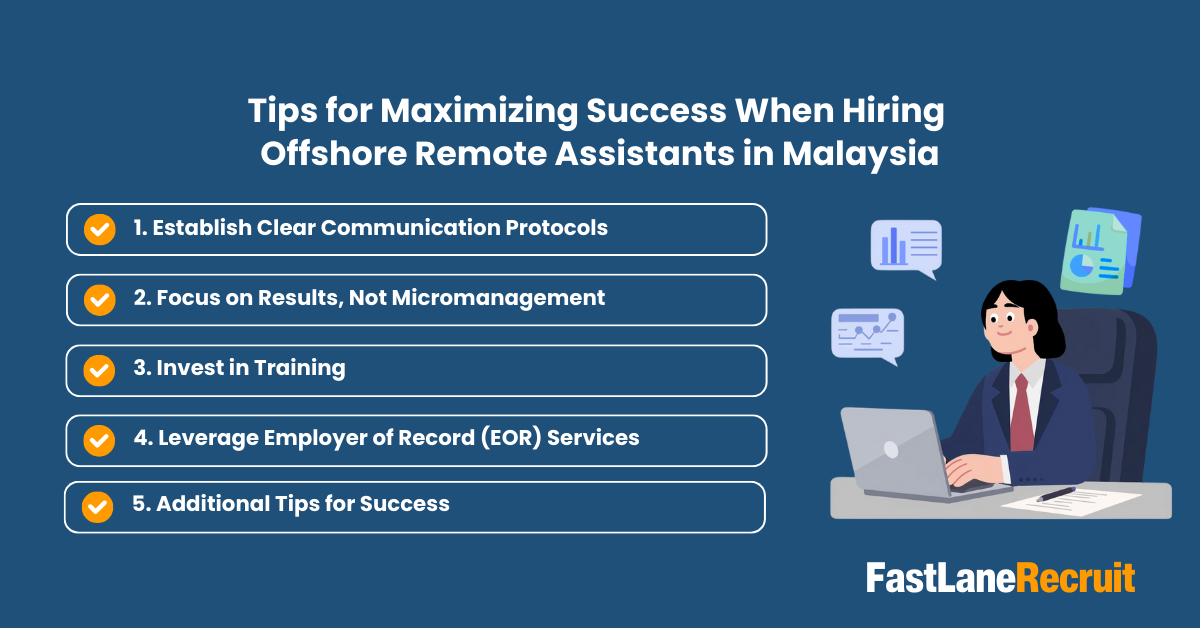
Hiring an offshore remote assistant is only the first step. To ensure a productive, long-term collaboration, you need strategies that optimize communication, accountability, and professional growth. Here are key tips:
1. Establish Clear Communication Protocols
Effective communication is the backbone of remote work. Without face-to-face interaction, it’s easy for misunderstandings or delays to occur.
Key Actions:
- Set expected response times for emails, chat messages, and task updates.
- Agree on preferred communication channels, such as Slack for daily messaging, Zoom for meetings, and email for formal updates.
- Define overlapping working hours if your team spans multiple time zones, ensuring real-time collaboration when needed.
Example:
A U.S.-based e-commerce company working with a Malaysian virtual assistant sets 9 AM–12 PM EST (9 PM–12 AM MYT) as overlap hours for daily check-ins, while all non-urgent updates are handled asynchronously via Slack. This ensures timely responses without overloading the assistant outside regular working hours.
2. Focus on Results, Not Micromanagement
Remote work requires trust, but structured oversight ensures productivity. Avoid micromanaging every task; instead, track outcomes and measure success.
Key Actions:
- Set Key Performance Indicators (KPIs) for measurable tasks such as email response time, content output, or customer service resolution.
- Schedule weekly or bi-weekly reviews to discuss performance, address challenges, and provide guidance.
- Use tools like Trello, Asana, or ClickUp to monitor progress without constantly checking in.
Example:
A Malaysian digital marketing assistant is responsible for creating 10 social media posts per week. Rather than tracking every draft, the manager reviews final outputs against quality standards and engagement KPIs, ensuring accountability while allowing autonomy.
3. Invest in Training
Even skilled assistants need guidance on your company processes, tools, and culture. A structured training program sets them up for success.
Key Actions:
- Provide walkthroughs of your software tools, project management systems, and reporting platforms.
- Share Standard Operating Procedures (SOPs) for recurring tasks.
- Explain company culture, values, and communication expectations to integrate the assistant into your team seamlessly.
Example:
PXbay Marketing trained their Malaysian administrative assistant on Google Drive folder structures, email templates, and client communication protocols. Within a month, the assistant was fully independent, improving team productivity by 30%.
4. Leverage Employer of Record (EOR) Services
Hiring foreign talent can involve complex legal, tax, and compliance considerations. An EOR simplifies these processes.
Key Benefits:
- Compliance: Ensures contracts, benefits, and payroll adhere to Malaysian labor laws.
- Payroll Management: Automates salaries, EPF, SOCSO, and other statutory contributions.
- Focus on Productivity: Lets your team focus on strategic tasks rather than HR administration.
Example:
A U.K.-based startup used FastLaneRecruit EOR to hire a full-time remote assistant in Kuala Lumpur. The EOR managed payroll, statutory benefits, and contract compliance, allowing the startup to onboard talent quickly and focus on growth.
5. Additional Tips for Success
- Set clear expectations early: Define working hours, deliverables, and reporting structures before starting.
- Encourage feedback: Ask assistants about workflow improvements to foster engagement and efficiency.
- Document processes: SOPs, guides, and templates reduce dependency on verbal instructions and help new team members ramp up faster.
- Foster trust: Recognize accomplishments and provide constructive feedback to maintain motivation.
By following these strategies, foreign companies can maximize the productivity, engagement, and long-term success of Malaysian remote assistants.
Simplify Global Hiring with FastLaneRecruit’s EOR Solution
Hiring talented remote assistants in Malaysia can open doors to skilled, English-proficient professionals, but navigating local labor laws, payroll, and benefits can be challenging for foreign companies. This is where FastLaneRecruit’s Employer of Record (EOR) becomes a game-changer.
With FastLaneRecruit EOR, you can hire and manage Malaysian employees legally and efficiently without setting up a local entity. We handle all the administrative and compliance work, letting you focus on growing your business.
What FastLaneRecruit EOR Offers:
- Full Compliance: Contracts, payroll, taxes, and statutory benefits (EPF, SOCSO, EIS) are fully managed according to Malaysian labor laws.
- Streamlined Payroll Management: Employees are paid on time, and all contributions and deductions are handled automatically.
- Quick Onboarding: Hire full-time talent faster without navigating complex local regulations.
- Risk Reduction: Avoid legal missteps and misclassification issues by leaving statutory compliance to experts.
- Focus on Growth: Spend less time on HR administration and more on strategic business goals.
Example:
A U.S.-based tech startup wanted to hire a full-time software developer in Kuala Lumpur but didn’t have a local entity. By using FastLaneRecruit EOR, they onboarded the developer within 5 weeks, with payroll, benefits, and employment compliance fully handled. The team was able to focus on product development instead of paperwork.
Why Choose FastLaneRecruit’s EOR?
- Trusted by global companies for seamless remote hiring.
- Reduces administrative burden and operational complexity.
- Provides peace of mind knowing your team is fully compliant with Malaysian laws.
- Enables you to scale your remote workforce quickly and efficiently, whether for short-term projects or long-term growth.
Whether you’re hiring a virtual assistant, digital marketing specialist, or software developer, FastLaneRecruit’s EOR makes hiring in Malaysia simple, secure, and efficient. Let FastLaneRecruit handle compliance, payroll, and HR logistics so you can focus on building a high-performing remote team in Malaysia.
Conclusion
Malaysia offers a unique combination of skilled talent, strategic location, and cost-effective options for hiring remote assistants. With proper planning, structured onboarding, and performance management, businesses can boost productivity, access specialized skills, and scale efficiently.
For global companies seeking a compliant and efficient solution, FastLaneRecruit’s Employer of Record (EOR) services provide a seamless way to hire Malaysian remote assistants without setting up a local entity. Our team handles payroll, contracts, and statutory compliance, so you can focus on growing your business.
Ready to expand your team with top Malaysian talent?
Explore FastLaneRecruit’s EOR services and start hiring remote assistants today.