Product development is moving faster than ever, from cutting-edge industrial design to AI-powered engineering and smart manufacturing. Singapore has quickly become one of the best places in the world to build new products. With its strong digital infrastructure, reliable IP protection, and innovation-friendly environment, the country attracts some of the brightest engineering and design talent in Asia.
Global companies, startups, and scale-ups increasingly choose Singapore not only to design and build products but also to validate, test, and commercialize them across Asia.
The Singapore Economic Development Board (EDB) highlights Singapore’s strong R&D ecosystem and engineering talent pipeline as key drivers of high-tech investment. In addition, Singapore consistently ranks among the world’s leading digital economies, supported by initiatives from the Infocomm Media Development Authority (IMDA).
In this comprehensive guide, we’ve listed the Top 15 Product Development Companies in Singapore. Whether you’re building a digital platform, creating a new IoT device, or developing a hardware prototype, these companies are well-positioned partners to support and accelerate product development roadmaps.
Content Outline
Key Summary
Singapore Is a Global Product Development Hub
Singapore’s strong digital infrastructure, IP protection, and innovation ecosystem make it a leading destination for hardware and software product development.
Top 15 Companies Span Software, Hardware, AI, and Industrial Design
From advanced industrial design to enterprise software engineering, Singapore offers world-class product development partners across multiple sectors.
Clear Criteria Ensure You Choose the Right Partner
Evaluating expertise, tech tools, compliance, past work, and IP protection helps you select a partner who can deliver efficiently and reduce development risks.
Industry Expertise Improves Product-Market Fit
Working with a company experienced in your industry, such as medical devices, IoT, eCommerce, or logistics, dramatically increases the chances of product success.
Full Design-to-Launch Capabilities Speed Time-to-Market
Companies offering research, design, engineering, prototyping, and testing under one roof eliminate communication gaps and accelerate development cycles.
Hybrid Singapore–Malaysia Development Models Reduce Costs
Many global teams pair Singapore’s strategic design leadership with Malaysian engineering execution to reduce development costs significantly, depending on team structure, role scope, and execution model.
FastLaneRecruit’s EOR Helps You Hire Malaysian Talent Easily
Instead of setting up an entity, companies can use FastLaneRecruit’s EOR service to engage Malaysian engineers and developers compliantly through an Employer of Record structure.
Why Singapore Is a Global Hub for Product Development
Singapore’s strategic position, strong regulatory environment, and innovation-centric government programs have transformed it into Asia’s preferred destination for end-to-end product development.
Here’s why businesses choose Singapore:
1. Strong IP Protection
Singapore is widely recognised for its robust intellectual property (IP) framework, with clear processes for trademarks, patents, and design protection. This gives companies greater confidence when building, documenting, and commercialising new product ideas—especially in competitive or regulated industries.
2. Government Support for Innovation and R&D
Schemes like the Enterprise Development Grant (EDG) and Startup SG help companies fund industrial design, product engineering, and commercialization.
Enterprise Singapore: https://www.enterprisesg.gov.sg/
Also Read: Top 20 HR SaaS Companies in 2025
3. World-Class Talent Pool
Singapore attracts experienced product strategists, UX/UI designers, mechanical engineers, software engineers, and manufacturing partners.
4. Advanced Tech and Digital Infrastructure
IMDA’s Smart Nation efforts support product development in AI, cloud engineering, IoT, automation, and cybersecurity. IMDA: https://www.imda.gov.sg/
5. Proximity to Manufacturing Powerhouses
Singapore’s location allows easy collaboration with manufacturers in Malaysia, Vietnam, Thailand, and China, reducing production costs while maintaining quality.
Top 15 Product Development Companies in Singapore
Note: This list is based on publicly available information, market presence, and service specialisation. It is not a ranking or endorsement.
1. Design Process
Specialization: Digital commerce design, UX, product strategy, UI, D2C-focused product experiences
Design Process focuses on digital product development, especially for high-performance eCommerce and D2C brands. They bring strong UX/UI expertise, data-backed design practices, and conversion-driven product thinking.
Why They Stand Out:
Their leadership team brings years of design-thinking expertise, making them a strong fit for digital-first brands seeking to improve user flows, product conversion, and retention.
2. Orcadesign Consultants
Specialization: Industrial design, mechanical engineering, prototyping, research
One of Singapore’s most reputable industrial design firms, Orcadesign combines design, engineering, and user research to create market-ready physical products.
Industries: Consumer electronics, healthcare devices, industrial equipment
Why They Stand Out:
They offer one of the most mature and complete hardware design pipelines in Singapore, from ethnographic research to engineering and launch.
3. Hyperganic
Specialization: Algorithmic engineering, AI-driven design, generative engineering tools
Hyperganic is transforming how engineering teams develop products by using algorithmic geometry and simulation to generate highly complex structures in minutes instead of weeks.
Why They Stand Out:
Their generative design tools accelerate R&D workflows in areas such as advanced manufacturing, aerospace research, and high-precision engineering.
4. Proteus-DT
Specialization: Custom software development, scalable application development, cloud systems
Proteus-DT supports companies building digital platforms and enterprise software tools. Their user-centric development approach ensures products are scalable and aligned with business needs.
Why They Stand Out:
A strong option for companies needing tailored enterprise applications and long-term product maintenance.
Also Read: Build Your Offshore HR and Payroll Management Team in Malaysia for Singapore Businesses
5. Mdesign Solutions Pte Ltd
Specialization: Product design, prototyping, engineering, medical and high-tech consumer goods
Mdesign Solutions brings engineering depth with over 300 completed projects and 30+ patented products.
Why They Stand Out:
They excel in regulated industries like medical devices, where precision, compliance, and performance are critical.
6. UP DEVLABS
Specialization: Customized enterprise software, digital product engineering, cloud integration
UP DEVLABS supports product development for high-volume enterprise needs with strong data-driven insights and modern development frameworks.
Why They Stand Out:
Their scale and engineering bench strength make them suitable for large digital transformation or multi-platform development projects.
7. Launch Ventures
Specialization: Product strategy, digital design, engineering scalable software products
With over 100+ product launches, Launch Ventures partners with startups and enterprises to bring new digital products to market.
Why They Stand Out:
They blend strategic consulting with product engineering, ideal for companies without an in-house product team.
Also Read: Build Your Offshore Marketing Team in Malaysia
8. Devhaus Digital Transformation Services
Specialization: MarTech product development, automation, UX strategy
Devhaus focuses on performance-driven digital product development, especially MarTech-related tools and customer experience platforms.
Why They Stand Out:
Their UX-first approach ensures high adoption and strong user engagement.
9. Business Academia
Specialization: Consulting, learning management systems (LMS), business process optimization
They develop digital training products and internal systems that help companies scale learning, leadership, and management innovation.
Why They Stand Out:
Best suited for product development in education, corporate learning, and knowledge-based products.
10. Design Insight Singapore Studio
Specialization: Design thinking, industrial design, UX, feasibility analysis
Recognized as one of the Top 30 Product Design Companies, Design Insight balances desirability, feasibility, and viability.
Why They Stand Out:
Strong partner for startups in need of concept-to-prototype support.
11. PLONQ
Specialization: Custom software and automation development
PLONQ builds digital products for operations-heavy industries such as logistics, shipping, and supply chain analytics.
Also Read: Singapore Companies Hire Remote Employees from Malaysia
12. Objectifs Design Studio
Specialization: Industrial design, UI/UX, prototyping
A boutique studio offering thoughtful design, concepting, and product-market fit research for hardware and digital hybrid products.
13. Dentsu Creative Technology
Industries: Marketing tech, creative tech, product R&D
Specialization: Immersive experience design, AR/VR, branded digital products
They work with global clients to build interactive digital solutions, prototypes, and innovation-led products.
14. Octal IT Solution Singapore
Specialization: Full-stack development, mobile apps, enterprise software
Known for scalability engineering and cloud-native product builds across multiple industries.
15. Ranosys Technologies
Specialization: Digital product engineering, cloud commerce platforms, enterprise solutions
Ranosys is strong in eCommerce and platform development, including Adobe Commerce, Salesforce Commerce, and mobile-first products.
Comparison Table: Top Product Development Companies in Singapore
| Company | Core Strength | Suitable For | Type |
| Design Process | UX/UI, digital commerce | D2C brands | Software |
| Orcadesign Consultants | Industrial design, engineering | Hardware products | Hardware |
| Hyperganic | Algorithmic engineering | Complex R&D | Engineering Tech |
| Proteus-DT | Custom software | Scalable apps | Software |
| Mdesign Solutions | Medical & high-tech product design | Regulated industries | Hardware |
| UP DEVLABS | Large-scale engineering | Enterprise projects | Software |
| Launch Ventures | Strategy + product engineering | Startups | Software |
| Devhaus | MarTech product dev | Marketing-driven companies | Software |
| Business Academia | LMS & management tools | Enterprise learning | Software |
| Design Insight | Product design & feasibility | Early-stage concepts | Hardware |
| PLONQ | Automation platforms | Logistics & supply chain | Software |
| Objectifs | Industrial & UI design | Hybrid hardware-software | Mixed |
| Dentsu Creative Tech | AR/VR experience products | Creative industries | Software |
| Octal IT Solution | Mobile & enterprise apps | Global businesses | Software |
| Ranosys | Commerce product platforms | Retail & digital commerce | Software |
How to Choose a Product Development Partner
Selecting the right product development partner can significantly accelerate your roadmap, or slow it down if the wrong team is chosen. Below are the essential criteria global businesses should evaluate when choosing a Singapore-based product development partner.
Also Read: Singapore Job Market: Hiring Trends In 2025
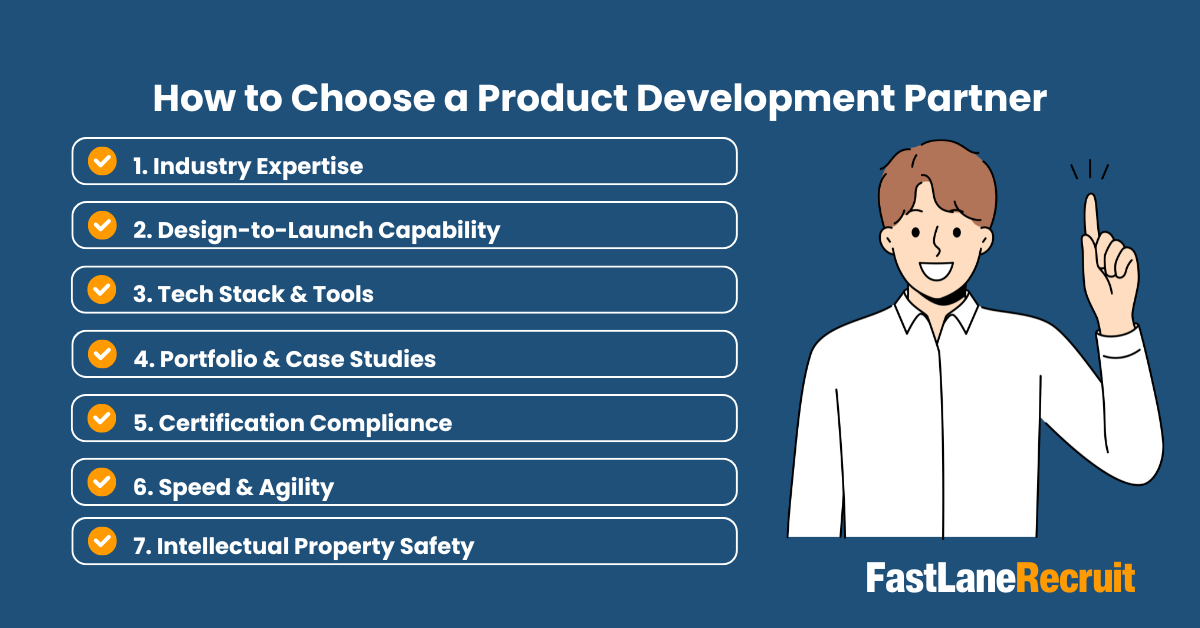
1. Industry Expertise
Industry expertise is one of the strongest predictors of successful product development. A partner who understands your sector already knows key user pain points, standards, and market expectations.
What It Means: They have specialization or experience in your specific industry (e.g., medical devices, logistics tech, eCommerce platforms, consumer electronics).
Why It Matters: Deep industry knowledge reduces the learning curve, increases product-market fit, and lowers the risk of building features that don’t resonate with your market.
Example:
If you’re building a medical hardware device, a design studio with ISO 13485 experience will help you avoid costly redesigns later.
2. Design-to-Launch Capability
Many companies only provide design, while others handle the full end-to-end process. Knowing the difference helps you build a realistic timeline.
What It Means: A partner can support all major stages, research, industrial design, engineering, prototyping, testing, manufacturing prep, and software integration.
Why It Matters: Working with a single partner minimizes communication breakdowns, shortens development cycles, and eliminates the need to manage multiple vendors.
Tip: Ask whether they offer Design for Manufacturability (DFM) and Engineering Validation Testing (EVT/DVT/PVT).
3. Tech Stack & Tools
Your partner’s tools directly impact the speed, scalability, and quality of the final product.
What It Means:
They use modern software, simulation tools, and engineering platforms such as:
- CAD and CAM tools (SolidWorks, Creo, Fusion 360)
- Simulation and AI modeling (ANSYS, generative design tools)
- Cloud and full-stack engineering frameworks
- Agile project management tools
Why It Matters: Better tools lead to fewer errors, faster iterations, and more efficient collaboration across digital and hardware teams.
Example:
Companies using AI-driven generative design (like Hyperganic) can accelerate engineering decisions by weeks.
4. Portfolio & Case Studies
A partner’s past work is often the clearest indication of what they can deliver.
What It Means: They have demonstrable success with similar projects, industries, or technologies.
Why It Matters: Case studies show problem-solving capabilities, design quality, technical skills, and real-world product performance.
What to Look For:
- Before/after results
- Commercial outcomes
- Patents or awards
- Testimonials or industry recognition
Tip: Ask for examples that reflect your specific scale, either a startup MVP or enterprise-grade systems.
Also Read: How FastLaneRecruit Helps Singapore Businesses Hire Top Talent
5. Certification Compliance
Product development, especially hardware, medical, and enterprise software, often requires meeting strict regulatory standards.
What It Means:
The company understands relevant certifications such as:
- ISO 9001 (Quality systems)
- ISO 13485 (Medical devices)
- IEC safety standards
- Cybersecurity frameworks
- PDPA & GDPR compliance for digital products
Why It Matters: Compliance ensures your product is ready for global markets and reduces risk of delays, audits, or legal issues.
Example:
A medical hardware prototype built without ISO 13485 considerations may require a full redesign before approval.
6. Speed & Agility
Time-to-market is a competitive advantage. How fast your partner works can determine your product’s success.
What It Means: Strong development frameworks, sprint cycles, iteration processes, and a clear roadmap for each product stage.
Why It Matters: Agile partners help you launch faster, validate early, and avoid long development cycles.
Questions to Ask:
- What is your average sprint length?
- How do you handle urgent iterations?
- Do you provide weekly or bi-weekly progress updates?
Tip: Choose a partner that offers rapid prototyping options (3D printing, simulated testing, fast MVP cycles).
7. Intellectual Property Safety
Your product is your company’s competitive edge. IP protection is non-negotiable.
What It Means:
Contracts clearly define:
- Who owns the IP (you should own 100 percent)
- Confidentiality terms
- Non-disclosure agreements (NDAs)
- Rights to code, prototypes, design files, and source assets
Why It Matters: Strong IP protection prevents disputes, misuse of proprietary assets, or loss of competitive advantage.
Tip: Avoid partners who retain rights to your design files unless explicitly agreed.
Tips When Working with a Singapore Product Development Partner
To help you navigate the landscape more effectively, here are practical recommendations:
1. Validate Prototype Costs Early
Prototyping in Singapore is high quality but can be costly. Many businesses reduce cost by outsourcing metal or plastic machining to nearby regions such as Malaysia or Vietnam.
2. Request IP Ownership Clauses
Ensure your contract clearly states that all IP created is fully owned by your company.
3. Ask About Manufacturing Readiness
Some firms only design. Others support manufacturing. Clarify which stage you need help with.
4. Set Clear Sprint Cycles for Software Development
Singapore companies often run structured processes, so align expectations around:
- Velocity
- Revision cycles
- QA testing
- Deployment timelines
5. Combine Singapore Talent + Malaysian Teams for Cost Savings
Many global companies pair Singapore product strategy with Malaysia-based developers or engineers for cost efficiency.
Example: Cost-Saving Hybrid Outsourcing Model
| Task | Singapore Team | Malaysia Team |
| Product Strategy | Yes | No |
| UX/UI Design | Yes | Possible |
| Software Development | High cost | Affordable |
| Hardware Prototyping | Yes | Partial |
| QA & Testing | Yes | Yes |
| Long-term Maintenance | Optional | Affordable |
This model allows companies to retain high-level design control while reducing engineering cost by 30–50 percent.
Alternative to Outsourcing Malaysian Employees: FastLaneRecruit’s EOR Service
If you plan to hire Malaysian engineers, designers, or developers to support your product development without setting up a Malaysian entity, FastLaneRecruit’s Employer of Record (EOR) solution is a strategic alternative.
Why Choose FastLaneRecruit EOR:
- Hire Malaysian employees legally without opening a company
- Manage payroll, compliance, and contributions
- Reduce HR risk and admin load
- Support multi-country product development teams
- Scale quickly across Southeast Asia
This is ideal for businesses adopting a Singapore-led strategy with Malaysian execution teams.
Learn more about FastLaneRecruit’s EOR service.
Conclusion
Singapore has earned its position as one of the world’s most innovative product development hubs. Its combination of engineering expertise, strong regulatory environment, digital maturity, and access to regional manufacturing powerhouses makes it a strategic choice for global businesses looking to build high-quality products.
The 15 companies listed in this guide represent the strongest players across software, hardware, industrial design, AI-driven engineering, and enterprise product development. Whether you’re a scaling startup or an enterprise pushing into new markets, these partners can accelerate product development, strengthen R&D, and shorten time-to-market.
For companies that want to extend their product development capabilities with Malaysian talent, without the complexity of setting up an entity, FastLaneRecruit’s EOR service offers a strategic, compliant, and cost-efficient solution.
If you’re ready to build smarter, faster, and more globally, Singapore and Malaysia in Southeast Asia are the best places to begin.
Speak with our team to explore compliant product development hiring in Malaysia.