
Hiring in Malaysia offers strong opportunities for business growth. With a skilled, multilingual workforce and a well-established legal framework, many Malaysian companies continue to expand their teams locally to stay competitive.
But successful hiring goes beyond finding the right candidate. Employers must also understand the cost of hiring, payroll requirements, and compliance obligations to avoid delays, penalties, or operational issues.
This guide breaks down everything you need to know, from costs and hiring process to employment laws and payroll compliance, so you can hire confidently and efficiently in Malaysia.
Content Outline
Key Summary
Employer Costs Go Beyond Salary
Hiring in Malaysia requires additional statutory contributions such as EPF, SOCSO, EIS, and HRDF, adding around 14%–17% on top of base salary.
Total Hiring Cost Can Reach 130%
When factoring in benefits like insurance, allowances, and bonuses, the true cost of hiring can rise to 120%–130% of an employee’s salary.
Compliance with Payroll Regulations Is Critical
Employers must manage monthly payroll, tax deductions (PCB), and statutory contributions accurately and submit them on time to avoid penalties.
Structured Hiring Process Ensures Smooth Onboarding
From business registration to issuing contracts and setting up payroll, following a step-by-step hiring process helps prevent legal and operational issues.
Employment Laws Define Working Conditions
The Employment Act 1955 governs working hours, overtime, leave entitlements, and minimum wage, making compliance essential for employers.
Misclassification of Workers Carries Risks
Incorrectly classifying employees as contractors can lead to backdated contributions, fines, and potential legal disputes.
Partnering with Experts Improves Efficiency
Working with recruitment and payroll partners like FastLaneRecruit helps businesses streamline hiring, ensure compliance, and access quality talent faster.
What Is the Cost of Hiring an Employee in Malaysia?
When you hire an employee in Malaysia, the total cost is more than just the salary you offer. Employers are required to make several statutory contributions and may also provide additional benefits.
Understanding these costs upfront helps you plan your hiring budget accurately and avoid surprises later on.
Mandatory Employer Contributions
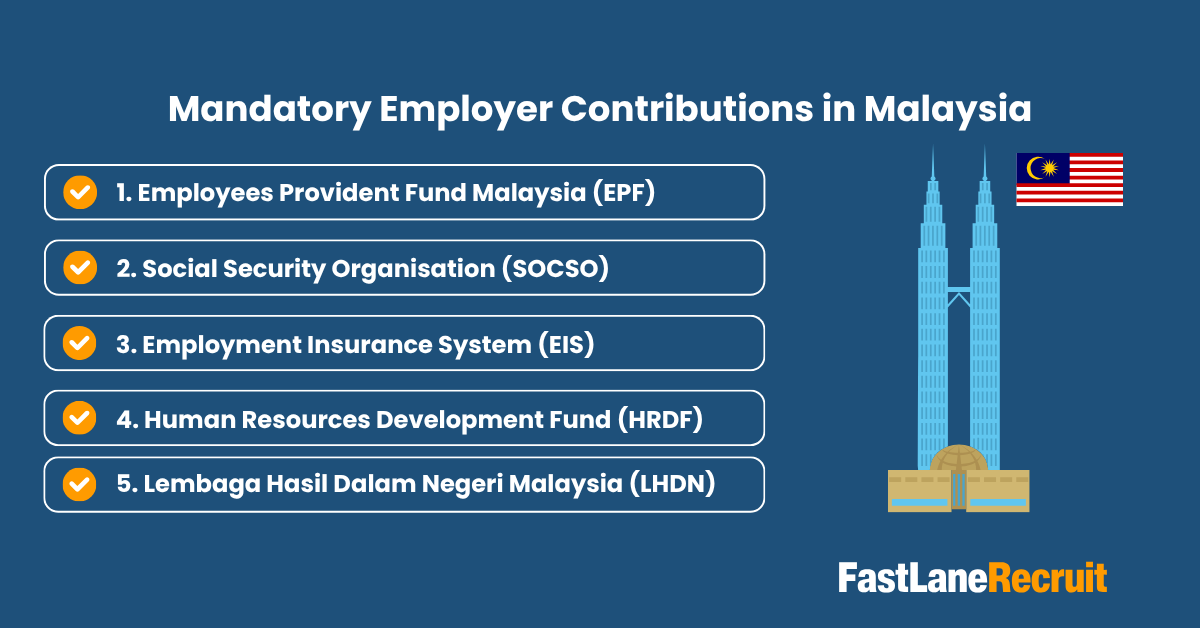
When hiring employees in Malaysia, employers are legally required to contribute to several government-regulated schemes. These contributions are not optional; they form a key part of the country’s employment framework and are designed to protect employees’ financial well-being, job security, and long-term savings.
For employers, this means going beyond salary payments and ensuring all required contributions are calculated accurately and submitted on time.
Below are the key statutory bodies every employer should understand:
1. Employees Provident Fund Malaysia (EPF)
The EPF is Malaysia’s mandatory retirement savings scheme.
- Both employer and employee contribute monthly
- Employer contribution: typically 12%–13% of salary
- Employee contribution: 11% (deducted from salary)
The purpose of EPF is to help employees build long-term financial security after retirement. These funds are invested and can be withdrawn under specific conditions such as retirement, housing, or medical needs.
For employers, EPF is usually the largest statutory cost component when hiring.
2. Social Security Organisation (SOCSO)
SOCSO provides social protection coverage for employees.
It includes benefits such as:
- Workplace injury compensation
- Medical coverage for work-related accidents
- Disability and invalidity support
- Survivor benefits for dependents
Employers contribute approximately 1.75% of wages, while employees contribute a smaller portion.
This scheme ensures employees are financially supported in case of unexpected incidents that affect their ability to work.
3. Employment Insurance System (EIS)
The EIS is designed to support employees who lose their jobs involuntarily.
Both employer and employee contribute 0.2% of monthly wages.
Key benefits include:
- Temporary income replacement
- Job search assistance
- Training and reskilling programs
This helps employees transition more smoothly between jobs and reduces financial stress during unemployment.
Also Read: Hybrid And Remote Work Trends in Malaysia
4. Human Resources Development Fund (HRDF)
The HRDF is a training and development levy aimed at improving workforce skills.
- Applies to employers with 10 or more Malaysian employees in certain industries
- Contribution rate: 1% of monthly payroll
Employers who contribute to HRDF can claim training costs and upskilling programs, making it a valuable investment in employee development.
5. Lembaga Hasil Dalam Negeri Malaysia (LHDN)
LHDN is Malaysia’s tax authority, and employers play an important role in tax compliance.
Employers are responsible for:
- Deducting monthly income tax (PCB) from employee salaries
- Submitting these payments to LHDN on time
- Ensuring accurate tax calculations based on salary and reliefs
Although this is not a direct employer cost, it is a critical compliance responsibility. Mistakes or delays can result in penalties.
Why These Contributions Matter
These statutory contributions are more than just compliance requirements, they help create a stable and secure workforce.
For employees, they provide:
- Retirement savings
- Protection against accidents and disability
- Financial support during unemployment
For employers, staying compliant helps:
- Avoid penalties and legal risks
- Build employee trust and satisfaction
- Ensure smooth business operations
Quick Tip for Employers
Managing multiple contributions can be complex, especially as your team grows. Many companies simplify this by:
- Using payroll software
- Setting up a compliance calendar
- Working with local HR or recruitment partners
This ensures contributions are accurate, timely, and fully compliant with Malaysian regulations.
Employer Cost Breakdown
Below is a simple breakdown of the main contributions employers need to pay:
| Contribution | Employer Rate | What It Means |
| EPF | 12% – 13% | Largest cost component; goes into employee retirement savings |
| SOCSO | ~1.75% | Covers social protection such as injury or disability |
| EIS | 0.2% | Provides unemployment support |
| HRDF | 1% | Training fund (only for eligible companies) |
Estimated Total Employer Cost
In total, employers typically pay an additional 14% to 17% on top of the employee’s salary.
Example: What You Actually Pay
Let’s break this down with a simple example:
| Component | Employee Salary RM 5,000 | Employee Salary RM 10,000 |
| Base Salary | RM 5,000 | RM 10,000 |
| EPF | RM 650 | RM 1,200 |
| SOCSO | ~RM 87 | ~RM 87 (capped) |
| EIS | ~RM 10 | ~RM 12 |
| Total Employer Cost | ~RM 5,747 | ~RM 11,299 |
What this means:
- For a RM 5,000 salary, you actually pay about RM 747 more per month
- For a RM 10,000 salary, the additional cost is about RM 1,299 per month
Total Cost Including Benefits
Beyond statutory contributions, many companies also offer additional benefits to attract and retain talent.
When these are included, the true cost of hiring typically becomes:
120% to 130% of the employee’s base salary.
Common Additional Benefits in Malaysia
While not legally required, these benefits are commonly offered by employers:
- Medical and outpatient insurance
- Dental coverage
- Transport or parking allowance
- Performance bonuses (usually 1–2 months of salary, depending on company performance)
- Flexible or hybrid working arrangements
These benefits play an important role in attracting and retaining skilled employees, especially in competitive industries.
Quick Summary
- Employer costs go beyond salary due to statutory contributions
- Expect to pay 14%–17% extra for mandatory contributions
- Total cost (including benefits) can reach 120%–130% of salary
- Offering competitive benefits helps improve hiring success
If you’re planning to hire, having a clear understanding of these costs will help you set realistic budgets and build a sustainable workforce.
Also Read: How to Build an Offshore Accounts Payable Team in Malaysia
Step-by-Step Hiring Process in Malaysia
Hiring in Malaysia follows a structured and regulated process. Getting each step right ensures your business stays compliant, avoids delays, and creates a smooth onboarding experience for your new employee.
Here’s a clear breakdown of how the hiring process typically works:
1. Register Your Business
Before you can hire any employees, your company must be legally registered with the
Companies Commission of Malaysia.
This applies to all businesses operating in Malaysia, whether you are:
- A local company
- A foreign-owned entity with local operations
Registration ensures your business is legally recognised and allowed to:
- Enter into employment contracts
- Pay salaries
- Make statutory contributions
Tip: Make sure your business registration details (such as company address and directors) are fully updated to avoid issues later.
2. Define the Role and Employment Terms
Before starting the hiring process, it’s important to clearly define what you’re looking for.
This includes:
- Job title and responsibilities
- Required skills and experience
- Salary range and compensation structure
- Employment type (permanent, contract, or part-time)
Having a clear structure helps you:
- Attract the right candidates
- Speed up the recruitment process
- Avoid mismatched expectations
Example: If you’re hiring for a marketing role, specify whether it focuses on digital, content, or performance marketing to attract more suitable applicants.
3. Issue a Written Employment Contract
Once you’ve selected a candidate, you should issue a formal written employment contract. This is a key requirement under Malaysian labour law and helps protect both employer and employee.
A complete contract should include:
- Job scope and responsibilities
- Salary and payment schedule
- Benefits and allowances
- Working hours and rest days
- Leave entitlements (annual, sick, etc.)
- Probation period (commonly 3–6 months)
- Termination terms and notice period
A clear contract reduces misunderstandings and ensures both parties are aligned from the start.
Tip: Always ensure your contract aligns with the requirements under the
Employment Act 1955.
4. Register with Statutory Bodies
After hiring your first employee, you must register your company with the relevant statutory authorities.
These include:
- Employees Provident Fund Malaysia (EPF)
- Social Security Organisation (SOCSO)
- Employment Insurance System (EIS)
- Lembaga Hasil Dalam Negeri Malaysia (LHDN)
This step is essential because it allows you to:
- Make mandatory contributions
- Deduct employee taxes correctly
- Stay compliant with Malaysian regulations
Important: Registration should be completed as soon as you hire your first employee to avoid penalties.
5. Set Up Payroll and Ensure Ongoing Compliance
Once everything is in place, you need a reliable payroll process to manage monthly payments and compliance requirements.
Your payroll system should handle:
- Monthly salary payments (paid within 7 days after the pay period)
- EPF, SOCSO, and EIS contributions
- Monthly tax deductions (PCB)
- Itemised payslip issuance
You also need to:
- Submit statutory contributions on time (usually by the 15th of the following month)
- Keep payroll records for at least 6 years
- Prepare annual reports such as Form E and Form EA
Tip: Many companies use payroll software or outsource payroll to reduce errors and save time.
Why Following the Right Process Matters
A structured hiring process helps you:
- Stay compliant with Malaysian labour laws
- Avoid penalties and administrative issues
- Improve employee experience from day one
- Build a strong and reliable workforce
Even small mistakes, like missing a registration or delaying contributions, can lead to unnecessary complications. Taking a step-by-step approach ensures your hiring process is smooth, compliant, and scalable as your business grows.
If you’re planning to expand your team, having the right process in place makes hiring in Malaysia much more efficient and manageable.
Also Read: How to Hire and Manage Remote Assistants in Malaysia
Key Employment Laws in Malaysia
Malaysia has a comprehensive framework of employment laws designed to protect employees while providing clear guidelines for employers. The primary legislation governing employment in Malaysia is the Employment Act 1955 (EA 1955), which applies to most employees in the private sector, especially those earning below RM 4,000 per month, and certain categories of higher-paid or managerial employees depending on their role.
Here’s a detailed breakdown of the main areas covered by employment laws in Malaysia:
Working Hours and Overtime
The Employment Act 1955 regulates standard working hours, overtime, and rest days. Employers must adhere to these rules to avoid penalties.
- Standard Workweek: 45 hours per week, typically spread over 5–6 days
- Typical Working Day: 8–9 hours per day
- Overtime Pay: Applicable for eligible employees under the Act
- Normal Days: 1.5 times the hourly rate
- Rest Days: 2 times the hourly rate
- Public Holidays: 3 times the hourly rate
Note: Management-level employees or those earning above RM 4,000 per month are generally excluded from overtime pay.
Leave Entitlements
Employees in Malaysia are entitled to various types of leave under the Employment Act and company policies. These entitlements depend on length of service and other eligibility criteria.
| Leave Type | Entitlement |
| Annual Leave | 8–16 days per year, depending on years of service |
| Sick Leave | 14–22 days, depending on service period |
| Hospitalisation Leave | Up to 60 days per year (including sick leave) |
| Maternity Leave | 98 consecutive days for female employees |
| Paternity Leave | 7 days (not mandatory under EA but commonly offered) |
Additional Notes:
- Public holidays: Employees are entitled to 11 gazetted public holidays per year, with additional state holidays determined by the employer.
- Unused annual leave: Depending on company policy, it may be carried over or encashed.
Also Read: Incorporation vs EoR in Malaysia
Minimum Wage
The minimum wage in Malaysia is periodically updated by the government to reflect economic conditions and cost of living.
- As of 2025: RM1,700 per month for employees in Peninsular Malaysia, Sabah, and Sarawak
- Employers must ensure all employees are paid at least the minimum wage to avoid fines or legal action.
- Some exemptions apply for apprentices, interns, or employees under certain contractual arrangements.
Why Compliance Matters
Understanding and adhering to Malaysia’s employment laws helps employers:
- Avoid fines and legal penalties for non-compliance
- Maintain fair and transparent workplace practices
- Improve employee satisfaction and retention
- Reduce risk during audits or inspections
By integrating these legal requirements into payroll, contracts, and HR policies, companies can ensure smooth operations while fostering a compliant and productive workforce.
Payroll and Compliance in Malaysia
Ensuring payroll compliance in Malaysia is a critical responsibility for employers. Failing to meet statutory obligations can lead to fines, penalties, and reputational damage, so it’s essential to understand both the monthly requirements and annual obligations.
Monthly Payroll Requirements
Employers in Malaysia must ensure that all payroll processes are conducted accurately and on time. Key responsibilities include:
- Salary Payments:
- Employees must be paid their salaries within seven days after the end of the pay period.
- Salaries can be paid via bank transfer or other agreed-upon methods.
- Tax Deductions (PCB / Monthly Tax Deduction):
- Employers act as withholding agents, deducting the correct amount of income tax (PCB) from each employee’s salary.
- These deductions are submitted to the Lembaga Hasil Dalam Negeri Malaysia (LHDN) on a monthly basis.
- Social Security and Retirement Contributions:
- Employees Provident Fund (EPF): Retirement savings contributions must be deducted and submitted monthly.
- Social Security Organisation (SOCSO): Contributions for workplace injury, disability, and invalidity insurance.
- Employment Insurance System (EIS): Provides financial support to employees in the event of job loss.
- Payslip Issuance:
- Employers must provide itemised payslips to employees each pay period.
- Payslips should include gross salary, deductions, contributions, and net pay to maintain transparency.
Key Deadlines
To remain compliant with Malaysian regulations, employers must meet specific deadlines:
- Monthly statutory submissions: Typically due by the 15th of the following month for EPF, SOCSO, EIS, and PCB.
- Late payments may incur fines, interest, or penalties from the respective regulatory bodies.
Annual Reporting
At the end of the financial year, employers have additional reporting responsibilities:
- Form E – Employer Declaration: Summarises all contributions made to employees’ EPF, SOCSO, and EIS accounts.
- Form EA – Employee Income Statement: Reports each employee’s annual salary and deductions for tax purposes.
- Employers must ensure these forms are accurately completed and submitted to LHDN before the year-end deadline.
Record Keeping
Proper documentation is a critical part of compliance:
- Employers must retain payroll records for at least six years for audit and inspection purposes.
- Records should include employment contracts, payslips, tax deductions, and contribution receipts.
- Keeping organised records helps employers respond efficiently to audits and ensures employees’ rights are protected.
Best Practices for Payroll Compliance
To streamline payroll and ensure compliance:
- Use automated payroll software to calculate taxes and contributions accurately.
- Schedule reminders for monthly and annual submissions to avoid missed deadlines.
- Conduct periodic internal audits to verify deductions, contributions, and reporting.
- Train HR and finance teams on regulatory updates from EPF, SOCSO, EIS, and LHDN.
By following these steps, companies can maintain compliance, avoid penalties, and provide employees with timely and accurate compensation.
Also Read: 4 Types of Employment Contracts in Malaysia Recruitment
Employee vs Contractor: What Employers Need to Know
Misclassifying workers is a common risk for employers in Malaysia and can lead to significant legal and financial consequences. Understanding the distinctions between an employee and a contractor is essential to ensure compliance with labor laws, payroll regulations, and tax obligations.
Key Differences Between Employees and Contractors
| Criteria | Employee | Contractor |
| Work Type | Ongoing employment with a continuous relationship | Project-based or temporary engagement, often for a specific task or period |
| Control | Work is directed and supervised by the employer | Operates independently, with autonomy over how work is completed |
| Benefits | Entitled to statutory benefits such as EPF, SOCSO, EIS, annual leave, and maternity/paternity leave | Not entitled to statutory employee benefits; may receive negotiated payment or fees only |
| Tax Obligations | Employer deducts monthly tax (PCB) and remits to LHDN | Contractor manages their own taxes and declares income independently |
Risks of Misclassification
Incorrectly classifying a worker can have serious consequences, including:
- Backdated Statutory Payments
- Employers may be liable for contributions to EPF, SOCSO, and EIS that should have been made, including interest and penalties.
- Penalties and Fines
- Regulatory bodies may impose fines or other penalties if workers are misclassified, especially if benefits or taxes are underpaid.
- Legal Disputes
- Workers may file claims for unpaid benefits, leave entitlements, or wrongful termination if misclassified as contractors.
How to Determine Proper Classification
Employers should assess the following factors when determining whether a worker is an employee or a contractor:
- Nature of Work: Is the worker performing core business functions or a temporary project?
- Control and Supervision: Does the employer dictate working hours, methods, and outcomes?
- Continuity: Is the work ongoing, or does it have a fixed end date?
- Payment Method: Is the worker paid a salary with deductions, or a fee upon completion of tasks?
- Benefits Eligibility: Does the worker receive statutory or company-provided benefits?
Best Practices for Employers
- Draft clear contracts specifying whether the engagement is as an employee or contractor.
- Maintain documentation of work arrangements, payment terms, and scope of duties.
- Review roles periodically to ensure continued compliance with Malaysian labor laws.
- Consult a legal or HR specialist if there is uncertainty about classification.
By correctly classifying workers from the outset, companies can avoid penalties, maintain compliance, and build a fair and transparent employment relationship.
Also Read: How to Hire Using EOR in Malaysia
Common Hiring and Payroll Mistakes to Avoid in Malaysia
Employers expanding or operating in Malaysia often face challenges navigating the local labor and payroll landscape. Even small mistakes can lead to fines, legal disputes, or employee dissatisfaction. Understanding common pitfalls helps companies maintain compliance and build a positive work environment.
1. Late Statutory Contributions
Employers are required to make timely contributions to statutory bodies such as EPF, SOCSO, and EIS. Missing deadlines, even by a few days, can result in:
- Penalties and interest charges imposed by regulatory authorities
- Backlogs in employee records
- Reputational risks, especially for companies hiring foreign talent
Best Practice: Set up automated reminders or use payroll software to ensure contributions are submitted on time, typically by the 15th of the following month.
2. Incorrect Payroll Calculations
Payroll errors are one of the most common compliance issues in Malaysia. Miscalculations can occur in:
- EPF contributions, which vary depending on salary level
- SOCSO and EIS contributions, which are subject to caps
- Monthly tax deductions (PCB)
Even minor mistakes can lead to fines, penalties, and the need to make retroactive corrections.
Best Practice: Regularly review payroll calculations, maintain up-to-date statutory rates, and consider outsourcing to a certified payroll provider.
3. Misclassifying Employees
Distinguishing between employees and contractors is critical. Misclassification can result in:
- Liability for unpaid statutory contributions
- Fines or interest from regulatory bodies
- Legal disputes over benefits, leave, and termination
Best Practice: Evaluate roles based on work type, control, benefits eligibility, and payment method, and document the classification clearly in contracts.
4. Incomplete Documentation
Accurate and complete documentation is essential for audits and regulatory compliance. Common issues include:
- Missing employment contracts or amendments
- Lack of payroll records or payslips
- Absence of leave, overtime, or benefits documentation
Best Practice: Maintain organized records for at least six years and ensure all employee information, contributions, and payroll reports are up to date.
5. Ignoring Local Practices
While statutory compliance is mandatory, understanding cultural and market norms is equally important. For example:
- Many Malaysian employers offer discretionary annual bonuses, medical coverage, or transportation allowances.
- Failure to provide market-standard benefits may affect employee satisfaction and retention.
Best Practice: Conduct market research to benchmark compensation and benefits packages, ensuring your company remains competitive.
By proactively avoiding these mistakes, employers can ensure smoother payroll operations, better employee satisfaction, and full compliance with Malaysian employment laws.
Also Read: Why Malaysia Is Becoming The Top Destination For Global Talent
Practical Tips for Malaysian Employers
Managing hiring, payroll, and compliance in Malaysia can be complex, especially for companies new to the market. Implementing practical strategies can save time, reduce errors, and ensure compliance with statutory requirements.
1. Use Payroll Software or Automation Tools
Manual payroll processing increases the risk of errors and missed deadlines. Using specialized payroll software allows you to:
- Automate salary calculations, tax deductions, and statutory contributions
- Generate payslips and compliance reports automatically
- Reduce administrative workload and human error
Tip: Choose software that is updated with local EPF, SOCSO, EIS, and tax rates to ensure accuracy.
2. Maintain a Compliance Calendar
A compliance calendar helps you keep track of statutory obligations and key deadlines, including:
- Monthly contributions to EPF, SOCSO, and EIS
- Monthly tax deductions (PCB) submissions
- Annual reporting forms (Form E and Form EA)
Tip: Integrate reminders into your HR or payroll system to avoid late payments and penalties.
3. Conduct Regular Internal Audits
Regular audits of payroll and HR processes can prevent mistakes before they escalate. Audits help you:
- Verify that statutory contributions are calculated correctly
- Ensure employee classifications and contracts are accurate
- Identify gaps in record-keeping and compliance documentation
Tip: Schedule audits quarterly or semi-annually to stay ahead of compliance requirements.
4. Stay Updated with Regulatory Changes
Malaysia’s employment and tax laws are updated regularly. Employers should:
- Monitor official updates from EPF, SOCSO, EIS, HRDF, and LHDN
- Attend seminars, workshops, or training on local employment regulations
- Review internal HR policies periodically to ensure alignment with current laws
Tip: Subscribe to official newsletters or follow regulatory agencies online for timely updates.
5. Partner with Local Recruitment Experts
Hiring the right talent quickly while remaining compliant can be challenging, especially for foreign companies. Recruitment partners can:
- Provide access to pre-screened, qualified candidates
- Ensure that hiring practices comply with Malaysian labor laws
- Offer insights into market salary benchmarks and industry standards
Tip: Use recruitment agencies when hiring for specialized roles, scaling rapidly, or managing multiple vacancies.
Also Read: Contract vs Permanent Employment in Malaysia
When Should You Use a Recruitment Service?
Recruitment services are particularly valuable in situations such as:
- Rapid workforce expansion, where speed is critical
- Filling highly specialized or niche roles that require targeted talent sourcing
- Managing multiple candidates efficiently while maintaining compliance
- Aligning compensation packages with market standards to attract top talent
Benefits of Using a Recruitment Partner:
- Access to a wider pool of local talent and pre-screened candidates
- Reduced time and effort in the hiring process
- Improved quality of hires through professional screening and assessment
- Better alignment with local salary benchmarks and market trends
By following these practical tips, employers in Malaysia can streamline hiring and payroll processes, maintain compliance, and build a competitive advantage in attracting and retaining top talent.
Build Your Team in Malaysia with FastLaneRecruit
Hiring the right talent is a critical factor for business growth, but managing recruitment, payroll, and compliance in Malaysia can be complex, especially for companies new to the market. FastLaneRecruit simplifies this process, giving you the local expertise you need to hire efficiently and stay compliant.
Comprehensive Recruitment Services
FastLaneRecruit supports Malaysian companies at every stage of the hiring process, helping you:
- Find and hire qualified local talent faster: Access a network of talented candidates across industries, from junior staff to specialised professionals.
- Streamline the recruitment process: We manage job postings, candidate sourcing, interviews, and shortlisting, reducing the administrative burden on your HR team.
- Ensure alignment with local hiring practices: Our experts ensure that employment contracts, salary offers, and benefits comply with Malaysian labour laws.
- Reduce operational workload for HR teams: Focus on core business priorities while we handle the end-to-end recruitment workflow.
Payroll and Compliance Support
FastLaneRecruit also provides reliable payroll services to ensure your team is paid accurately and on time:
- Compliant Payroll Processing: Manage monthly salaries, statutory contributions (EPF, SOCSO, EIS, HRDF), and tax deductions (PCB) in line with local regulations.
- Payslip Generation: Deliver detailed, professional payslips to employees every month.
- Regulatory Reporting: Support for annual filings, Form E and Form EA submissions, and record keeping for audits.
- Minimizing Risk: Avoid late payments, miscalculations, or penalties through automated, compliant payroll management.
Why Choose FastLaneRecruit?
Whether you’re hiring a single role or scaling an entire team in Malaysia, FastLaneRecruit provides:
- Local Market Expertise: Guidance on market salary benchmarks, benefits, and employment practices.
- End-to-End Support: Recruitment, onboarding, payroll, and compliance handled under one roof.
- Time and Cost Savings: Reduce administrative overhead and accelerate your hiring process.
- Flexible Solutions: Services tailored for startups, SMEs, and large multinational companies.
By partnering with FastLaneRecruit, companies can confidently expand their teams in Malaysia, knowing that recruitment, payroll, and compliance are handled professionally. Your HR team can focus on strategic growth while we take care of the operational details.
Also Read: Hiring Data Engineer in Malaysia
Conclusion
Hiring in Malaysia offers strong opportunities, but it requires a clear understanding of costs, employment laws, and payroll compliance. From statutory contributions to employee benefits and proper classification, every step plays a role in building a sustainable and compliant workforce.
By putting the right processes in place, and working with experienced recruitment partners, you can hire efficiently, stay compliant, and focus on growing your business.
If you’re planning to hire Malaysian talent, taking a structured and informed approach will set you up for long-term success.
Recruit, Pay, and Comply Effortlessly with FastLaneRecruit!
Partner with FastLaneRecruit to simplify recruitment, payroll, and compliance. Whether you’re hiring one employee or scaling your entire team, our local expertise ensures your hiring process is fast, efficient, and fully compliant.