
Remote work has transformed from a temporary workplace trend into a long-term business strategy. Today, companies of all sizes are hiring remote employees to access global talent, reduce operating costs, and improve workforce flexibility. At the same time, professionals are actively searching for remote jobs that offer better work-life balance, location freedom, and career opportunities. But what is a remote job? How does remote work really function in practice?
In this guide, we explain the meaning of remote jobs, how remote work operates, the advantages and challenges involved, and how businesses can successfully hire remote talent. Whether you are a job seeker or an employer exploring remote recruitment, this article will help you make informed decisions.
Content Outline
Key Summary
Remote Jobs Enable Work Beyond Traditional Offices
Remote jobs allow employees to perform their roles outside physical office spaces using digital communication and collaboration tools.
Remote Work Has Become a Long-Term Business Strategy
What began as a temporary shift has evolved into a sustained workforce model adopted by companies globally.
Multiple Remote Work Models Exist
Common structures include fully remote, hybrid setups, freelance arrangements, and remote-first organizational models.
Remote Hiring Is Common Across Multiple Industries
Sectors such as technology, marketing, HR, customer service, finance, and recruitment frequently employ remote professionals.
Remote Work Offers Strong Employee Benefits
Key advantages include improved work-life balance, flexible location options, reduced commuting time, and access to global job opportunities.
Businesses Benefit From Remote Workforce Expansion
Companies gain access to wider talent pools, reduced overhead costs, improved scalability, and stronger employee retention rates.
Effective Remote Work Requires Strong Operational Systems
Success depends on clear communication protocols, productivity frameworks, cybersecurity measures, and well-defined workflows.
Recruitment Partners Help Optimize Remote Hiring
Recruitment agencies support faster hiring, risk reduction, and access to pre-screened candidates for remote roles.
FastLaneRecruit Supports Global Remote Team Building
FastLaneRecruit helps companies build efficient remote teams through recruitment expertise and offshore staffing solutions.
Key Takeaways
- A remote job allows employees to work outside a traditional office using digital communication and collaboration tools.
- Remote work has become a long-term workforce strategy for businesses worldwide, not just a temporary trend.
- Common types of remote work include fully remote, hybrid, freelance, and remote-first arrangements.
- Industries such as technology, marketing, HR, customer service, finance, and recruitment frequently hire remote employees.
- Remote jobs offer benefits like work-life balance, location flexibility, reduced commuting, and access to global career opportunities.
- Businesses benefit from remote hiring through larger talent pools, lower operational costs, improved scalability, and employee retention.
- Successful remote work depends on strong communication, productivity systems, cybersecurity measures, and clear workflows.
- Companies hiring remote employees typically prioritize communication skills, self-discipline, adaptability, and digital collaboration abilities.
- Recruitment agencies can help businesses streamline remote hiring, reduce recruitment risks, and access pre-screened talent faster.
- FastLaneRecruit helps businesses build efficient remote teams through professional recruitment and offshore staffing solutions.
What Is a Remote Job?
A remote job is a type of employment where employees perform their work outside a traditional office environment. Instead of commuting to a physical workplace every day, remote workers use digital tools and internet-based communication platforms to complete tasks from home, coworking spaces, or other locations.
Remote jobs are also commonly referred to as:
- Work-from-home jobs
- Virtual jobs
- Telecommuting jobs
- Distributed work
- Online jobs
The key feature of a remote job is location flexibility. Employees can collaborate with teams, attend meetings, manage projects, and communicate with clients entirely through technology.
Remote jobs can be:
- Fully remote
- Hybrid remote
- Temporary remote
- Freelance remote
- International remote positions
Today, remote work is widely used across industries such as technology, customer service, finance, accounting, marketing, design, HR, and recruitment.
How Does Remote Work Really Work?
Remote work relies on digital communication and cloud-based collaboration systems. Instead of working inside a centralized office, remote employees connect virtually using tools such as:
- Video conferencing software
- Team messaging applications
- Project management systems
- Cloud document platforms
- Time tracking tools
A typical remote work setup includes:
- A stable internet connection
- A laptop or desktop computer
- Communication software
- Clear workflows and performance expectations
Most remote companies focus on:
- Outcome-based performance
- Regular communication
- Digital collaboration
- Flexible scheduling
- Productivity tracking
Some remote companies operate synchronously, meaning employees work during shared hours. Others use asynchronous work models where teams collaborate across different time zones without requiring simultaneous schedules.
Types of Remote Jobs
Understanding the different remote work arrangements can help both employers and candidates choose the right setup.
Fully Remote Jobs
Employees work entirely outside the office. Communication and collaboration happen online.
Best for:
- Global teams
- Digital businesses
- International hiring
Hybrid Remote Jobs
Employees split time between home and office work.
Best for:
- Companies transitioning into remote work
- Teams requiring occasional in-person collaboration
Freelance Remote Jobs
Independent contractors provide services remotely to multiple clients.
Common freelance roles:
- Writers
- Designers
- Developers
- Marketers
- Consultants
Remote-First Companies
These organizations are designed primarily around remote operations. Processes, communication, and culture are optimized for distributed teams.
Popular Remote Job Examples
Remote jobs are no longer limited to technology companies. Many industries now support flexible work arrangements.
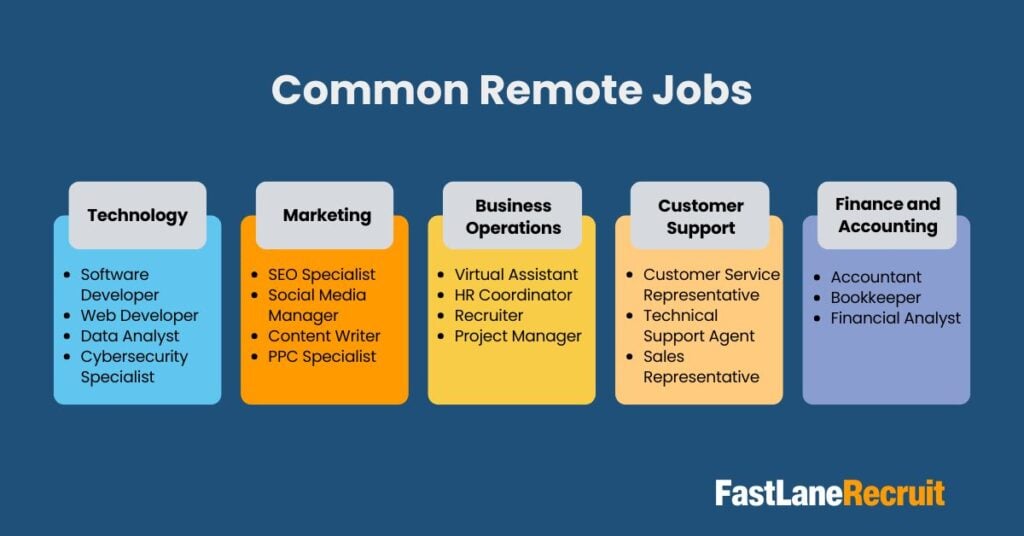
Businesses increasingly use remote recruitment to access specialized talent globally instead of limiting hiring to local candidates.
Benefits of Remote Jobs for Employees
Remote work offers several advantages for professionals seeking flexibility and career growth.
Better Work-Life Balance
Remote employees often save commuting time and gain more flexibility in managing personal responsibilities.
Location Independence
Workers can apply for opportunities outside their city or country, expanding career options significantly.
Cost Savings
Remote employees may save money on:
- Transportation
- Meals
- Office clothing
- Relocation expenses
Flexible Scheduling
Some remote companies allow employees to work flexible hours based on productivity and project deadlines.
Access to Global Opportunities
Remote work enables professionals to join international companies without relocating.
Benefits of Remote Hiring for Businesses
Remote recruitment is becoming a strategic advantage for many organizations.
Access to a Larger Talent Pool
Companies can hire skilled candidates from different cities or countries rather than relying only on local applicants.
This is especially valuable for businesses struggling with talent shortages in competitive industries.
Reduced Operational Costs
Remote businesses may reduce expenses related to:
- Office space
- Utilities
- Equipment
- Daily operations
Improved Employee Retention
Flexible work arrangements can improve employee satisfaction and reduce turnover.
Increased Productivity
Many businesses report higher productivity levels when employees work remotely under clear performance expectations.
Challenges of Remote Work
While remote work offers many benefits, businesses and employees should also understand the challenges involved.
Communication Barriers
Remote teams may experience misunderstandings if communication processes are unclear.
Solutions:
- Regular meetings
- Documentation
- Clear communication guidelines
Employee Isolation
Some remote workers may feel disconnected from colleagues.
Solutions:
- Virtual team activities
- Collaborative projects
- Regular check-ins
Time Zone Differences
Global remote teams often work across multiple time zones.
Solutions:
- Shared calendars
- Flexible schedules
- Asynchronous workflows
Cybersecurity Risks
Remote employees handle company data outside office networks.
Solutions:
- VPN usage
- Security training
- Multi-factor authentication
Remote Job Skills Employers Look For
Companies hiring remote employees usually prioritize candidates with strong self-management abilities.
Essential Remote Work Skills
- Communication skills
- Time management
- Self-discipline
- Digital collaboration
- Problem-solving
- Adaptability
- Technical literacy
Candidates who demonstrate independence and accountability often perform better in remote environments.
How Companies Hire Remote Employees Successfully
Hiring remote talent requires a structured recruitment process.
Step 1: Define the Role Clearly
Businesses should specify:
- Responsibilities
- Required skills
- Time zone expectations
- Communication requirements
Step 2: Use Specialized Recruitment Support
Many companies partner with recruitment agencies to:
- Source qualified remote candidates
- Screen applicants efficiently
- Reduce hiring risks
- Accelerate onboarding
FastLaneRecruit helps businesses hire remote professionals across various industries by streamlining the recruitment and candidate selection process.
Step 3: Evaluate Communication Skills
Strong communication is critical in remote environments. Employers often assess:
- Responsiveness
- Written communication
- Virtual interview performance
Step 4: Build a Remote-Friendly Culture
Successful remote companies invest in:
- Collaboration systems
- Employee engagement
- Clear workflows
- Performance management
Also Read: 6 Fastest Growing Remote Hiring Destinations in 2026
How to Find Legitimate Remote Jobs
As remote work demand grows, job seekers should be cautious about scams.
Signs of Legitimate Remote Jobs
- Professional company website
- Clear job descriptions
- Transparent interview process
- Verified business information
- No upfront payment requests
Red Flags to Avoid
- Unrealistic salary promises
- Requests for personal financial information
- Poorly written job postings
- Unverified recruiters
Using trusted recruitment firms and professional job platforms can reduce risks significantly.
Is Remote Work the Future?
Remote work is expected to remain a major part of the global workforce. While some companies are returning to hybrid models, many organizations continue investing in flexible hiring strategies to attract and retain top talent.
The future of work is likely to include:
- Hybrid work arrangements
- International remote teams
- Digital-first collaboration
- Flexible employment structures
Businesses that adapt to modern workforce expectations may gain competitive advantages in hiring and employee retention.
Why Businesses Are Partnering With Recruitment Agencies for Remote Hiring
Finding qualified remote employees can be time-consuming and complex. Recruitment agencies help businesses:
- Access pre-screened candidates
- Reduce hiring timelines
- Improve hiring quality
- Navigate international recruitment challenges
Whether you need remote accounting staff, recruiters, marketers, developers, or administrative professionals, working with an experienced recruitment partner can simplify the hiring process significantly.
Final Thoughts
Remote work has fundamentally changed how businesses hire and how professionals build careers. Understanding what a remote job is and how remote work functions can help both employers and employees make smarter decisions in today’s digital workforce.
For businesses, remote hiring offers access to wider talent pools, operational flexibility, and scalability. For professionals, remote jobs provide greater freedom, flexibility, and career opportunities across global markets.
As remote work continues evolving, companies that build strong remote hiring strategies will be better positioned for long-term growth and workforce resilience.
Build Your Remote Team With FastLaneRecruit
Finding reliable remote employees is no longer just about posting a job advertisement online. Businesses today need qualified professionals who can adapt to remote collaboration, communicate effectively, and contribute to long-term growth.
That is where FastLaneRecruit can help.
FastLaneRecruit specializes in remote hiring, offshore staffing, and recruitment solutions for businesses looking to scale efficiently in Malaysia. The company helps employers connect with pre-screened talent while simplifying the recruitment and onboarding process.
Why Businesses Choose FastLaneRecruit
- Access skilled remote talent across multiple industries
- Reduce recruitment and operational costs
- Streamline hiring and candidate screening
- Build remote teams faster and more efficiently
- Receive support for international hiring and workforce expansion
- Work with recruitment specialists who understand remote workforce management
FastLaneRecruit supports startups, SMEs, and growing companies looking for:
- Remote accountants
- HR professionals
- Recruiters
- Customer support staff
- Digital marketers
- Developers
- Administrative professionals
- Offshore teams
We also provides tailored recruitment strategies designed around business goals, workforce scalability, and operational efficiency.
Ready to Hire Remote Talent?
Whether you are building your first remote team or expanding global operations, FastLaneRecruit helps businesses find qualified professionals without the complexity of traditional hiring.
Schedule a consultation today and discover how remote recruitment can help your business scale smarter, reduce hiring pressure, and stay competitive in the modern workforce.
Frequently Asked Questions (FAQs)
What is a remote job?
A remote job is a role where employees work outside a traditional office using internet-based tools and digital communication systems.
Are remote jobs legitimate?
Yes, many legitimate companies hire remote employees. However, job seekers should verify employers carefully and avoid opportunities requesting upfront payments.
What is the difference between remote work and work from home?
Remote work refers to working outside a central office from various locations, while work from home specifically means working from home.
What industries commonly offer remote jobs?
Technology, marketing, customer service, accounting, HR, recruitment, and design industries frequently offer remote positions.
How do companies manage remote workers?
Businesses typically use project management software, communication platforms, productivity tracking systems, and regular virtual meetings.
How can businesses hire remote employees efficiently?
Companies often partner with professional recruitment firms like FastLaneRecruit to streamline remote hiring and access qualified talent faster.