Whether you’re managing a growing startup or leading an established organization, one challenge remains the same: building a team that works well together. Even with highly skilled employees, differences in communication styles, leadership approaches, and workplace culture can significantly influence how people collaborate and perform.
This is where workplace dynamics become a critical factor in long-term business success. Healthy workplace dynamics create an environment where employees communicate openly, trust one another, solve problems efficiently, and stay motivated to achieve shared goals. In contrast, poor workplace dynamics can lead to frequent conflicts, low morale, reduced productivity, and higher employee turnover.
For businesses looking to scale, workplace dynamics are not just an HR concern—they directly affect operational efficiency, customer satisfaction, and profitability. A well-balanced team is often the result of thoughtful recruitment, effective leadership, and a workplace culture that encourages collaboration and continuous improvement.
As organizations increasingly hire across borders and embrace remote work, fostering strong workplace dynamics has become even more important. Building cohesive teams requires hiring individuals who not only possess the right technical skills but also align with the company’s values, communication style, and ways of working.
In this guide, you’ll learn what workplace dynamics are, why they matter, the key factors that influence them, and practical strategies to strengthen collaboration within your organization. We’ll also explore how hiring the right talent and leveraging recruitment or Employer of Record (EOR) services in Malaysia, can help businesses build high-performing teams that thrive in today’s competitive business landscape.
Content Outline
Key Summary
Workplace Dynamics Shape Team Performance
Positive workplace dynamics encourage collaboration, trust, and effective communication, helping teams achieve better business outcomes.
Strong Leadership Creates A Healthy Workplace
Leaders play a crucial role in setting expectations, resolving conflicts, and fostering an inclusive workplace culture.
Hiring The Right People Improves Workplace Dynamics
Recruiting employees who align with your company’s values and work style helps strengthen collaboration, engagement, and long-term retention.
Workplace Culture Impacts Employee Retention
A supportive work environment increases job satisfaction, reduces turnover, and helps businesses retain top talent.
Recruitment Is The Foundation Of High-Performing Teams
Partnering with experienced recruitment specialists like FastLaneRecruit enables businesses to build teams with the right skills and cultural fit, creating healthier workplace dynamics from day one.
What Are Workplace Dynamics?
Workplace dynamics refer to the patterns of interaction, relationships, behaviors, and communication between employees, managers, and teams within an organization. They shape how individuals collaborate, make decisions, resolve conflicts, and work toward common objectives.
These dynamics are influenced by various factors, including leadership styles, organizational culture, communication practices, employee personalities, diversity, and team structures. Every workplace has its own unique dynamics, and they evolve as businesses grow, adopt new technologies, or expand into different markets.
Healthy workplace dynamics are characterized by mutual respect, transparency, accountability, and collaboration. Employees feel comfortable sharing ideas, providing feedback, and supporting one another, which often leads to higher engagement, stronger innovation, and better overall performance.
On the other hand, unhealthy workplace dynamics may involve poor communication, lack of trust, unclear responsibilities, workplace conflicts, or ineffective leadership. Over time, these issues can negatively affect employee morale, productivity, and retention.
It’s important to understand that workplace dynamics are not static. They require ongoing attention, effective leadership, and strategic hiring decisions. By bringing in individuals who complement both the technical needs and cultural values of the organization, businesses can create a more cohesive and productive workforce.
Understanding workplace dynamics is the first step toward building an environment where employees can perform at their best and contribute meaningfully to long-term business success.
Why Workplace Dynamics Matter
Strong workplace dynamics do more than create a pleasant work environment—they directly influence how effectively employees collaborate, solve problems, and achieve business goals. Organizations with healthy workplace dynamics are more likely to experience higher employee engagement, stronger team performance, and improved retention.
When employees trust one another and communicate openly, they can share ideas confidently, resolve challenges quickly, and adapt to change more effectively. This creates a workplace where innovation thrives, decisions are made faster, and teams remain focused on delivering results.
On the other hand, poor workplace dynamics often lead to misunderstandings, low morale, disengagement, and frequent conflicts. These issues can reduce productivity, increase absenteeism, and make it difficult for businesses to retain skilled employees. Over time, the cost of replacing talent and rebuilding team cohesion can significantly impact business growth.
For employers expanding their workforce or hiring across multiple locations, workplace dynamics become even more important. Integrating new employees into existing teams requires thoughtful onboarding, clear communication, and recruitment strategies that prioritize both technical expertise and cultural compatibility.
Ultimately, organizations that invest in improving workplace dynamics create an environment where employees feel valued, motivated, and empowered to perform at their best. This not only strengthens day-to-day operations but also helps businesses build resilient teams that support long-term success.
Key Factors That Influence Workplace Dynamics
Workplace dynamics are shaped by a combination of organizational practices, leadership approaches, and employee interactions. Understanding these factors enables businesses to identify areas for improvement and build a stronger, more collaborative workforce.
Leadership And Management Style
Leaders play a critical role in establishing workplace expectations and influencing team behavior. Transparent, supportive, and approachable leaders foster trust, encourage open communication, and create a culture of accountability.
In contrast, inconsistent leadership, micromanagement, or unclear direction can create uncertainty and reduce employee confidence, making collaboration more difficult.
Communication And Transparency
Clear communication is the foundation of healthy workplace dynamics. Employees need to understand their responsibilities, organizational goals, and how their contributions support business success.
Regular team meetings, constructive feedback, and open communication channels help minimize misunderstandings while promoting collaboration across departments.
Workplace Culture And Shared Values
A positive workplace culture encourages employees to work toward common goals while respecting different perspectives. Organizations that promote inclusivity, recognition, and continuous learning often experience stronger teamwork and higher employee satisfaction.
When employees share similar values and understand company expectations, they are more likely to contribute positively to team dynamics.
Employee Personalities And Diversity
Every employee brings unique experiences, skills, and communication styles to the workplace. Diverse teams often generate more innovative ideas and creative solutions because they approach challenges from different perspectives.
However, diversity also requires inclusive leadership and mutual respect to ensure differences become strengths rather than sources of conflict.
Defined Roles And Responsibilities
Employees perform more effectively when they understand what is expected of them and how their work contributes to the broader organization.
Clearly defined responsibilities reduce confusion, prevent duplicated efforts, and improve accountability across teams. This clarity also enables employees to collaborate more efficiently and resolve issues without unnecessary delays.
Recruitment And Cultural Fit
One of the most overlooked factors influencing workplace dynamics is hiring. Recruiting candidates based solely on technical qualifications may leave gaps in communication styles, teamwork, or adaptability.
Businesses that evaluate both professional capabilities and cultural fit are more likely to build balanced teams that collaborate effectively from the start. A strategic recruitment process helps reduce turnover, strengthen employee relationships, and create a workplace where individuals can thrive together.
Positive Vs. Negative Workplace Dynamics
Understanding the difference between healthy and unhealthy workplace dynamics helps employers identify improvement opportunities before they affect business performance.
| Positive Workplace Dynamics | Negative Workplace Dynamics |
|---|---|
| Open and transparent communication | Poor communication and misunderstandings |
| High levels of trust between colleagues | Lack of trust and accountability |
| Collaborative teamwork | Department silos and unhealthy competition |
| Constructive feedback and continuous improvement | Blame culture and fear of making mistakes |
| Strong employee engagement | Low morale and disengagement |
| Inclusive and supportive leadership | Micromanagement or inconsistent leadership |
| Respect for diverse perspectives | Workplace conflict and exclusion |
| Clearly defined roles and expectations | Role confusion and overlapping responsibilities |
| High employee retention | Frequent turnover and recruitment challenges |
| Adaptability and innovation | Resistance to change and limited collaboration |
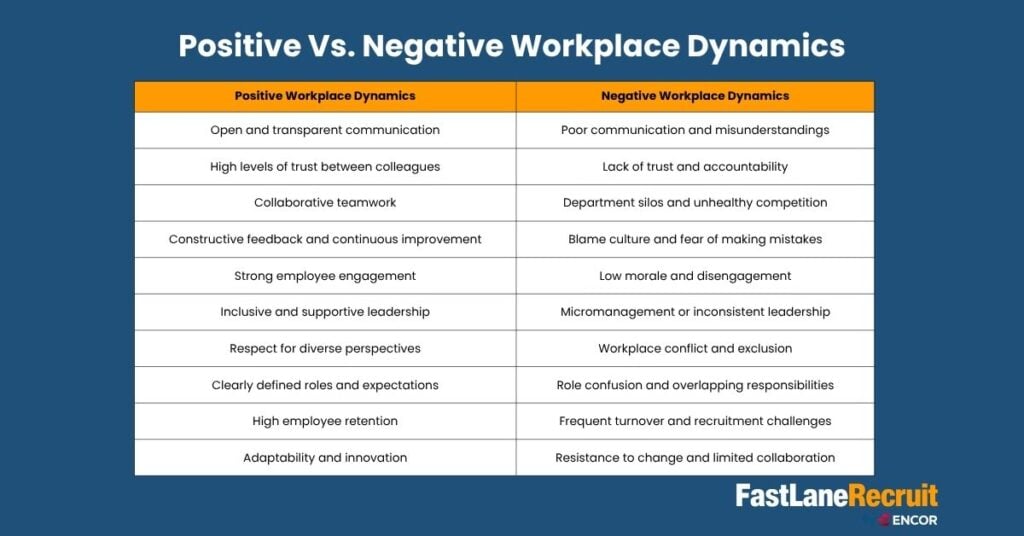
While no workplace is free from occasional disagreements, organizations with positive workplace dynamics address issues proactively through effective communication, supportive leadership, and continuous development. Businesses that recognize warning signs early can prevent small challenges from evolving into larger organizational problems.
A healthy workplace doesn’t happen by chance, it is built through intentional leadership, thoughtful hiring, and a culture that encourages employees to work together toward shared success.
How Workplace Dynamics Affect Business Performance
Workplace dynamics have a direct impact on how efficiently teams operate and how successfully businesses achieve their goals. While skills and technology are important, the relationships between employees often determine whether an organization can effectively execute its strategies.
Companies that prioritize healthy workplace dynamics benefit from stronger collaboration, better problem-solving, and improved employee performance. When employees feel respected and connected to their teams, they are more likely to contribute ideas, take ownership of their responsibilities, and remain committed to organizational goals.
Increased Employee Productivity
Employees perform better when they work in an environment built on trust, clear communication, and mutual support. Positive workplace dynamics reduce unnecessary conflicts and allow teams to focus their energy on achieving business objectives.
When employees understand their roles and collaborate effectively, projects can move faster, decision-making improves, and operational efficiency increases.
Higher Employee Engagement And Retention
Employee engagement is closely connected to workplace relationships and organizational culture. Employees who feel valued and supported are more likely to remain motivated and committed to their roles.
Poor workplace dynamics are often linked to dissatisfaction and employee turnover. High turnover creates additional recruitment costs, disrupts team performance, and affects overall business stability.
By creating a positive work environment and hiring employees who align with company values, businesses can improve retention and build stronger long-term teams.
Better Collaboration And Innovation
Diverse teams with healthy workplace dynamics are more likely to generate creative ideas and innovative solutions. When employees feel comfortable expressing different opinions, organizations benefit from broader perspectives and improved decision-making.
A workplace culture that encourages collaboration allows employees to combine their strengths and solve challenges more effectively.
Stronger Employer Brand
Workplace dynamics also influence how employees and candidates view a company. Organizations known for positive workplace culture often attract higher-quality talent because professionals increasingly consider company values, leadership style, and team environment when choosing employers.
A strong employer brand helps businesses compete for skilled professionals in competitive hiring markets.
Common Challenges That Affect Workplace Dynamics
Even successful organizations can experience workplace dynamic challenges as teams grow, business priorities change, or new employees join. Identifying these challenges early helps businesses maintain a productive and supportive environment.
Communication Gaps
Poor communication is one of the most common causes of unhealthy workplace dynamics. Misaligned expectations, unclear instructions, and limited feedback can create frustration among team members.
For businesses managing remote teams or offshore employees, communication becomes even more important. Establishing clear processes, collaboration tools, and regular check-ins helps maintain alignment across locations.
Lack Of Cultural Alignment
Hiring employees with strong technical skills does not always guarantee successful teamwork. Differences in working styles, values, or communication approaches can create challenges if employees struggle to adapt to the organization’s culture.
This is why businesses should consider cultural fit during recruitment. Finding candidates who share similar values and can collaborate effectively helps create stronger workplace relationships.
Leadership Challenges
Managers significantly influence workplace dynamics through their decisions, communication style, and ability to support employees.
Poor leadership practices, such as inconsistent expectations, limited recognition, or ineffective conflict management, can negatively impact team morale.
Organizations should invest in leadership development and ensure managers have the skills needed to create positive team environments.
Workplace Conflicts
Conflicts are a natural part of any organization, especially when teams include people with different backgrounds and perspectives. However, unresolved conflicts can damage relationships and reduce productivity.
Effective conflict resolution strategies, including open discussions, active listening, and fair problem-solving approaches, help maintain healthier workplace dynamics.
Difficulty Building Connected Remote Teams
As remote and hybrid work models become more common, businesses face new challenges in maintaining team connection and collaboration.
Employees working from different locations may experience reduced communication, weaker relationships, or feelings of isolation if companies do not actively create opportunities for engagement.
For organizations expanding internationally, building a connected team requires strategic hiring, structured onboarding, and ongoing employee support.
Also Read: Managing Remote Employees: Hire, Onboard & Lead Remote Teams Effectively
How To Improve Workplace Dynamics In Your Organization
Improving workplace dynamics requires a combination of effective people management, strong communication practices, and strategic hiring decisions. Businesses can strengthen team relationships by focusing on the following areas:
Hire Employees Who Match Your Company Culture
The foundation of strong workplace dynamics begins with hiring the right people. Beyond evaluating skills and experience, businesses should consider how candidates communicate, collaborate, and adapt to the organization’s working environment.
A recruitment partner can help businesses identify professionals who meet both technical requirements and cultural expectations, reducing hiring risks and improving long-term team performance.
Create Clear Communication Processes
Organizations should establish clear communication guidelines to ensure employees understand priorities, responsibilities, and expectations.
This is especially important for companies working with international teams. Defined communication channels, regular meetings, and transparent workflows help maintain alignment.
Encourage Feedback And Employee Recognition
Employees are more engaged when they feel their contributions are recognized. Regular feedback sessions, appreciation programs, and opportunities for growth can strengthen employee relationships and improve workplace satisfaction.
Invest In Team Development
Training, team-building activities, and professional development programs help employees build stronger connections while improving collaboration skills.
A workplace that supports continuous learning creates a culture where employees grow together.
Also Read: Recruitment Costs in 2026: The True Cost of Hiring and How Businesses Can Reduce It
Why Malaysia Is A Strategic Choice For Building High-Performing Teams
As businesses expand globally, choosing the right location to build and manage teams has become a critical decision. Companies need access to skilled professionals while maintaining operational efficiency, cultural alignment, and compliance with local employment regulations.
Malaysia has become an attractive destination for international businesses looking to establish teams, outsource operations, or hire remote professionals. With its skilled workforce, strong business infrastructure, multilingual talent pool, and competitive employment costs, Malaysia provides an ideal environment for companies seeking sustainable growth.
For organizations aiming to create positive workplace dynamics, Malaysia offers access to professionals who can integrate effectively with global teams while contributing diverse skills and perspectives.
Access To A Skilled And Diverse Talent Pool
Malaysia has a growing workforce with expertise across various industries, including technology, finance, customer support, digital marketing, administration, and business services.
Many Malaysian professionals are experienced in working with international companies and understand global business practices. This exposure helps employees adapt quickly to different workplace cultures, communication styles, and operational requirements.
By hiring the right talent in Malaysia, businesses can build teams that combine technical capability with strong collaboration skills—two essential elements of healthy workplace dynamics.
Strong English Communication Skills
Effective communication is one of the most important factors influencing workplace dynamics. Malaysia offers a workforce with strong English proficiency, making it easier for international companies to collaborate with Malaysian employees.
Clear communication reduces misunderstandings, improves teamwork, and allows employees across different locations to work together more efficiently.
For businesses managing regional or global operations, Malaysia’s communication advantages help create smoother team interactions and stronger workplace relationships.
Cost-Effective Workforce Expansion
Building an overseas team can help businesses access high-quality talent while optimizing operational costs. Malaysia provides competitive employment costs compared with many developed markets, allowing companies to scale efficiently without compromising talent quality.
By establishing teams in Malaysia, businesses can invest more resources into growth, innovation, and employee development while maintaining a productive workforce.
Business-Friendly Environment And Regional Connectivity
Malaysia’s strategic location in Southeast Asia makes it an attractive hub for businesses expanding across the region. Its developed infrastructure, digital capabilities, and business-friendly policies support companies looking to establish long-term operations.
For companies seeking to build international teams, Malaysia provides a practical balance between talent availability, cost efficiency, and operational stability.
How Employer Of Record (EOR) Services Support Better Workplace Dynamics In Malaysia
Expanding into a new country often involves complex employment requirements, including payroll management, compliance obligations, employee benefits, and local labor regulations. These challenges can create unnecessary administrative pressure for businesses trying to focus on team growth.
An Employer of Record (EOR) service allows companies to hire employees in Malaysia without establishing a local legal entity. The EOR provider becomes the official employer for compliance purposes while the business manages the employee’s daily work responsibilities.
Beyond simplifying employment processes, EOR services can support healthier workplace dynamics by helping businesses create structured, compliant, and well-managed teams.
Faster Access To Malaysian Talent
EOR services allow businesses to quickly hire qualified professionals in Malaysia without lengthy entity setup processes.
This enables companies to focus on finding the right candidates who match their skills requirements, company values, and team culture.
Simplified HR And Compliance Management
Managing employment regulations in another country can be challenging. An EOR partner handles essential employment responsibilities, including:
- Employment contracts
- Payroll administration
- Statutory contributions
- Employee benefits administration
- Local labor law compliance
By reducing administrative complexity, companies can dedicate more attention to employee engagement, communication, and team development.
Better Employee Experience
A smooth employment experience contributes to positive workplace dynamics. Employees who receive proper onboarding, accurate payroll processing, and compliant employment support are more likely to feel valued and secure.
A reliable EOR partner helps create a professional employee experience from the beginning, strengthening trust between employers and employees.
Supporting Remote And Global Teams
As businesses increasingly operate across borders, maintaining strong team connections is essential. EOR services provide the infrastructure needed to manage international employees while allowing businesses to maintain their preferred management style and company culture.
Build Stronger Workplace Dynamics With FastLaneRecruit
Creating a high-performing team starts with hiring the right people. While workplace culture, leadership, and communication influence team success, the foundation is always the talent within the organization.
FastLaneRecruit helps businesses build effective teams in Malaysia by connecting companies with skilled professionals who match their operational requirements and workplace culture.
Our recruitment approach focuses on more than technical qualifications. We help businesses identify candidates who can contribute positively to team collaboration, communication, and long-term growth.
How FastLaneRecruit Helps Businesses Build Global Teams Across Asia and the UAE
Expanding into international markets requires more than hiring talent. Businesses need a reliable workforce strategy, local market knowledge, and compliant employment solutions to build successful teams across different countries.
FastLaneRecruit helps companies hire and manage international employees through Employer of Record (EOR) services across Malaysia, Hong Kong, Singapore, China, Taiwan, and the United Arab Emirates (UAE). Our solutions enable businesses to access qualified talent, manage employment requirements, and expand globally without the complexity of setting up local entities.
With FastLaneRecruit, businesses can:
- Access skilled professionals in new markets without establishing a local company
- Build compliant teams while meeting local employment laws, payroll regulations, tax requirements, and statutory obligations
- Receive support with employment contracts, onboarding, payroll management, benefits administration, and HR processes
- Reduce the risks and administrative burden associated with international hiring
- Create scalable workforce solutions that align with business objectives and expansion plans
- Partner with a regional EOR provider with local expertise across multiple markets
Our approach focuses on understanding each business’s unique workforce needs, from hiring requirements and team structures to long-term growth goals. By providing localized support and end-to-end workforce management, FastLaneRecruit helps companies build teams that integrate effectively with their global operations.
Whether you are entering a new market, hiring overseas employees, or expanding your regional presence, FastLaneRecruit provides the expertise and infrastructure to simplify global workforce management.
How FastLaneRecruit Helps Businesses Build Better Teams
Access To Asia and UAE Talent
FastLaneRecruit specializes in connecting businesses with qualified professionals in Malaysia, Hong Kong, Singapore, China, Taiwan, and the United Arab Emirates (UAE), helping companies access a reliable talent pool for different operational needs.
Recruitment Based On Skills And Cultural Fit
Finding the right employee requires understanding both business requirements and workplace expectations. FastLaneRecruit helps identify candidates who align with your company’s values, communication style, and team environment.
Support For Business Expansion
Whether you are building a remote team, expanding operations, or hiring specialized professionals, FastLaneRecruit provides recruitment support to simplify the hiring process.
Building Teams That Strengthen Workplace Dynamics
The right employees do more than complete tasks, they contribute to collaboration, innovation, and a positive workplace culture. By hiring individuals who work well together, businesses can create teams that perform better and grow sustainably.
Conclusion: Build Strong Workplace Dynamics With The Right Talent Strategy
Workplace dynamics are one of the most important factors influencing how teams collaborate, communicate, and achieve business goals. A company can have advanced technology and strong processes, but without effective teamwork and positive employee relationships, long-term growth can become challenging.
Healthy workplace dynamics are built through a combination of strong leadership, open communication, shared values, and most importantly, hiring the right people. Employees who align with a company’s culture and working style are more likely to collaborate effectively, contribute new ideas, and remain committed to organizational success.
For businesses expanding into Malaysia, building the right team requires more than simply finding qualified candidates. Companies need employees who can integrate into their workplace culture while supporting productive and collaborative team environments.
With Malaysia’s skilled workforce, strong English communication capabilities, and business-friendly environment, it has become an attractive destination for companies looking to expand their teams. However, navigating recruitment and employment processes in a new market can be complex.
FastLaneRecruit helps businesses simplify talent acquisition across Malaysia, Hong Kong, Singapore, China, Taiwan, and the United Arab Emirates (UAE) by connecting them with skilled professionals who match their business requirements and workplace culture. Whether you are expanding your operations, building a remote team, or looking for reliable talent solutions, our recruitment expertise helps you create teams designed for long-term success.
Build stronger workplace dynamics by hiring the right people. Contact FastLaneRecruit to discover qualified talent and create a high-performing team that drives business growth.
Frequently Asked Questions About Workplace Dynamics
What Are Workplace Dynamics?
Workplace dynamics refer to the interactions, relationships, communication patterns, and behaviors between employees and teams within an organization. They influence collaboration, productivity, employee engagement, and overall workplace culture.
Why Are Workplace Dynamics Important?
Workplace dynamics directly impact team performance, employee satisfaction, and business success. Positive workplace dynamics improve communication, collaboration, innovation, and employee retention.
What Are Examples Of Positive Workplace Dynamics?
Examples include open communication, mutual trust, supportive leadership, effective teamwork, respect for different perspectives, and employees working together toward shared goals.
What Causes Poor Workplace Dynamics?
Poor workplace dynamics can result from unclear communication, ineffective leadership, lack of trust, workplace conflicts, unclear responsibilities, and hiring employees who do not align with company values.
How Can Companies Improve Workplace Dynamics?
Businesses can improve workplace dynamics by strengthening communication, encouraging feedback, investing in leadership development, creating a positive company culture, and hiring employees who are a good cultural fit.
How Does Hiring Affect Workplace Dynamics?
Hiring directly impacts workplace dynamics because employees influence team relationships, communication styles, and workplace culture. Recruiting candidates who match both technical requirements and company values helps create stronger teams.
Why Should Companies Hire Talent In Malaysia?
Malaysia offers a skilled and diverse workforce, competitive employment costs, strong English communication capabilities, and experience working with international businesses. These advantages make Malaysia a strategic location for companies expanding their teams.
What Is An Employer Of Record (EOR) In Malaysia?
An Employer of Record (EOR) allows companies to hire employees in Malaysia without setting up a local entity. The EOR provider manages employment responsibilities such as payroll, contracts, and compliance while the company manages daily employee operations.
Can FastLaneRecruit Help Build A Team In Malaysia?
Yes. FastLaneRecruit helps businesses find qualified professionals in Malaysia by providing recruitment solutions focused on skills, cultural fit, and long-term team success. Our goal is to help companies build balanced teams with strong workplace dynamics.