The Philippines continues to stand out as one of Southeast Asia’s fastest-growing talent markets. With over 120,000 active job vacancies and steady economic growth of around 5.6%, the country offers strong opportunities for companies looking to build and expand their teams.
According to data from the Philippine Statistics Authority and industry reports, sectors such as IT-BPM, healthcare, logistics, and digital services are driving hiring demand. Combined with a highly skilled, English-speaking workforce, the Philippines has become a strategic destination for global employers.
In this guide, we break down the top in demand jobs in the Philippines for 2026, along with hiring insights, industry trends, and practical strategies to help you access top talent.
Content Outline
Key Summary
Philippines Job Market Growth
The country offers 120,000+ active job vacancies with ~5.6% GDP growth, making it a prime destination for global hiring.
Top Industries Driving Demand
IT-BPM, healthcare, logistics, manufacturing, and digital services are leading job creation, offering strong opportunities for professionals.
High-Demand Roles in 2026
From software developers and data scientists to HR specialists and project managers, digital, operational, and healthcare roles are most sought after.
Skills That Employers Value
Candidates with technical expertise, business acumen, communication, problem-solving, and adaptability are highly preferred in the evolving market.
Remote & Flexible Work Trends
Hybrid and remote work models are rising, giving employers access to regional talent and allowing employees greater flexibility and work-life balance.
Regional Talent Hubs Matter
Cities beyond Metro Manila, like Cebu, Davao, and Clark, offer growing talent pools for IT, BPO, logistics, and other sectors.
Strategic Expansion into Malaysia
Global employers can diversify hiring by combining Philippines and Malaysia talent pools, accessing tech, finance, and regional management expertise efficiently.
Philippines Job Market Overview 2026
The Philippines job market in 2026 continues to show strong growth, making it an attractive destination for both job seekers and global employers. With a combination of economic stability, a growing digital economy, and a skilled workforce, the country is well-positioned as a key hiring hub in Southeast Asia.
Key Highlights
| Metric | What It Means |
| Active Job Vacancies (120,000+ roles) | There are thousands of open positions across industries, showing strong hiring demand and ongoing business expansion. |
| Economic Growth (~5.6% GDP growth) | The economy is steadily growing, which encourages companies to invest, expand, and hire more talent. |
| Key Industries | Sectors like IT-BPM, healthcare, logistics, and manufacturing are leading job creation and offering the most opportunities. |
| Talent Strength | The Philippines has a young, highly trainable workforce with strong English proficiency, making collaboration with global teams easier. |
| Work Trends | Remote and hybrid work models are becoming more common, allowing companies to hire talent from different regions more efficiently. |
Government support also plays a big role in shaping the job market. Agencies like the Department of Labor and Employment and Technical Education and Skills Development Authority continue to invest in workforce development, skills training, and digital transformation programs. These initiatives help ensure that talent in the Philippines remains competitive and ready for future job demands.
What Makes a Job In-Demand in the Philippines?
Not all jobs grow at the same pace. Certain roles become more valuable based on industry needs, technology changes, and economic trends. In the Philippines, several key factors are driving the rise of in demand jobs in the Philippines.
Key Drivers of Job Demand
1. Rapid Digital Transformation
Businesses across industries are adopting digital tools, automation, and online platforms. This increases demand for tech-related roles such as developers, data analysts, and cybersecurity professionals.
2. Growth of IT-BPM and E-commerce
The IT-BPM sector remains one of the largest employers in the country. At the same time, e-commerce continues to expand, creating more roles in customer support, logistics, and digital operations.
3. Rising Demand for Remote and Global Roles
More companies are building remote teams, allowing them to hire Filipino talent for roles in administration, marketing, tech, and support functions.
4. Infrastructure and Logistics Expansion
Ongoing infrastructure projects and supply chain growth are increasing demand for logistics professionals, engineers, and project managers.
5. Growing Healthcare Needs
Healthcare remains a priority, driving consistent demand for nurses, medical staff, and healthcare support professionals.
What Employers Are Looking For in 2026
To stay competitive, candidates are expected to bring a balanced mix of skills. Employers are not only hiring for technical ability but also for how well individuals can adapt and collaborate.
Technical Skills
- IT and software development
- Data analysis and artificial intelligence
- Cybersecurity and cloud systems
Business and Operational Skills
- Project management
- Process improvement
- Sales and marketing strategy
Soft Skills
- Clear communication (especially in global teams)
- Problem-solving and critical thinking
- Adaptability in fast-changing environments
In summary, high demand jobs in the Philippines are shaped by a mix of technology, global business needs, and local economic growth. For employers, understanding these trends makes it easier to identify the right talent and build strong, future-ready teams.
Also Read: Top 15 Medical Billing Companies in the Philippines
Top 10 In-Demand Jobs in the Philippines (2026)
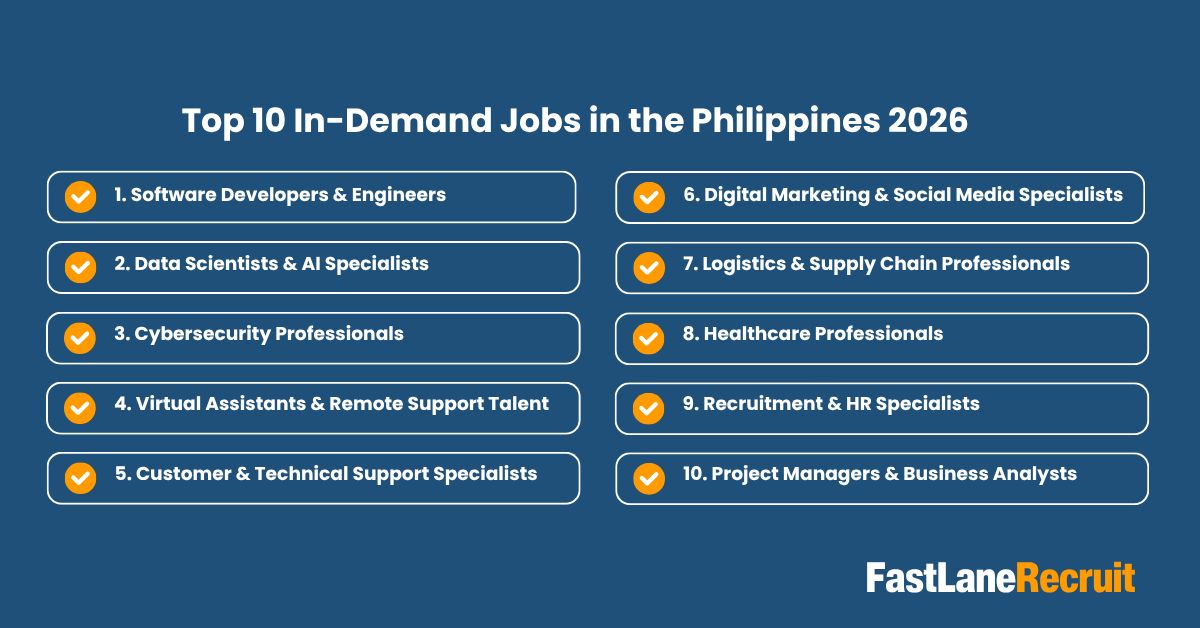
As industries continue to evolve, the demand for talent in the Philippines is becoming more diverse. From highly technical roles to business support functions, companies are actively hiring across multiple areas.
Below are the most in-demand jobs in the Philippines in 2026, based on job market data, industry growth, and employer hiring trends.
1. Software Developers & Engineers
Software developers are at the core of today’s digital economy. As businesses build websites, mobile apps, and internal systems, the need for skilled developers continues to grow.
They are responsible for designing, coding, testing, and maintaining software that supports business operations.
Common roles include:
- Front-end and back-end developers
- Mobile app developers
- Full-stack engineers
Why demand is high:
Digital transformation across industries means companies need reliable systems to operate and scale efficiently.
2. Data Scientists & AI Specialists
Data is now one of the most valuable business assets. Companies rely on data scientists and AI specialists to turn raw data into useful insights.
These professionals help businesses make smarter decisions, predict trends, and improve performance.
Key skills:
- Data analysis and visualization
- Machine learning
- Programming (Python, R)
Why demand is high:
Organizations are increasingly adopting data-driven strategies to stay competitive.
3. Cybersecurity Professionals
As businesses move online, protecting data has become a top priority. Cybersecurity professionals help prevent data breaches, cyberattacks, and system vulnerabilities.
Typical responsibilities:
- Monitoring systems for threats
- Implementing security measures
- Responding to security incidents
Why demand is high:
The rise in digital platforms and remote work increases the need for strong security systems.
4. Virtual Assistants & Remote Support Talent
The Philippines is well known for its strong remote workforce. Virtual assistants (VAs) provide essential support to businesses worldwide.
They handle a wide range of tasks, including:
- Administrative support
- Calendar and email management
- Social media and content support
Why demand is high:
Global companies are building remote teams and need flexible support roles to manage daily operations.
5. Customer & Technical Support Specialists
Customer support remains one of the largest employment sectors in the Philippines, driven by the strong IT-BPM industry.
These professionals assist customers by:
- Answering inquiries
- Resolving issues
- Providing technical assistance
Why demand is high:
Businesses prioritize customer experience, making support roles critical for retention and satisfaction.
6. Digital Marketing & Social Media Specialists
With the Philippines being one of the most active social media markets, companies are investing heavily in digital marketing.
Platforms like Facebook play a major role in reaching audiences and building brand presence.
Key responsibilities:
- Managing social media campaigns
- Search engine optimization (SEO)
- Content creation and performance tracking
Why demand is high:
Businesses need strong online visibility to attract and engage customers.
7. Logistics & Supply Chain Professionals
The growth of e-commerce and infrastructure projects has increased the need for logistics and supply chain professionals.
These roles ensure that goods and services move efficiently from one point to another.
Common roles:
- Warehouse managers
- Supply chain analysts
- Logistics coordinators
Why demand is high:
Efficient delivery systems are essential for business success, especially in online retail.
Also Read: Top 10 Software Outsourcing Companies in the Philippines
8. Healthcare Professionals
Healthcare remains a critical sector, with ongoing demand for skilled professionals such as nurses, medical assistants, and allied health workers.
Key responsibilities:
- Providing patient care
- Supporting medical procedures
- Managing healthcare services
Why demand is high:
An aging population and increased focus on health continue to drive hiring in this sector.
9. Recruitment & HR Specialists
As companies grow, the need to hire and manage talent becomes more important. Recruitment and HR specialists help organizations find the right people and build strong teams.
Responsibilities include:
- Sourcing and screening candidates
- Managing hiring processes
- Supporting employee engagement
Why demand is high:
Business expansion and global hiring trends require efficient talent acquisition strategies.
10. Project Managers & Business Analysts
Project managers and business analysts play a key role in ensuring that projects are completed successfully and business processes are optimized.
They help organizations:
- Plan and execute projects
- Improve workflows
- Align business goals with operations
Why demand is high:
Companies need structured processes and clear direction to stay competitive and achieve growth.
Quick Summary Table
| Job Role | Key Function | Why It’s In Demand |
| Software Developers | Build digital systems | Digital transformation |
| Data Scientists | Analyze data | Data-driven decisions |
| Cybersecurity | Protect systems | Rising cyber threats |
| Virtual Assistants | Remote support | Global remote hiring |
| Customer Support | Handle customer needs | Customer experience focus |
| Digital Marketers | Promote brands online | High social media usage |
| Logistics Professionals | Manage supply chains | E-commerce growth |
| Healthcare Workers | Provide care | Growing healthcare needs |
| HR Specialists | Manage hiring | Talent demand |
| Project Managers | Oversee projects | Business scaling |
This mix of roles shows that high demand jobs in the Philippines are not limited to just tech. Companies are hiring across digital, operational, and business functions to support long-term growth.
For global employers, understanding these roles makes it easier to build well-rounded teams that can support both day-to-day operations and future expansion.
In-Demand Industries in the Philippines
Based on job ad volume and growth trends:
| Industry | Demand Indicator |
| BPO / IT-Enabled Services | Highest job volume (~22%) |
| Public Services | Strong hiring demand |
| Education | Growing opportunities |
| IT & Software | Fastest growth (~57%) |
| Retail & Trade | Expanding workforce |
| Manufacturing | Stable growth |
| Banking & Finance | Increasing demand |
| Healthcare | Consistent need |
| Construction | Infrastructure-driven growth |
The IT and digital sectors continue to grow rapidly, supported by global demand and digital adoption.
Also Read: Top 15 International Payroll Services in the Philippines
Key Hiring Locations in the Philippines
| Region | Key Strengths |
| Metro Manila | Business hubs, finance, BPO |
| Cebu | IT-BPM and outsourcing |
| Davao | Emerging tech and services |
| Clark (Pampanga) | Logistics and infrastructure |
| Iloilo & Bacolod | Growing outsourcing hubs |
These regions provide access to diverse talent pools across industries.
Top Skills Employers Look For
Technical Skills
- Software development and programming
- Data analytics and AI
- Cybersecurity and cloud computing
- Digital marketing and SEO
Soft Skills
- Communication and teamwork
- Problem-solving
- Adaptability
- Project management
Platforms like LinkedIn are widely used to identify and engage skilled professionals in the Philippines.
The Rise of Remote Hiring in the Philippines
Remote work continues to reshape hiring strategies:
Benefits for Employers
- Access to a wider talent pool
- Improved workforce flexibility
- Reduced operational costs
Benefits for Employees
- Better work-life balance
- Access to global job opportunities
- Increased productivity
This trend strengthens the Philippines’ position as a global remote talent hub.
Practical Hiring Tips for Global Employers
Hiring in the Philippines and Southeast Asia comes with unique opportunities and challenges. Here are actionable strategies to attract, retain, and maximize the right talent for your organization:
1. Focus on Skills Over Degrees
While formal education is important, many candidates develop valuable expertise through certifications, online courses, bootcamps, or hands-on experience.
- Evaluate portfolios, work samples, or project outcomes rather than just academic credentials.
- Look for candidates who demonstrate problem-solving, adaptability, and practical knowledge relevant to your industry.
- This approach widens your talent pool and uncovers hidden gems who may bring fresh perspectives to your team.
2. Leverage Regional Talent Hubs
Metro Manila is a primary talent center, but other cities like Cebu, Davao, and Clark are growing rapidly with skilled professionals.
- Explore candidates from secondary cities to access diverse talent and potentially lower labor costs.
- Many professionals in regional hubs are open to remote or hybrid roles, increasing flexibility for global employers.
- Tapping into multiple regions reduces over-reliance on one location and strengthens workforce resilience.
3. Invest in Upskilling and Development
Building long-term talent pipelines ensures you have the right skills available when needed.
- Partner with local training institutions or online learning platforms to offer relevant courses for your industry.
- Offer in-house development programs or mentorship opportunities to upskill employees.
- Upskilling not only enhances productivity but also increases employee engagement and retention.
4. Adopt Flexible Work Models
Remote and hybrid work models are no longer optional; they are a major factor in attracting top talent.
- Provide flexibility in work hours and location to meet employee needs while maintaining productivity.
- Use digital collaboration tools to keep teams connected and workflows efficient.
- Companies that embrace flexible arrangements often see improved talent attraction and retention rates.
Also Read: Top 15 IT Companies in the Philippines
5. Use Trusted Local Recruitment Partners
Navigating local labor laws, compliance, and cultural nuances can be complex for international employers.
- Partner with reputable local recruitment firms or Employer of Record (EOR) services to streamline hiring.
- Local partners ensure your employment contracts, benefits, and payroll are compliant with regulations.
- Their expertise accelerates hiring timelines and reduces administrative burdens, allowing you to focus on business growth.
Bonus Tip: Prioritize Cultural Fit and Adaptability
Beyond skills and experience, look for candidates who can thrive in your company culture and adapt to evolving business needs.
- Conduct interviews that assess problem-solving, collaboration, and communication.
- Candidates who align with your organizational values are more likely to stay engaged and perform well long-term.
These practical tips help global employers attract the best talent in the Philippines, build scalable teams, and navigate hiring challenges efficiently.
Hiring Tip: Consider Malaysia as a Strategic Alternative
While the Philippines remains a top destination for hiring talent in Southeast Asia, many global companies are also expanding into Malaysia as part of a broader regional hiring strategy.
Instead of relying on a single market, businesses are increasingly building teams across multiple countries to improve flexibility, access a wider talent pool, and support long-term growth.
Why Malaysia?
Malaysia offers a strong combination of skilled talent, modern infrastructure, and a supportive business environment, making it a smart complement to hiring in the Philippines.
1. Strong Digital and Tech Talent Pool
Malaysia has a well-developed ecosystem for technology and digital roles. Companies can find talent in areas such as:
- Software development
- IT infrastructure and cloud computing
- Data analytics and cybersecurity
This makes it a strong option for building technical teams or supporting digital transformation initiatives.
2. Well-Developed Infrastructure
Malaysia is known for its reliable infrastructure, including:
- High-speed internet connectivity
- Modern office facilities
- Established business hubs like Kuala Lumpur and Penang
This supports smooth business operations, especially for companies managing regional or remote teams.
3. Business-Friendly Environment
The Malaysian government actively supports foreign investment and business expansion through:
- Clear regulatory frameworks
- Investment incentives
- Pro-business policies
This makes it easier for international companies to enter the market and scale their operations with confidence.
4. Strategic Location in Southeast Asia
Malaysia’s location makes it a central hub for companies expanding across Southeast Asia. It offers:
- Easy access to neighboring markets
- Strong trade and logistics connections
- Time zone alignment with other major Asian economies
This is especially useful for companies managing regional operations or serving clients across multiple countries.
Philippines + Malaysia: A Smarter Hiring Strategy
Rather than choosing one location over the other, many companies are combining both markets to build a more balanced workforce.
Example Strategy:
| Function | Philippines | Malaysia |
| Customer Support | Strong BPO talent | — |
| Virtual Assistants | Highly experienced | — |
| Tech & Development | Growing talent pool | Strong specialization |
| Regional Operations | — | Strategic hub |
| Finance & Compliance | — | Well-established ecosystem |
Key Benefits of a Dual-Market Approach
- Access to wider talent pools across different skill sets
- Improved business continuity by reducing reliance on one location
- Better scalability when expanding teams quickly
- Stronger regional presence in Southeast Asia
In today’s competitive hiring landscape, combining talent from the Philippines and Malaysia allows companies to build more resilient, flexible, and future-ready teams.
Also Read: Top 30 Business Consulting Firms in the Philippines
How FastLaneRecruit Helps You Hire in Malaysia
FastLaneRecruit’s Employer of Record (EOR) service in Malaysia specializes in helping global companies hire and manage talent in Malaysia without the complexity of setting up a local entity.
What FastLaneRecruit’s EOR Offers in Malaysia
1. Hire in Malaysia Without Setting Up a Local Entity
Entering a new market can be time-consuming and resource-intensive.
With FastLaneRecruit, you can:
- Hire employees in Malaysia quickly and legally
- Avoid the need to establish a local company
- Start operations faster with minimal setup
2. Ensure Full Compliance with Malaysian Labor Laws
Each country has its own employment regulations, and staying compliant is critical.
FastLaneRecruit ensures:
- Employment contracts meet Malaysian legal requirements
- Statutory contributions and benefits are properly managed
- Your business operates with reduced compliance risk
3. Simplify Payroll and HR Management
Managing payroll in a different country can be complex without local expertise.
FastLaneRecruit provides:
- Accurate and timely payroll processing
- Local HR support and guidance
- Proper handling of employee benefits and documentation
This allows your team to focus on performance and growth instead of administrative tasks.
Build a Stronger Southeast Asia Hiring Strategy
By combining hiring in the Philippines with expansion into Malaysia, companies can:
- Access a broader and more diverse talent pool
- Strengthen regional operations
- Improve scalability as business needs evolve
For example:
- Philippines → Customer support, virtual assistants, operations
- Malaysia → Tech roles, finance, regional management
A Smarter Way to Scale Your Team
FastLaneRecruit helps you go beyond single-market hiring by making it easier to establish and grow your presence in Malaysia.
Whether you are:
- Expanding your team beyond the Philippines
- Setting up a regional base in Southeast Asia
- Building a more balanced and scalable workforce
FastLaneRecruit provides the local expertise and support you need to move forward with confidence.
Also Read: Singapore Companies Hire Remote Employees from Malaysia
Conclusion
The Philippines remains one of the top destinations for global hiring in 2026, offering a strong combination of skilled talent, growing industries, and digital readiness.
From tech roles like software development and cybersecurity to operational roles in customer support and logistics, the range of in demand jobs in the Philippines continues to expand.
For global employers, the opportunity lies not just in hiring but in building a future-ready, scalable workforce. By combining talent strategies across the Philippines and markets like Malaysia, companies can unlock sustainable growth in Southeast Asia.
Start Expanding with Confidence
Hiring across Southeast Asia doesn’t have to be complicated. With the right partner, you can unlock new talent opportunities while staying compliant and efficient.
FastLaneRecruit is here to help you build your team in Malaysia, simply, quickly, and strategically. Contact us for a FREE consultation!