Hiring in Malaysia is becoming increasingly competitive, especially for local businesses competing for skilled Malaysian talent. In many sectors, employers are chasing the same candidate pool, making hiring speed, employer branding, and a clear recruitment strategy just as important as salary.
Across industries, Malaysian employers are facing several common hiring challenges:
- Rising salary expectations across key roles
- High employee movement and shorter job tenure
- Strong competition from multinational corporations (MNCs) and larger local companies
- Difficulty attracting and retaining experienced professionals
- Skills shortages in specialised and digital-focused positions
For many Malaysian SMEs and growing businesses, the challenge is not only filling vacancies, but attracting candidates who are the right long-term fit and can contribute to sustainable growth.
At the same time, employee priorities have changed.
While salary remains a major factor, it is no longer the only reason candidates accept or stay in a role. Today’s Malaysian workforce increasingly values:
- Work-life balance and flexible arrangements
- Career growth and upskilling opportunities
- Positive workplace culture and leadership
- Job stability and meaningful benefits
- Access to modern tools and efficient ways of working
This means employers can no longer rely on compensation alone. To compete effectively, businesses need a structured hiring and retention strategy that reflects current workforce expectations.
This guide provides a practical overview of:
- Salary benchmarks across major industries in Malaysia
- What Malaysian employees value most in 2026
- How do different generations approach work and career decisions
- Practical strategies to improve recruitment success and employee retention
For Malaysian employers hiring locally, understanding these market dynamics is essential to building teams that not only join the business but also stay engaged, perform well, and grow with the company.
Content Outline
Key Summary
Competitive Salary Still Matters Most
Salary remains a key driver of hiring success and employee retention in Malaysia. Employers should align pay with market benchmarks and offer structured bonuses.
Benefits Influence Retention Decisions
Medical coverage, EPF/SOCSO contributions, flexible leave, and wellness support can improve job satisfaction and reduce turnover.
Work-Life Balance Is a Major Priority
Flexible hours, hybrid work options, and manageable workloads are increasingly important to Malaysian employees across all generations.
Career Growth Helps Keep Top Talent
Employees are more likely to stay when companies offer clear promotion pathways, training opportunities, and long-term career development.
Industry Trends Shape Hiring Strategy
Sectors like technology, life sciences, and shared services have unique salary expectations and talent shortages that employers must understand.
Faster Hiring Wins Better Candidates
Long hiring cycles can cause employers to lose strong candidates. Streamlined recruitment processes improve hiring success and reduce vacancies.
Recruitment Partners Can Improve Outcomes
When hiring becomes slow or difficult, recruitment specialists can help businesses access better candidates faster and improve retention through stronger matching.
Salary & Benefits: Meeting Employee Expectations
In Malaysia, salary remains one of the most important factors influencing employee satisfaction, recruitment success, and long-term retention. While many employees prioritize competitive pay and benefits, employers often face challenges balancing rising expectations with business costs. When compensation falls below market expectations, businesses may experience higher turnover, lower morale, and difficulty attracting qualified candidates.
For Malaysian SMEs and growing companies, offering the right salary package is essential to remain competitive in the local hiring market.
Key Insights on Salary Expectations in Malaysia
Current workforce trends show that Malaysian employees are placing greater focus on fair pay, career growth, and financial recognition.
- Job-switching due to pay: Many employees are willing to explore new opportunities if annual increments or bonuses do not meet expectations.
- Expected salary increases: Candidates increasingly expect yearly salary adjustments that reflect inflation, skills growth, and market demand.
- Bonus expectations: Performance bonuses, festive bonuses, and annual incentives continue to play an important role in overall compensation satisfaction.
- Benefits matter more than ever: Medical coverage, leave flexibility, and career development support can strongly influence job decisions.
These trends show that offering only a basic monthly salary is no longer enough. Malaysian employers need a well-rounded compensation strategy that combines pay, benefits, and progression opportunities.
Sectoral Salary Benchmarks in Malaysia (2026 Estimates)
| Industry | Entry-Level (MYR/month) | Mid-Level (MYR/month) | Senior-Level (MYR/month) |
| Technology | 3,500 – 5,000 | 6,000 – 9,000 | 12,000 – 18,000 |
| Sales & Marketing | 2,500 – 4,000 | 5,000 – 8,000 | 10,000 – 15,000 |
| Life Sciences | 3,800 – 5,500 | 6,500 – 9,500 | 13,000 – 20,000 |
| HR & Administration | 2,800 – 4,500 | 5,500 – 8,000 | 9,500 – 14,000 |
These salary benchmarks reflect increasing competition for skilled Malaysian talent, particularly in specialised and fast-growing sectors. Employers offering below-market packages may face longer hiring timelines and stronger counteroffers from competitors.
How Malaysian Employers Can Bridge the Salary Gap
Offering a competitive salary is important, but retention usually depends on the full employee experience. Businesses that combine fair pay with a strong workplace environment are more likely to keep top performers.
Structured Bonus Systems
Introduce transparent bonus schemes tied to performance, business goals, or tenure. Clear reward systems help improve motivation and trust.
Regular Salary Reviews
Review salaries annually against Malaysia market benchmarks to ensure competitiveness and recognise employee growth.
Comprehensive Employee Benefits
Strengthen total compensation through medical coverage, allowances, EPF/SOCSO contributions, flexible leave, and wellness support.
Recognition and Career Growth
Many employees value advancement opportunities as much as salary. Provide training, promotions, mentorship, and skill development pathways.
Positive Workplace Culture
Supportive leadership, healthy communication, and work-life balance can significantly improve retention without major cost increases.
Why This Matters for Malaysian Businesses
For local companies hiring in Malaysia, compensation strategy is no longer just an HR issue, it is a business growth priority. Employers that align salary packages with market expectations while creating a strong employee experience will be better positioned to attract talent, reduce turnover, and build stable high-performing teams.
Also Read: Recruitment Agencies in Malaysia: Guide to Local Recruitment
Work-Life Balance: A Key Driver of Employee Retention
In 2026, work-life balance has become one of the most important factors influencing employee engagement, job satisfaction, and retention in Malaysia. While salary remains a major consideration, many employees now place equal value on flexibility, manageable workloads, supportive leadership, and a healthy work environment.
For Malaysian SMEs and growing businesses, this shift is important. Companies that support employee wellbeing often experience stronger retention, better productivity, and improved morale. Employers that ignore these expectations may face higher turnover, even when offering competitive salaries.
Generational Insights on Work-Life Balance in Malaysia
Different workforce groups may prioritise work-life balance in different ways, but the overall expectation is clear: employees want workplaces that support both performance and personal wellbeing.
| Generation | Key Priority | Impact on Retention | Example |
| Gen Z | Positive culture and teamwork | More likely to stay in collaborative environments | Young employees often value supportive managers, learning opportunities, and a friendly workplace culture. |
| Millennials | Flexibility and balance | Higher engagement when flexible arrangements are available | Employees with family or personal commitments often appreciate hybrid work or flexible hours. |
| Gen X | Stability and manageable workload | Lower turnover when workloads are realistic | Experienced professionals often remain loyal to employers who respect boundaries and provide job security. |
These trends show that while motivations differ, flexibility, fair workload distribution, and positive management are strong retention drivers across all age groups.
Practical Work-Life Balance Strategies for Malaysian Employers
Introduce Flexible Working Hours
Where operationally possible, allow flexibility in start and finish times. This helps employees manage commuting, family needs, and productivity preferences.
Example: A business may set core working hours while allowing staff flexibility outside those hours.
Offer Hybrid or Remote Options Where Suitable
For roles that do not require constant on-site presence, hybrid arrangements can improve satisfaction and widen talent attraction.
Example: Administrative, marketing, finance, and digital roles may benefit from partial remote work arrangements.
Monitor Workloads to Prevent Burnout
Regularly review staffing levels, deadlines, and workload distribution. Employees who feel consistently overloaded are more likely to disengage or resign.
Example: Weekly manager check-ins can help identify pressure points early and rebalance responsibilities.
Build a Positive Team Culture
Strong workplace relationships often improve loyalty. Encourage open communication, peer recognition, and team collaboration.
Example: Monthly team sessions, internal recognition programmes, or cross-department projects can improve morale.
Include Work-Life Balance in Retention Planning
Retention is stronger when flexibility is combined with fair salaries, benefits, and growth opportunities.
Example: Businesses that pair competitive pay with flexible arrangements often see stronger employee loyalty and lower hiring replacement costs.
Why It Matters for Malaysian Businesses
For companies hiring locally in Malaysia, work-life balance is no longer a “nice-to-have” benefit. It is a practical business strategy that helps attract skilled talent, improve engagement, and reduce staff turnover.
Employers that combine competitive salaries with flexibility, manageable workloads, and supportive leadership are more likely to build stable, motivated teams that perform well over the long term.
Also Read: Contract vs Permanent Employment in Malaysia
Industry Hiring Trends in Malaysia: What Employers Need to Know
Understanding industry-specific hiring trends is essential for Malaysian companies looking to attract and retain local talent. Each sector faces different recruitment challenges, salary expectations, and employee priorities. Employers who align their hiring strategy with sector trends are often better positioned to secure quality candidates and reduce turnover.
Life Sciences: Growing Demand for Skilled Talent in Malaysia
Malaysia’s life sciences sector continues to expand, supported by growth in healthcare services, pharmaceuticals, medical devices, biotechnology, and research-related activities.
Key Hiring Challenges
- Shortage of experienced professionals in regulatory, R&D, quality assurance, and technical roles
- Rising salary expectations for specialised candidates
- Strong competition for candidates with niche certifications or industry experience
- Higher demand for career progression and skills development opportunities
Effective Retention Strategies
Employers in this sector can improve retention by offering:
- Clear career pathways and promotion opportunities
- Technical training and professional certification support
- Exposure to cross-functional projects
- Competitive salaries aligned with market demand
- Strong leadership and employee recognition programmes
Example: A Malaysian healthcare or biotech company that supports employee training and internal promotion is more likely to retain experienced staff than one focused only on base salary.
Technology and Shared Services: Talent Competition Remains Strong
Malaysia’s technology, digital services, and shared services sectors continue to face intense competition for skilled professionals. Demand remains high for candidates in software development, IT infrastructure, cybersecurity, data analytics, finance operations, and digital marketing.
Key Hiring Challenges
- Ongoing shortage of experienced digital talent
- Faster employee movement due to multiple job opportunities
- High expectations for salary increments and flexible working arrangements
- Competition from larger employers with stronger brand recognition
Effective Retention Strategies
To stay competitive, Malaysian employers should focus on:
- Upskilling programmes in AI, analytics, automation, and digital tools
- Clear career growth opportunities
- Hybrid or flexible working arrangements where suitable
- Performance-based bonuses and competitive benefits
- Strong team culture and supportive management
Example: A shared services company that invests in employee training, flexible work options, and internal progression pathways can improve retention and attract stronger candidates.
Why Industry Trends Matter for Malaysian Employers
Different industries require different hiring approaches. Candidates in specialised sectors may prioritise salary and career growth, while others may place greater emphasis on flexibility, culture, or job stability.
For Malaysian SMEs and local businesses, understanding these differences helps to:
- Build more competitive job offers
- Reduce hiring delays
- Improve employee retention
- Allocate salary budgets more effectively
- Strengthen long-term workforce planning
Also Read: Hybrid And Remote Work Trends in Malaysia
How Malaysian Employers Can Improve Hiring and Retention Outcomes
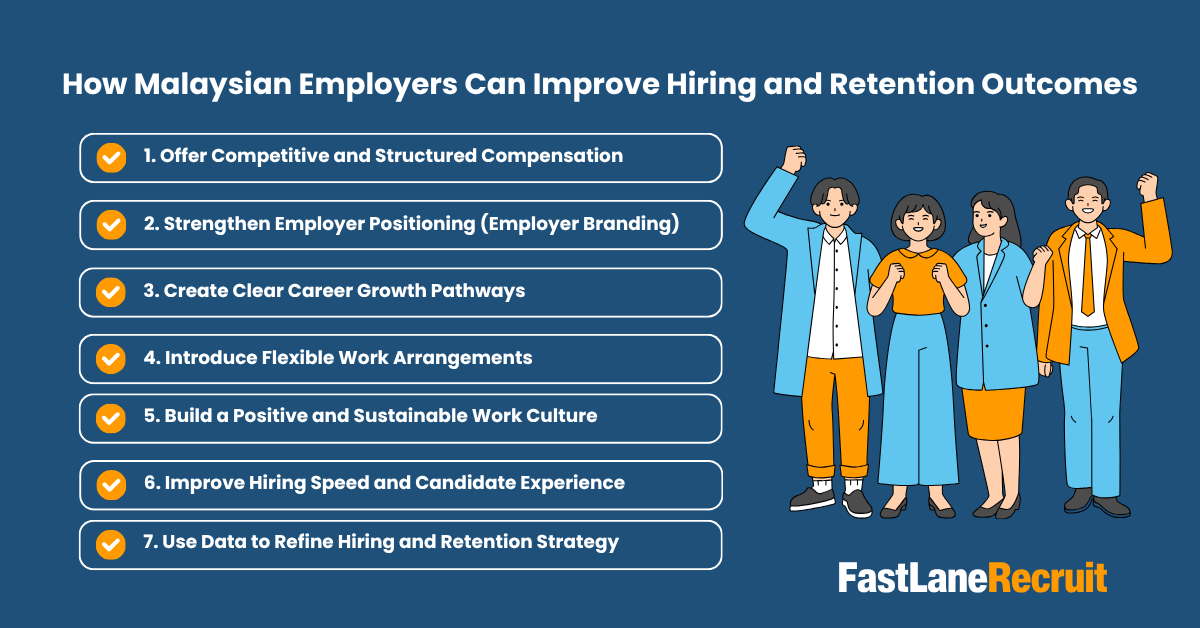
Retention challenges often begin at the hiring stage. Companies that improve how they recruit, onboard, and develop employees usually achieve stronger long-term retention outcomes.
In today’s Malaysia job market, hiring success is no longer just about offering a competitive salary. Candidates are also evaluating workplace culture, leadership quality, flexibility, learning opportunities, and long-term career potential.
To stay competitive, Malaysian employers need a structured hiring and retention strategy that combines compensation, employee experience, and career development.
1. Offer Competitive and Structured Compensation
Salary remains the foundation of any successful hiring strategy. If compensation is below market expectations, employers may struggle to attract quality candidates or face higher resignation rates.
Employers should ensure that:
- Basic salary aligns with current Malaysia market benchmarks
- Bonus structures are transparent and performance-based
- Benefits such as medical coverage, allowances, EPF/SOCSO, and leave entitlements are clearly structured
- Salary reviews are conducted regularly based on performance and market movement
Example: Companies that implement transparent bonus systems and annual salary reviews often experience higher employee satisfaction and lower turnover.
2. Strengthen Employer Positioning (Employer Branding)
In Malaysia, candidates are increasingly selective about where they work. They often research a company before accepting an offer.
Candidates commonly evaluate:
- Company culture
- Leadership quality
- Career progression opportunities
- Workplace flexibility
- Reputation and employee reviews
Employers that communicate their values, growth plans, and employee success stories often attract stronger applicants.
Example: A company that highlights internal promotions, training opportunities, and team culture can build stronger credibility in the hiring market.
3. Create Clear Career Growth Pathways
A common reason employees leave is the lack of progression or development opportunities.
To improve retention, employers should:
- Define promotion criteria and career pathways
- Offer training, mentorship, and upskilling programmes
- Provide exposure to new responsibilities or cross-functional projects
- Conduct regular performance and development discussions
Example: A marketing executive who sees a clear path to senior or managerial roles is more likely to stay and grow with the company.
4. Introduce Flexible Work Arrangements
Work-life balance has become a major differentiator in attracting and retaining talent.
Where suitable, companies can offer:
- Hybrid working arrangements
- Flexible working hours
- Output-based performance management
- Reasonable workloads and realistic deadlines
These practices can improve morale, productivity, and long-term loyalty.
Example: Employers that allow flexibility for family commitments or commuting challenges often see stronger employee engagement.
5. Build a Positive and Sustainable Work Culture
Culture has a direct impact on retention. Employees are more likely to remain in organisations where they feel respected, supported, and valued.
Employers should focus on:
- Open communication between leadership and staff
- Recognition for strong performance and contributions
- Fair and respectful management practices
- Inclusive teamwork and collaboration
- Consistent feedback and employee listening channels
Example: Businesses with strong recognition programmes and supportive managers often retain talent more effectively than companies relying on salary alone.
6. Improve Hiring Speed and Candidate Experience
Strong candidates are often hired quickly. Slow or unclear hiring processes can lead to lost talent.
Employers should aim to:
- Reduce unnecessary interview stages
- Communicate timelines clearly
- Provide prompt feedback
- Keep offers competitive and timely
- Create a smooth onboarding experience after acceptance
Example: A company that moves efficiently from interview to offer is more likely to secure top candidates before competitors do.
7. Use Data to Refine Hiring and Retention Strategy
Tracking workforce trends helps businesses make better hiring decisions.
Useful metrics include:
- Time-to-hire
- Offer acceptance rate
- New hire turnover rate
- Employee engagement levels
- Reasons for resignation
By reviewing these insights regularly, employers can identify issues early and improve workforce planning.
Also Read: Top 15 SEO Companies in Malaysia
AI & Digital Upskilling: Empowering Employees and Driving Retention
In 2026, AI and digital skills are no longer limited to technology teams. They are increasingly valuable across many functions in Malaysia, including finance, HR, marketing, customer service, operations, and administration.
From automating repetitive tasks to improving reporting and decision-making, digital tools are changing how businesses operate. For Malaysian employers, investing in AI and digital upskilling can improve productivity, strengthen employee engagement, and support long-term retention.
Companies that fail to develop digital capabilities may struggle to remain competitive in attracting and retaining talent.
Why AI and Digital Upskilling Matter for Malaysian Employers
Boosts Efficiency and Productivity
Digital tools can automate manual and repetitive tasks, allowing employees to focus on higher-value responsibilities.
Example: A finance team using automated reporting tools can complete monthly reports faster, reduce errors, and improve workload efficiency.
Improves Problem-Solving and Decision-Making
Employees with digital skills can analyse information faster, identify trends, and make more informed business decisions.
Example: A marketing team using analytics tools can optimise campaigns more quickly and improve return on budget spend.
Supports Career Growth and Retention
Many employees value employers who invest in learning and development. Upskilling opportunities can improve loyalty and reduce turnover.
Example: Staff offered training in analytics, automation, or AI tools may be more motivated to stay with an employer that supports career progression.
Builds a More Adaptable Workforce
Businesses with digitally capable teams are often better prepared for market changes, process improvements, and operational challenges.
Example: Companies that train staff across departments in digital tools can improve collaboration and reduce over-reliance on a few specialists.
Practical Ways Malaysian Companies Can Upskill Employees
Provide AI and Digital Training Programmes
Offer workshops, internal training sessions, or online courses covering tools relevant to each department.
Examples may include:
- AI productivity tools
- Spreadsheet automation
- Data visualisation tools
- CRM and ERP systems
- Project management software
- Digital marketing platforms
Encourage Hands-On Learning
Training is most effective when employees can apply new skills in real work situations.
Example: Assign small automation or reporting improvement projects after training sessions.
Promote Cross-Functional Collaboration
Allow teams to share knowledge across departments so digital best practices spread throughout the organisation.
Example: Finance teams can share reporting automation methods with operations or HR teams.
Introduce Mentorship and Peer Learning
Employees often learn quickly from colleagues already confident with digital tools.
Example: Pair experienced team members with staff who need additional support.
Recognise Innovation and Improvement
Reward employees who use digital tools to improve processes, save time, or increase service quality.
Example: Recognising workflow improvements can encourage wider adoption across the business.
Why This Helps Hiring and Retention in Malaysia
Candidates increasingly look for employers that support professional growth and modern ways of working. Businesses known for developing employee skills often gain an advantage in recruitment.
For Malaysian SMEs, digital upskilling can also help compete with larger employers by offering valuable learning opportunities even when salary budgets are tighter.
Also Read: Top 15 IT Consulting Companies in Malaysia
Common Hiring Challenges Faced by Malaysian Employers
Many Malaysian companies are not facing a shortage of applicants alone, they are also dealing with hiring inefficiencies that make it harder to secure and retain the right talent.
In a competitive labour market, delays, unclear offers, and poor hiring decisions can increase recruitment costs, disrupt operations, and slow business growth.
1. Long Hiring Cycles
Roles often remain open for extended periods because of slow internal processes, delayed approvals, too many interview stages, or inconsistent follow-up with candidates.
When hiring takes too long, strong candidates may accept competing offers first.
Impact on business:
- Productivity gaps within teams
- Increased workload for existing staff
- Lost candidates to faster-moving employers
- Delayed project delivery or expansion plans
2. Mismatch Between Salary Expectations and Budgets
Many employers face challenges balancing hiring budgets with rising salary expectations in Malaysia’s job market.
Candidates are increasingly aware of market rates and may decline offers that fall below expectations, especially for in-demand skills.
Common issues include:
- Outdated salary ranges
- Limited flexibility during negotiations
- Benefits packages that do not add enough value
- Lack of benchmarking against current market rates
3. High Early-Stage Turnover
Some employees leave within the first 6 to 12 months because of poor role fit, unrealistic expectations, weak onboarding, or limited support after joining.
This creates repeated hiring costs and team disruption.
Common causes:
- Job scope differs from interview expectations
- Lack of training or onboarding structure
- Weak management support
- Better offers received shortly after joining
4. Limited Access to Qualified Candidates
Many businesses rely only on basic job postings or passive hiring methods, which may not reach the most suitable candidates.
This is especially common for specialised, mid-level, or urgently needed roles.
Challenges include:
- Limited employer brand visibility
- Narrow sourcing channels
- Low response rates from quality candidates
- Difficulty attracting experienced talent
5. Weak Candidate Experience
Candidates often judge employers by the hiring process itself. Poor communication, long silence periods, unclear timelines, or disorganised interviews can damage employer reputation.
A weak candidate experience may cause applicants to withdraw even when interested in the role.
6. Retention Problems That Start During Hiring
Retention issues often begin before an employee joins. If the hiring process does not properly assess fit, communicate expectations, or present a realistic view of the role, turnover risk increases later.
Hiring the wrong fit is often more expensive than taking slightly longer to hire the right one.
How Malaysian Employers Can Address These Challenges
To improve results, companies need a more structured recruitment approach focused not only on filling vacancies quickly, but hiring the right people for long-term success.
Key priorities include:
- Reviewing salary benchmarks regularly
- Streamlining interview and approval processes
- Improving job descriptions and role clarity
- Expanding sourcing channels
- Strengthening onboarding and early employee support
- Prioritising cultural and long-term fit, not just availability
Also Read: Top 15 Medical Billing Companies in Malaysia
When to Engage a Recruitment Partner in Malaysia
Many hiring challenges do not come from a lack of candidates alone, they often come from how the hiring process is structured, managed, and executed.
While some vacancies can be filled successfully through internal hiring efforts, there are situations where engaging a recruitment partner becomes a strategic business decision that helps improve hiring speed, candidate quality, and long-term retention.
For Malaysian SMEs and growing businesses, external recruitment support can be especially valuable when internal resources are limited or hiring needs become more urgent.
1. When Hiring Takes Too Long
If important roles remain open for extended periods, it often signals process gaps such as:
- Limited access to qualified candidates
- Slow screening or interview coordination
- Delays in decision-making
- Low response rates from applicants
Long hiring timelines can affect operations, sales performance, customer service, and team productivity.
A recruitment partner can help by:
- Accelerating candidate sourcing
- Pre-screening suitable applicants
- Coordinating interviews efficiently
- Reducing overall time-to-hire
2. When There Is a Gap Between Salary Expectations and Budget
In Malaysia’s current labour market, salary mismatches are common. Candidates are more aware of market rates and may decline offers that do not meet expectations.
Without updated market insight, employers may:
- Under-offer and lose quality candidates
- Overpay without proper benchmarking
- Structure benefits packages ineffectively
- Face repeated offer rejections
A recruitment partner can provide:
- Current salary benchmarks by role and industry
- Hiring market insights
- Guidance on competitive offer structuring
- Realistic expectations based on candidate demand
This helps employers make faster and better-informed hiring decisions.
3. When Internal Teams Cannot Reach the Right Talent Pools
Posting vacancies on job portals alone is not always enough, especially for experienced, specialised, or management roles.
Many strong candidates may be:
- Not actively applying for jobs
- Selective about opportunities
- Open only to confidential outreach
- Already employed but willing to move for the right role
A recruitment partner can widen access through:
- Pre-qualified candidate networks
- Direct sourcing strategies
- Targeted outreach campaigns
- Industry-specific talent pipelines
This often improves both candidate quality and hiring success rates.
4. When Retention Becomes a Recurring Problem
High turnover is often a symptom of deeper hiring issues such as:
- Poor role fit
- Misaligned expectations
- Weak screening processes
- Inaccurate job scope communication
- Hiring based only on urgency
Hiring faster does not solve retention problems, hiring better usually does.
A strong recruitment process focuses on:
- Clear role definition
- Skills and culture fit assessment
- Candidate motivation checks
- Long-term alignment between employer and employee
This can lead to stronger retention outcomes and more stable teams.
5. When Scaling Requires Consistency and Speed
As Malaysian businesses grow, hiring needs often become:
- More frequent
- More specialised
- More urgent
- Harder to manage internally alongside daily operations
Relying only on internal hiring resources may create bottlenecks.
A recruitment partner can support growth by providing:
- Scalable hiring support
- Faster shortlisting and placement
- Consistent candidate quality
- Support across multiple vacancies or departments
This allows businesses to scale without compromising hiring standards.
6. When Internal HR Capacity Is Limited
Many SMEs have lean HR teams managing payroll, employee relations, compliance, and administration. Recruitment may compete with other priorities.
External hiring support can reduce workload by handling:
- Candidate sourcing
- Screening and shortlisting
- Interview scheduling
- Market benchmarking
- Offer-stage coordination
This allows internal teams to stay focused on core people operations.
Also Read: Top 15 Digital Marketing Companies in Malaysia
Conclusion
The hiring landscape in Malaysia has changed.
Employers are no longer just competing on salary; they are competing on:
- Flexibility
- Career growth
- Workplace culture
- Overall employee experience
Companies that fail to adapt may face the following:
- Higher turnover
- Longer hiring cycles
- Increased recruitment costs
On the other hand, businesses that take a structured approach to hiring and retention can build teams that are more stable, engaged, and productive.
Strengthen Your Hiring Process with FastLaneRecruit
Hiring the right talent is not just about filling vacancies; it is about building a team that performs, grows, and stays with your business long term.
FastLaneRecruit helps Malaysian companies improve hiring outcomes through a more strategic and efficient recruitment process.
We support businesses to:
- Access qualified candidates faster
- Reduce time-to-hire and minimise hiring delays
- Improve candidate quality through better role matching
- Strengthen long-term retention with the right hires from the start
- Reduce hiring uncertainty with market insights and structured support
Whether you are replacing key talent, scaling your team, or facing recurring turnover challenges, the right recruitment approach can make a measurable difference.
Ready to Hire Smarter?
Let FastLaneRecruit help you find the right people faster and build a stronger team for long-term growth in Malaysia. Contact FastLaneRecruit today to discuss your hiring needs.