
Step-by-Step Guide for Global Employers
Building a software development team in Malaysia can unlock access to a skilled, cost-competitive talent base, modern infrastructure, and strong English proficiency. However, managing offshore teams comes with challenges: time zone differences, cultural nuances, communication gaps, and compliance requirements.
This guide provides a step-by-step approach for global companies to successfully manage Malaysian software development teams. Whether you’re hiring directly or using an Employer-of-Record (EOR) solution like FastLaneRecruit, these strategies help maximize productivity, maintain quality, and ensure compliance.
Content Outline
Key Summary
Malaysia Offers Strong Tech Talent
Malaysia provides skilled, English-proficient developers across web, mobile, cloud, and data, making it an ideal offshore development hub.
Cost Efficiency Supports Faster Scaling
Businesses can hire quality developers at competitive rates, enabling more budget flexibility for team expansion and technology investment.
Clear Expectations Improve Collaboration
Defining roles, deliverables, coding standards, and reporting structures upfront helps avoid miscommunication and ensures aligned workflows.
Communication Tools Keep Teams Aligned
Using structured channels, Slack, Zoom, Jira, combined with clear response rules and asynchronous updates ensures smooth daily collaboration.
Documentation & Code Reviews Maintain Quality
Centralized documentation, consistent coding standards, and regular PR reviews help prevent rework, reduce errors, and support knowledge sharing.
Time Zone & Cultural Awareness Boost Productivity
Managing overlapping hours, using async tools, and respecting work styles improves team cohesion and reduces delays.
EOR Services Simplify Compliance for Global Teams
An Employer of Record like FastLaneRecruit handles payroll, tax, EPF/SOCSO, and legal requirements, allowing companies to focus on product delivery.
Why Malaysia Is an Ideal Destination for Offshore Development
Malaysia is also becoming a preferred location for companies looking to hire Malaysian developers, build offshore development teams, or explore Malaysia software outsourcing models due to its talent quality and competitive cost structure.
1. High-Quality Talent Pool
Malaysia produces thousands of IT graduates every year from universities and technical institutions. These professionals have expertise in a wide range of technologies, including web development, mobile apps, cloud computing, and data analytics. In addition, many Malaysian developers are fluent in English, making communication with international teams smooth and efficient. This strong talent pool ensures that companies can hire skilled professionals who can contribute effectively from day one.
2. Cost Advantages
Compared to hiring in North America, Europe, or even some parts of Asia, Malaysia offers highly competitive salaries for software developers. This cost efficiency allows businesses to scale their teams faster without compromising on quality. Companies can allocate budget to additional hires, training, or technology investments while still keeping overall project costs manageable.
3. Strong Infrastructure
Major Malaysian cities like Kuala Lumpur, Penang, and Johor Bahru are established tech hubs with reliable internet connectivity, modern office spaces, and coworking facilities. These cities also have a growing ecosystem of tech startups, incubators, and innovation centers, making it easy for offshore teams to stay up-to-date with the latest tools, processes, and trends.
4. Regulatory Clarity and Compliance
Malaysia’s employment laws are well-documented and transparent, covering areas like working hours, leave entitlements, minimum wage, and termination rules. Statutory contributions such as the Employees Provident Fund (EPF), Social Security Organisation (SOCSO), and Employment Insurance System (EIS) are clearly defined, helping companies comply with local regulations and avoid legal issues.
For foreign companies, navigating these requirements can be challenging. Using an Employer-of-Record (EOR) simplifies the process by allowing businesses to legally employ staff without having to set up a local entity. FastLaneRecruit, for example, manages payroll, taxes, statutory contributions, and compliance on your behalf. This way, your company can focus on managing your offshore team effectively and driving product development, while the EOR ensures that all legal and administrative obligations are met.
Also Read: Outsourcing IT Support Specialists: Cost Savings & Service Quality
Step-by-Step Guide to Managing Offshore Teams in Malaysia
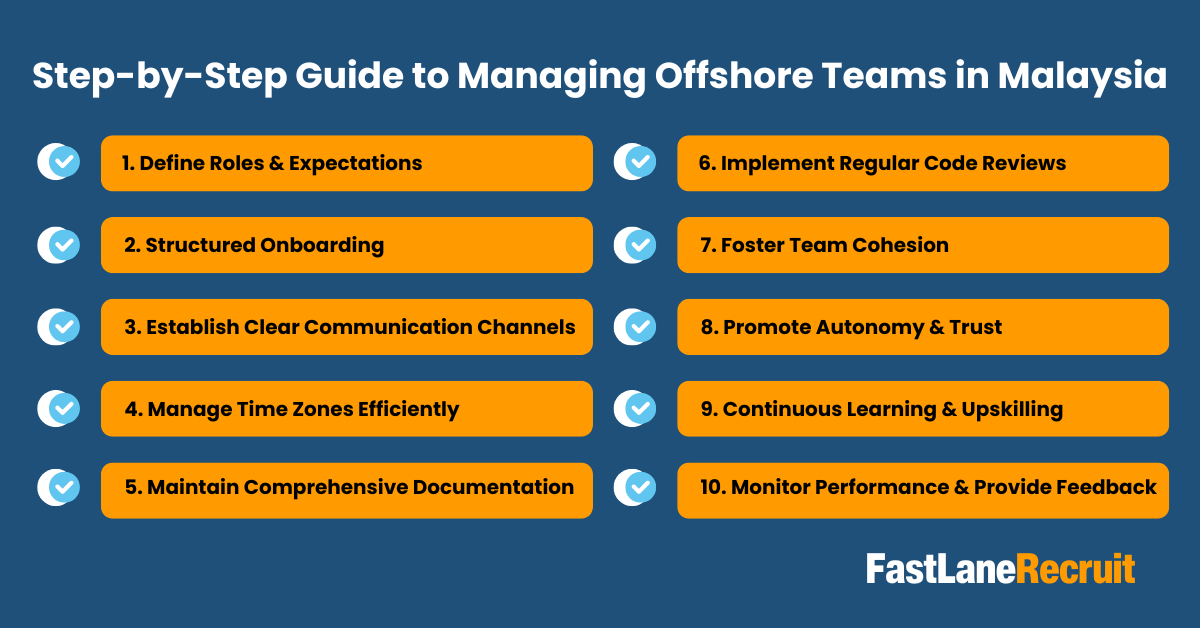
1. Define Roles & Expectations
Before starting any project, it’s crucial to clearly outline each team member’s responsibilities, expected deliverables, deadlines, and coding standards. Establishing a reporting structure ensures everyone knows who to approach for questions or approvals.
Tip: Document all of this in a shared format such as Confluence or Google Docs. Clear expectations help prevent misunderstandings and provide a solid foundation for smooth collaboration.
2. Structured Onboarding
A strong onboarding process helps offshore developers integrate quickly into your workflows and company culture. Introduce the team to essential tools, communication protocols, internal processes, and key contacts.
Tip: Consider short onsite visits or virtual workshops for team introductions and practical demonstrations. Good onboarding fosters trust, builds engagement, and accelerates productivity from day one.
3. Establish Clear Communication Channels
Effective communication is the backbone of offshore team management. Use platforms like Slack or Microsoft Teams for daily chat, Zoom for meetings, and project management tools such as Jira or Trello to track tasks and deadlines.
Tip: Set clear expectations for response times and balance real-time meetings with asynchronous updates. Tools like Otter.ai can capture meeting notes and transcripts, improving efficiency and reducing misunderstandings.
4. Manage Time Zones Efficiently
Time zone differences can create workflow lag due to time zone gaps if not managed thoughtfully. Schedule critical meetings during overlapping hours, and rely on asynchronous tools like Loom or task trackers when live interactions aren’t possible.
Tip: Use scheduling tools like WorldTimeBuddy to visualize overlapping hours and rotate meeting times fairly to avoid burdening one region over another.
5. Maintain Comprehensive Documentation
Create a single source of truth for requirements, architecture, and coding standards. Assign owners to keep documentation up to date and accurate.
Tip: Assign an owner for documentation to ensure it remains up-to-date and accurate. Thorough documentation reduces dependency on individual team members and helps onboard new hires quickly.
6. Implement Regular Code Reviews
Code reviews ensure consistency, quality, and knowledge sharing across your offshore team. Use GitHub, Bitbucket, or GitLab, and define clear pull request (PR) standards. Automate quality checks using tools like SonarQube or CI/CD pipelines.
Tip: Make code reviews constructive and regular to avoid technical debt and prevent security vulnerabilities.
7. Foster Team Cohesion
Even distributed teams benefit from personal connections. Schedule informal virtual coffee chats, celebrate project milestones, and encourage casual communication outside of work tasks.
Tip: Tools like Donut (Slack integration) can randomly pair team members for virtual hangouts, helping strengthen relationships and engagement.
8. Promote Autonomy & Trust
Empower developers to take ownership of their tasks and milestones. Avoid micromanaging and focus on measuring outcomes rather than activity.
Tip: Trust fosters motivation, creativity, and accountability. Teams with autonomy tend to deliver higher-quality work and remain more engaged.
9. Continuous Learning & Upskilling
Offer opportunities for professional growth through online courses, internal mentorship programs, and skill development initiatives.
Tip: Encouraging continuous learning keeps your team competitive, supports retention, and ensures they can adapt to evolving technologies and project requirements.
10. Monitor Performance & Provide Feedback
KPIs provide measurable insights into your offshore team’s productivity and quality. Common metrics include delivery timelines, code quality, sprint velocity, and bug resolution rates. Hold regular retrospectives and one-on-one check-ins to gather feedback and refine processes.
Tip: Use performance data to continuously improve workflows, resolve bottlenecks, and maintain alignment with business objectives. Regular feedback ensures the team stays productive, engaged, and motivated.
Common Challenges and How to Overcome Them
1. Communication Breakdowns
Offshore teams can face misunderstandings due to cultural differences, language barriers, or lack of real-time interactions. Miscommunication can delay projects, cause rework, and reduce team morale.
How to overcome it:
- Establish structured communication protocols, such as weekly status meetings and daily stand-ups.
- Use video calls (Zoom, Microsoft Teams) for complex discussions, and chat platforms (Slack, MS Teams) for quick updates.
- Document meeting notes and decisions in shared tools like Confluence or Notion to avoid confusion.
Example: If a Malaysian developer misunderstands a requirement for a feature, a quick Zoom call with screen sharing can clarify details immediately, preventing days of wasted effort.
Also Read: IT Support Specialist Salary Guide
2. Inconsistent Code Quality
Teams from different regions may have varying levels of coding experience and follow different practices, which can lead to inconsistent or substandard code.
How to overcome it:
- Enforce regular code reviews using GitHub, Bitbucket, or GitLab.
- Define clear coding standards and best practices (e.g., PEP 8 for Python or Airbnb’s JavaScript style guide).
- Use automated quality tools like SonarQube to detect errors and enforce code coverage.
Example: A Malaysian team might submit a pull request with missing unit tests. Automated CI/CD checks can flag the issue immediately, and reviewers can provide constructive feedback for improvement.
3. Time Zone Delays
Time zone gaps can slow approvals. Use asynchronous updates (Loom, Jira, GitHub comments) and schedule overlapping-hour check-ins to maintain workflow momentum.
How to overcome it:
- Schedule critical meetings during overlapping hours to maximize live collaboration.
- Use asynchronous tools like Loom (video updates), Jira/Trello (task tracking), or email summaries for tasks that don’t require immediate response.
- Plan ahead for daylight savings changes, which may temporarily shift overlapping hours.
Example: If your HQ is in Singapore and your offshore team is in Penang, there’s almost complete overlap in working hours, making live collaboration straightforward. For teams farther away, like in Eastern Europe, asynchronous updates keep projects moving without waiting for live feedback.
4. Cultural & Team Conflicts
Differences in work styles, communication norms, and decision-making approaches can cause misunderstandings or friction among team members.
How to overcome it:
- Offer intercultural training to raise awareness of local norms, expectations, and communication styles.
- Promote transparency in all discussions and encourage open feedback.
- Schedule team-building activities, virtual meetups, or small celebrations to strengthen relationships.
Example: A Malaysian developer may hesitate to voice disagreement in a meeting. Encouraging one-on-one feedback sessions or using anonymous surveys can give them a comfortable way to share concerns, resolving conflicts early.
5. Maintaining Agility
Offshore teams sometimes struggle to respond quickly to changing project requirements or pivot when priorities shift.
How to overcome it:
- Implement Agile frameworks such as Scrum or Kanban to structure work and allow flexibility.
- Conduct regular sprint retrospectives to reflect on challenges, identify bottlenecks, and adjust workflows.
- Iterate processes continually to improve efficiency and responsiveness.
Example: A product manager realizes a new feature needs to be prioritized. With Agile practices in place, the Malaysian team can adjust their sprint backlog and deliver the updated feature without significant disruption.
Compliance & Legal Considerations in Malaysia
Even when your team works remotely in Malaysia, all employees must adhere to local employment laws and regulations. Understanding these requirements is crucial to avoid legal issues and ensure smooth operations.
1. Employment Act 1955
The Employment Act 1955 governs the rights and protections of employees in Malaysia. It covers essential areas such as working hours, rest days, annual leave, sick leave, termination procedures, and general employee protections.
Example: If an offshore software developer in Malaysia works more than the statutory 48 hours per week without overtime compensation, your company could face penalties. Having clear employment contracts aligned with the Act protects both parties and ensures fair treatment.
2. Statutory Contributions
Employers in Malaysia must contribute to statutory schemes, including:
- Employees Provident Fund (EPF): Retirement savings plan.
- Social Security Organisation (SOCSO): Provides workplace injury and disability coverage.
- Employment Insurance System (EIS): Offers unemployment benefits.
Example: If you hire a Malaysian developer directly, failing to pay SOCSO contributions could result in fines. Using an EOR ensures all contributions are calculated and remitted correctly, automatically complying with local regulations.
Also Read: Malaysia’s Labour Laws for Hiring IT Support Specialists: EPF, SOCSO & Compliance
3. Minimum Wage
As of August 2025, the minimum wage for eligible employees in Malaysia is RM1,700 per month. Employers must ensure that salaries meet or exceed this threshold.
Example: If your offshore developer is hired on a freelance basis below the minimum wage, it may be considered illegal employment. Using an EOR guarantees that wages comply with local laws while still providing flexibility in contract structuring.
4. Work Permits for Foreign Nationals
Foreign employees must obtain valid employment passes or work permits before commencing employment in Malaysia. Working without a proper permit is illegal and can result in severe fines or deportation.
Example: If your company hires a foreign developer to work in Malaysia remotely, the EOR can handle all work permit applications, renewals, and compliance documentation, ensuring your team is legally employed at all times.
For companies without a Malaysian entity, managing these compliance requirements can be operationally heavy. This is where an Employer of Record (EOR) like FastLaneRecruit becomes essential.
How an EOR Simplifies Compliance
Navigating Malaysia’s legal and regulatory landscape can be complex for companies without a local presence. Using an Employer-of-Record (EOR) like FastLaneRecruit ensures:
- Payroll and statutory contributions (EPF, SOCSO, EIS) are calculated and submitted correctly.
- Employment contracts comply with local laws.
- Foreign nationals have valid work permits.
- Minimum wage requirements are automatically met.
Example: Instead of managing payroll, tax filings, and work permits yourself, you can focus on managing your Malaysian development team while FastLaneRecruit handles all administrative and compliance responsibilities.
Measuring Success & Continuous Improvement
Effectively managing offshore software development teams isn’t just about completing tasks, it’s about tracking performance, gathering feedback, and refining processes to ensure continuous improvement. Here’s how to do it:
1. Track Key Performance Indicators (KPIs)
KPIs provide measurable insights into your offshore team’s productivity and quality. Common metrics include:
- Delivery Timelines: Monitor whether projects or sprints are completed on schedule.
- Code Quality: Track bug density, code maintainability, and adherence to coding standards.
- Sprint Velocity: Measure how much work is completed per sprint to assess team capacity.
- Bug Resolution Rates: Evaluate how quickly issues are resolved after they’re reported.
Example: If your Malaysian team is consistently missing sprint goals, this could indicate that tasks are being underestimated or blockers aren’t addressed promptly. By analyzing KPIs, you can make informed adjustments to resource allocation or processes.
2. Establish Feedback Loops
Regular feedback keeps the team aligned and improves overall performance. Feedback can be gathered through:
- Sprint Retrospectives: Team discussions after each sprint to review what worked, what didn’t, and what can be improved.
- One-on-One Sessions: Personalized check-ins between managers and developers to discuss challenges, career growth, and personal concerns.
- Stakeholder Reviews: Periodic reviews with product owners or clients to ensure deliverables meet expectations.
Example: During a retrospective, the team may highlight delays caused by unclear requirements. Addressing this feedback immediately by improving documentation and clarifying specifications prevents future delays.
Also Read: Malaysia as a Competitive Hub for Offshore IT Support
3. Refine Processes Continuously
Use data and feedback to optimize workflows and enhance collaboration. Continuous improvement may include:
- Adjusting sprint planning or task allocation.
- Automating repetitive processes using CI/CD pipelines or project management tools.
- Implementing new tools or practices to streamline communication.
Example: If bug resolution rates are low, introducing automated testing tools or code quality checks can reduce manual errors and speed up delivery.
4. Monitor Team Engagement and Retention
A motivated and satisfied team is more productive and likely to stay long-term. Track engagement through:
- Employee Surveys: Assess morale, workload balance, and satisfaction with team collaboration.
- Retention Rates: Monitor turnover trends to identify potential issues early.
- Recognition Programs: Celebrate achievements, milestones, and contributions to keep the team motivated.
Example: If engagement surveys show that offshore developers feel disconnected from the main office, you could introduce virtual team-building activities, occasional onsite visits, or more frequent video check-ins.
5. Benefits of Continuous Evaluation
Regularly measuring performance and refining processes ensures that your offshore team stays aligned with business objectives, delivers high-quality results, and adapts quickly to changes. It also fosters a culture of transparency, accountability, and growth, which is critical for long-term success.
Example: By consistently tracking KPIs, gathering feedback, and iterating workflows, a Malaysian offshore team can maintain productivity comparable to an in-house team while benefiting from cost efficiency and flexibility.
How FastLaneRecruit’s EOR Service Can Help
Managing offshore software development teams in Malaysia can be highly rewarding, but it also comes with legal, administrative, and compliance responsibilities that can be challenging for companies without a local presence. This is where FastLaneRecruit’s Employer of Record (EOR) service becomes an ideal solution.
FastLaneRecruit acts as the legal employer, while your company retains full operational control over work allocation, sprint planning, engineering standards, and performance management. This ensures compliance is handled centrally while your team continues operating exactly like an in-house engineering unit.
Simplified Hiring Without a Local Entity
FastLaneRecruit allows you to legally employ software developers in Malaysia without the need to establish a local company. This means you can quickly expand your team, scale operations, and tap into Malaysia’s talent pool while avoiding the complexities of local incorporation.
Example: A US-based tech startup can hire a Malaysian backend developer through FastLaneRecruit in days rather than months, ensuring that projects stay on schedule without the administrative burden of setting up a local office.
Compliance and Payroll Management
FastLaneRecruit manages all statutory requirements, including payroll processing, tax filings, EPF, SOCSO, and EIS contributions. This ensures your team remains fully compliant with Malaysian employment laws and regulations, reducing legal risk and administrative overhead.
Example: If a developer’s salary changes or bonuses are issued, FastLaneRecruit automatically calculates the correct deductions and contributions, saving HR teams time and ensuring accuracy.
Work Permits for Foreign Nationals
For companies hiring foreign nationals in Malaysia, FastLaneRecruit handles work permit applications and renewals, ensuring your team is legally employed and fully authorized to work in the country.
Example: A European developer can start working for your Malaysian project without you worrying about immigration paperwork, as FastLaneRecruit manages all permit processes.
Also Read: How to Hire and Manage Offshore IT Support Teams in Malaysia
Focus on Productivity and Team Management
By taking care of payroll, benefits, compliance, and legal requirements, FastLaneRecruit allows you to focus entirely on managing your team, driving projects, and achieving business goals. Your offshore developers can concentrate on coding, collaboration, and delivering high-quality software.
Example: With administrative tasks outsourced to FastLaneRecruit, your project managers can dedicate more time to sprint planning, code reviews, and fostering team cohesion.
Why Choose FastLaneRecruit
- Fast and flexible hiring: Get your team up and running quickly.
- Full compliance: Eliminates compliance risk and administrative burden with expert local support.
- Cost-effective scaling: Access Malaysia’s top talent without setting up a local entity.
- Streamlined HR and payroll: All employment administration handled professionally.
Conclusion
Managing an offshore software development team in Malaysia requires clarity, communication, cultural awareness, and compliance. Applying structured workflows, Agile methodologies, robust documentation, and trust-based management transforms offshoring from a simple cost-saving measure into a strategic growth driver.
For global companies seeking a streamlined approach, partnering with FastLaneRecruit’s EOR service is a smart choice. We handle legal employment, payroll, statutory contributions, and compliance so you can focus on leading your Malaysian team, delivering quality software, and scaling efficiently.
Contact FastLaneRecruit today to start building your offshore software development team in Malaysia.
Hiring Model Comparison
| Hiring Model | Entity Needed | Compliance Burden | Speed to Hire | Best For |
| Direct Hire | Yes | High | Slow | Large enterprises with long-term plans |
| Freelancers | No | Low | Fast | Short-term or task-based work |
| Outsourcing Vendors | No | Medium | Medium | Project-based development |
| EOR (FastLaneRecruit) | No | Low | Fastest | Building long-term Malaysian development teams |
Take the Next Step with FastLaneRecruit
Take the Next Step with FastLaneRecruit
If you are planning to build or expand a software development team in Malaysia, the most efficient and compliant route is through an EOR model. FastLaneRecruit enables you to hire skilled Malaysian developers without setting up a local entity, while we manage payroll, taxes, statutory contributions, and all employment compliance.
Your team maintains full operational control of day-to-day work, sprint cycles, and delivery — FastLaneRecruit handles the legal and administrative foundation behind the scenes.
Build your offshore development team with confidence, scale at speed, and maintain full compliance from day one.