
UAE Contractors Services
Hiring independent contractors in the United Arab Emirates (UAE) allows businesses to access specialised expertise without employing full-time staff. Contractors can help companies complete short-term projects, support business expansion, and provide skills that may not be available internally.
However, businesses must understand the legal distinction between independent contractors and employees. Incorrect worker classification can expose employers to compliance risks, financial penalties, and employment disputes.
FastLaneRecruit helps businesses engage international contractors while simplifying workforce management and supporting compliance throughout the contractor lifecycle.

UAE population
9,282,410
Official language
Arabic
Capital city
Abu Dhabi
Official currency
UAE Dirham (AED)
Hiring Independent Contractors in the UAE
Engage specialized talent for project-based initiatives while navigating local UAE labor compliance seamlessly.
Engagement Overview
Independent contractors are commonly engaged for project-based work, consulting assignments, technical expertise, and specialised professional services.
Unlike employees, contractors typically operate independently and manage how they deliver their services.
IT & Software Development
Custom software engineering, technical infrastructure, and IT systems architecture.
Engineering Projects
Specialized engineering consultations, oversight, and technical implementation.
Marketing & Creative Services
Brand strategy, digital media production, design, and marketing campaigns.
Finance & Consulting
Financial auditing, strategic analysis, tax planning, and risk management.
Construction & Technical Services
On-site technical support, structural planning, and specialized construction management.
Business Advisory Projects
Corporate expansion strategy, operational transformation, and advisory services.
Before engaging contractors, employers should understand local labour regulations and ensure the working relationship reflects genuine independent contracting.
Consult Compliance Experts →Independent Contractors vs. Employees
Correct worker classification is essential for legal compliance and risk management in the UAE.
Independent Contractors
- Operate as self-employed professionals or businesses
- Control how and when work is completed
- Provide services to multiple clients
- Use their own equipment and resources
- Invoice clients for completed work
- Are responsible for managing their own business affairs
Employees
- Work under the employer’s supervision and direction
- Follow company working hours and internal policies
- Receive regular salaries through payroll
- May be entitled to statutory employment benefits
- Work under an employment contract governed by UAE labour laws
Legal Compliance Note: The actual working relationship—not simply the title written on the contract—determines worker classification under UAE immigration and labor regulations.
Risks of Worker Misclassification
Misclassifying an employee as an independent contractor can expose businesses to significant legal and financial risks.
Potential consequences may include:
- Government penalties
- Employment disputes
- Liability for unpaid statutory benefits
- Payroll and tax compliance issues
- Backdated employment obligations
- Reputational damage
To reduce compliance risks, businesses should carefully assess each working relationship before deciding whether a contractor arrangement is appropriate.

How to Hire Independent Contractors in the UAE
Successfully engaging contractors requires a structured and compliant approach.
Evaluate the Contractor Relationship
Before engaging a contractor, clearly determine whether the role is genuinely project-based and suitable for independent contracting.
When selecting contractors, focus on:
- Relevant experience
- Technical expertise
- Project portfolio
- Professional qualifications
- Ability to deliver agreed outcomes independently
Avoid creating recruitment processes that resemble permanent employee hiring.
Prepare a Service Agreement
Instead of an employment contract, businesses should use a comprehensive service agreement that clearly defines the commercial relationship.
A contractor agreement should typically include:
- Scope of services
- Project deliverables
- Payment terms
- Project timeline
- Confidentiality obligations
- Intellectual property ownership
- Dispute resolution procedures
- Termination conditions
A well-drafted agreement helps minimise misunderstandings while protecting both parties.
Provide Project Information
Contractors generally require only the information necessary to complete their assignment.
Businesses may provide:
- Project documentation
- Key contacts
- Communication procedures
- Security or system access where necessary
- Project deadlines
Contractors should remain free to determine how they perform their work without day-to-day supervision.
How to Pay Independent Contractors in the UAE
Payment arrangements should always be agreed upon before work begins and documented clearly in the service agreement.
Fixed Project Fees
A set, lump-sum commercial fee agreed upon for defined project scopes and specific deliverables.
Hourly Rates
Time-tracked compensation based on the exact number of hours worked towards task completion.
Daily Rates
A per-day fee structure commonly utilized for short-term consulting or technical operations.
Monthly Retainers
A recurring fee securing dedicated contractor availability and ongoing service allocations.
Milestone-Based Payments
Structured installments triggered and released upon reaching specific, verified project phases.
Terminating Independent Contractors
Unlike employment relationships, contractor engagements are generally governed by the service agreement signed by both parties.
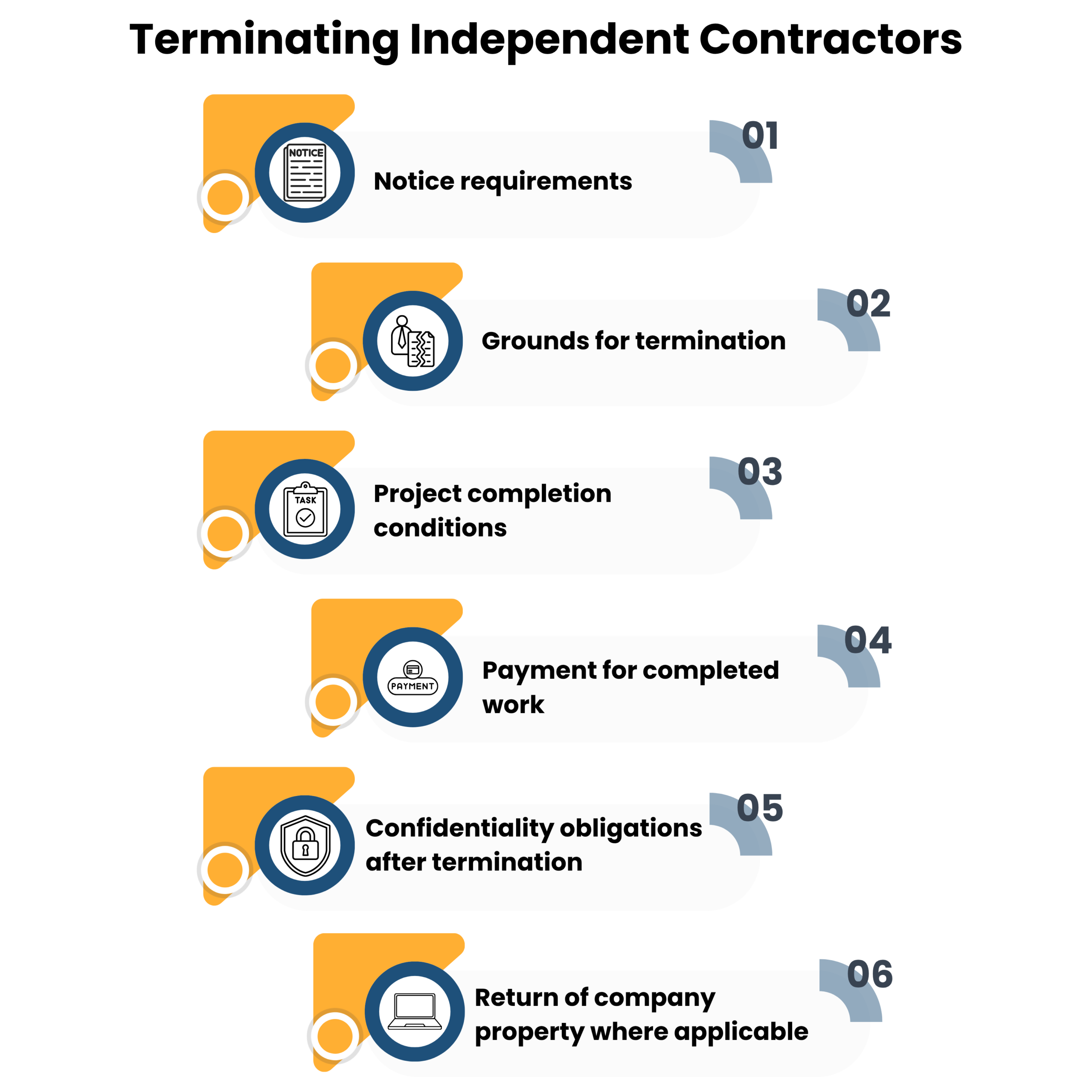
Termination clauses should clearly specify:
1
Notice requirements
The period and process for ending the agreement.
2
Grounds for termination
The reasons either party can end the contract.
3
Project completion conditions
Requirements for completing or handing over work.
4
Payment for completed work
Ensures contractors are paid for approved work delivered.
5
Confidentiality obligations after termination
Protects sensitive business information after the contract ends
6
Return of company property where applicable
Requires contractors to return company assets or materials when applicable.
Simplify Global Contractor Management with FastLaneRecruit
Managing international contractors requires more than simply signing an agreement. Businesses must also manage contracts, payments, compliance, documentation, and workforce administration.
FastLaneRecruit helps companies engage and manage global contractors through streamlined workforce solutions designed to simplify international expansion.
Whether you’re hiring independent contractors or full-time employees, FastLaneRecruit provides flexible workforce solutions to support your global growth.
Contact FastLaneRecruit today to learn how we can help you build and manage your international contractor workforce.
Book a Free Consultation →Our Services Help Businesses
- Engage contractors efficiently
- Manage contractor agreements
- Support compliant onboarding
- Coordinate contractor payments
- Simplify workforce administration
- Reduce compliance risks
Hire Global Contractors with Confidence
Access specialised talent without the complexity of international workforce management. FastLaneRecruit helps businesses engage independent contractors, manage agreements, streamline payments, and support compliance, making it easier to scale your global workforce.
