
Payroll Services in China
China remains one of the world’s largest economies and an important destination for international expansion. Businesses entering the Chinese market must understand local payroll requirements, employment regulations, and statutory contributions to ensure compliance and maintain smooth workforce operations.
Managing China payroll involves more than processing salaries. Employers are responsible for administering taxes, mandatory social insurance contributions, and housing fund payments while ensuring all employment arrangements align with local labor laws. FastLaneRecruit supports business owners and professional navigate their payroll process in China

China population
1,412,704,360
Official language
Standard Chinese
Capital city
Beijing
Official currency
CNY(¥)
Key Payroll and Tax Requirements in China
Businesses operating payroll in China are required to comply with individual income tax regulations and statutory employee benefit obligations. Understanding these requirements is essential for maintaining compliance and avoiding administrative challenges.
Individual Income Tax
China applies a progressive individual income tax (IIT) system. Tax rates currently range from 3% to 45%, depending on an employee’s taxable income level. Employers are responsible for calculating, withholding, and remitting the appropriate tax amounts to the relevant authorities.

Mandatory Social Insurance Contributions
China’s social security framework consists of several statutory insurance programs designed to support employees throughout different stages of employment and life events. Employers have to take care of it without failing.

Statutory Benefits in China
Employers are generally required to contribute to the following schemes, Pension insurance, Medical insurance, Unemployment insurance, Work-related injury insurance, Maternity insurance

Housing Provident Fund
In addition to social insurance, employers must contribute to the Housing Provident Fund. Contribution rates vary by municipality but commonly range between 5% and 12% of an employee’s salary. Businesses should confirm applicable requirements based on place of employment.
How to Set Up Payroll in China
Setting up payroll in China requires careful planning and adherence to local regulations. Businesses should establish the appropriate legal and operational framework before hiring employees and processing payroll.
Establish a Local Presence
Companies typically need a registered legal entity or an alternative compliant hiring solution before employing staff in China. Depending on their expansion strategy, businesses may establish a subsidiary or work with a local employment and payroll partner.
Open a Local Bank Account
Employers are generally expected to maintain local banking arrangements to facilitate payroll processing and statutory payments. Employee salaries are paid in Renminbi (CNY), China’s official currency.
Register for Payroll and Social Contributions
Businesses must register with the relevant tax and social security authorities to administer payroll, remit taxes, and manage mandatory contributions accurately and on time.
Employment Contract Requirements
Chinese labor laws require employers to provide written employment contracts that clearly define the terms of employment. These agreements form an important part of China payroll administration and compliance management.

Information Included in Employment Contracts
Employment agreements in China typically include:
- Employer and employee identification details
- Job title, responsibilities, and workplace location
- Salary and compensation structure
- Contract duration
- Working hours and overtime arrangements
- Rest periods and leave entitlements
- Social insurance and statutory benefits
- Workplace health and safety provisions
Having comprehensive and compliant employment contracts helps businesses establish clear expectations while reducing potential disputes related to compensation and employment terms.
Employee Leave and Entitlements
Employment termination in China is governed by labor laws that establish notice periods and procedural requirements. Employers should ensure all termination decisions are supported by lawful grounds and documented appropriately.
Probationary Employees
During the probation period, employers are generally required to provide written notice before terminating an employee, subject to applicable legal requirements and the circumstances surrounding the termination.
Employees Beyond Probation
For employees who have completed probation, employers commonly provide at least 30 days’ written notice or payment in lieu of notice where permitted by law. Fixed-term agreements and dismissals for cause may be subject to different requirements.
Local Compliance Considerations
Given the complexity of China’s labor framework, businesses are encouraged to seek local guidance when handling employee separations, severance obligations, and other employment-related matters.
Why Businesses Outsource Payroll in China
Managing payroll internally can become increasingly complex as organizations expand into new markets. Outsourcing payroll in China can help businesses improve efficiency while maintaining compliance with local employment and tax regulations.
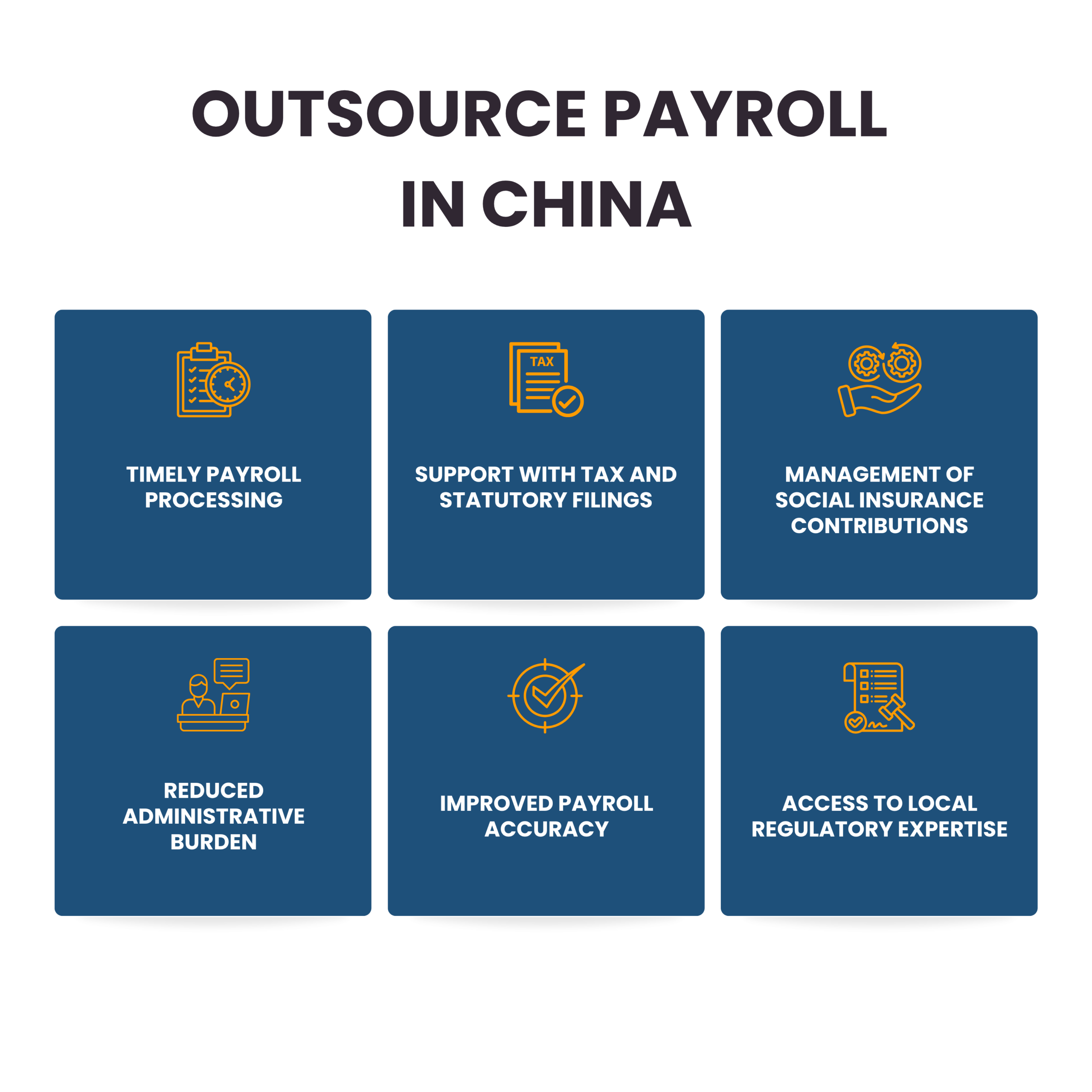
Benefits of working with a payroll provider may include:
- Timely payroll processing
- Support with tax and statutory filings
- Management of social insurance contributions
- Reduced administrative burden
- Improved payroll accuracy
- Access to local regulatory expertise
Partner with FastLane Recruit for Payroll in China
FastLane Recruit supports businesses seeking reliable payroll solutions across Asia. Our team works with companies to navigate payroll administration requirements, statutory obligations, and workforce compliance considerations in China.
Whether you are hiring your first employee or expanding an existing team, FastLane Recruit can help simplify payroll processes and support your business growth objectives through practical, locally informed solutions.
Contact FastLane Recruit to learn more about payroll services in China and how our team can assist with your expansion plans.
Book a Free Call with Our China Payroll Specialist