The job market in Hong Kong has seen significant challenges since 2023 because of the global recession, high interest rates, economic impact from China and domestic slowdown. Employers became more cautious with their hiring process and focused more on cost control, longer interview process and several levels of approval before offering employment to the potential candidates. Under this condition, professionals also prioritized more on job security rather than career growth when they considered new job opportunities.
In this article, we explore the key recruitment factors shaping 2026 and the major hiring trends in Hong Kong, including generalist roles, contract hiring, and the rise of technology-driven recruitment culture.
Content Outline
Key Summary
The Role of Recruitment Agencies
Recruitment agencies simplify the hiring process for employers and connect job seekers with suitable opportunities.
How Agencies Benefit Employers
They streamline hiring through candidate screening, market insights, interview coordination, and salary negotiations.
Support for Job Seekers
Agencies offer access to hidden job markets, personalized recommendations, interview preparation, and career guidance.
Choosing the Right Agency
Factors like industry specialization, track record, and client diversity are essential when selecting a recruitment agency.
Top Agencies in Hong Kong
Leading recruitment agencies such as FastLaneRecruit, Hays, Adecco, Michael Page, and Randstad provide comprehensive hiring solutions.
Generalization Of Roles In The Market
Trend towards generalist roles were also observed in 2023, especially at the mid career level in Hong Kong. To cut expenses, companies promoted junior employees to senior positions — switching directors for vice presidents, for instance. This is a strategy that is aimed at cutting down on the overall cost of hiring while seeking to address the scarcity of junior and middle-level employees.
In 2026, this trend is expected to continue as companies increasingly favour candidates with versatile skill sets over highly specialised professionals. Hiring adaptable talent enables businesses to maximise resources and cover multiple functions efficiently.
Bridging The Expectation Gap: The Continuing Need For Flexibility And Career Growth
While businesses are looking for ways to minimize their costs, the Expectation Gap between the employer and the employees continues to grow. In 2026, professionals are prioritising career advancement, workplace flexibility, and work-life balance. Employers that fail to offer hybrid or flexible working models may face growing talent shortages.
More Contract Hiring In 2026
As markets faced economic uncertainty in recent years, many businesses relied more heavily on contract hiring. This trend is expected to remain strong in 2026, allowing companies to maintain operational flexibility and access specialised skills for project-based or short-term needs.
Bridging The Expectation Gap: Temporary Workers Seeking For Stability
In contract situations, most employees view it as an opportunity to gain some experience and learn new skills. However, contract workers are also searching for opportunities that provide stability and chances for a transition to more permanent positions. By offering opportunities for progression within the contract roles, employers can make them more attractive in the market for highly skilled contract workers.
Technology And AI to Lead Talent Demand
In 2026, Hong Kong’s job market is expected to remain strongly influenced by technology, particularly Artificial Intelligence (AI), automation, and machine learning.
As businesses adopt AI to optimise workflows and improve efficiency, demand for candidates with AI literacy, automation skills, and digital transformation experience will continue rising.
Bridging the Expectation Gap: The Role of AI in Career Development
As AI adoption provides great opportunities for organizations, there are concerns about job security and the skills relevance in the future system among job seekers with 59% of employees consider Al to have an influence on their future employment. Businesses that support continuous training for upskilling of the employees will cultivate an envionrment of inventions while considering the employee’s concerns on the future work scenario.
Marginal Salary Growth And Cautious Recovery
Hiring activity in 2026 is expected to improve gradually, though salary growth may remain modest. Professionals changing jobs may still expect salary increments, but employers are likely to remain cautious while market confidence rebuilds.
Bridging The Expectation Gap: Compensation Beyond Salaries
Although pay rise is crucial, today’s employees are now focusing on other aspects such as work-life balance, career growth opportunities, appreciation and recognition for their contributions. Companies that rely heavily on financial rewards and incentives may have a problem in retaining talent. Today, employers need to provide a comprehensive approach to managing the expectations which include flexibility in terms of work, opportunities for career enhancement, as well as organizational culture.
Diversity, Equity And Inclusion (DE&I): From Policy To Action
Diversity, equity and inclusion (DE&I) efforts continue to be critical to any organization’s ability to create a competitive and innovative talent pipeline. Hong Kong employees report low levels of workplace identity and perceive their senior leadership team as not diverse enough.
In 2026, organisations are expected not only to support DE&I policies, but also take measurable action through leadership diversity, pay equity, and inclusive workplace cultures.
Bridging The Expectation Gap: Fostering Inclusivity
Today’s employees expect their employers to work towards equity and inclusion. The companies that invest in DE&I initiatives are not only increasing the engagement level of their employees but are also making themselves attractive workplaces among employees. Talents today are searching for purpose and authenticity so businesses should also align their culture with these values to reflect this reality.
Seeking Talent from Malaysia
Due to the ongoing talent crisis and particular demand for skilled jobs, Hong Kong companies are increasingly seeking for Malaysian talent to address talent shortage in Hong Kong firms. Malaysia’s skilled labor pool is diverse and competitive and therefore it is perceived as a favorable sourcing location.
It is believed that this trend will continue to increase as more and more companies look forward to leveraging Malaysia’s talent pool to address skill shortages and bring fresh perspectives to have an added-value view into their organizations.
Bridging the Expectation Gap: Malaysian Talents
Hong Kong companies must pay attention to offering competitive compensation strategies, defined career paths and strengthening the organizational culture to attract Malaysian talent. It is necessary to identify the specific needs and expectations of the Malaysian professionals for a successful recruitment.
Competitive Compensation Packages
Provide good salary structures and packages for the Malaysian employees that will be compatible to their skill level and experience. It includes offering not only competitive salaries but also other benefits such as health insurance, reimbursement of relocation costs or performance incentives.
Clear Career Progression Opportunities
Ensure the organization shows a clear career advancement for its employees. Most Malaysian professionals seek growth and development, therefore presenting the possible career paths as well as the development programmes are important ways of demonstrating the future career opportunities.
Supportive Work Environment
Promote diverse and inclusive work culture for employees from different backgrounds. It is important to include Malaysian employees and make them feel important, provide incentives such as mentorship, cultural diversity training, and networking opportunities.
Understanding Specific Needs
Learn on how Malaysian professionals expect and what they want in the workplace including their culture, their work-life balance preferences and any unique career goal they have in mind.
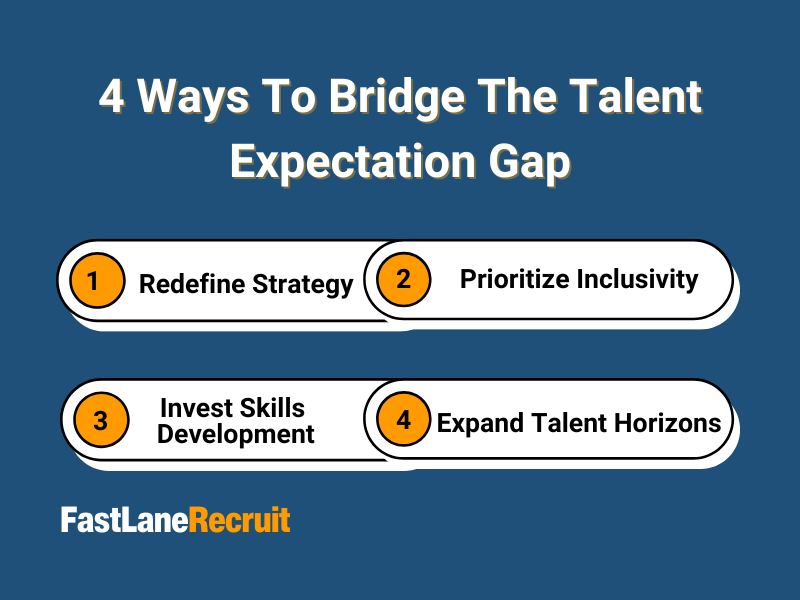
Bridging The Expectation Gap In 2026
For Hong Kong-based companies to effectively attract and retain talent in the 2026 job market, it will be important to adopt new strategies to bridge the expectation gap in the workforce. Here are three steps that can be helpful:
- Redefine Your Talent Strategy
Do not limit your strategy to salary increases and provide more personalized remuneration for the employees’ engagement. You can attract and retain more top talent through addressing career goals, work-life balance and flexible work arrangements for individual employees.
- Prioritize Inclusivity
Incorporate diversity and inclusion (DE&I) into your organization’s strategic planning process. It is necessary to create a culture that allows employees to be themselves and it will help to increase their job satisfaction and have a more dynamic workforce.
- Invest in AI and Skills Development
Guide your team and company to what a future of work will look like by offering opportunites to advance their skills specifically in the areas of AI and technology. It will keep your workforce to be innovative and your employees motivated to perform at their best.
- Expand Talent Horizons
Expand your talent search to other neighboring regions such as Malaysia to solve the lack of skill shortage and bring more fresh and diverse perspectives into the organization.
Preparing For A Dynamic Job Market In Hong Kong
In 2026, Hong Kong’s hiring market is expected to continue gradual recovery, shaped by contract hiring, broader job scopes, and rising demand for AI talent. To stay competitive, companies must close the expectation gap by offering flexibility, career development, inclusive cultures, and future-ready opportunities. By adapting to changing workforce expectations, businesses can attract top talent and improve long-term retention.
At FastLaneRecruit we focus on helping businesses navigate such challenges and how companies can manage to come up with the best recruitment strategies. Contact our team today to know how we can support your hiring needs in 2026.