
Hiring the right software developers in Malaysia can unlock cost-effective talent, innovative solutions, and smoother global operations. However, alongside recruiting top developers, understanding Malaysian payroll and compliance requirements is critical to avoid costly mistakes. This guide walks you through both hiring and payroll processes, offering tips, tables, and actionable advice for global employers.
Content Outline
Key Summary
Why Malaysia for Software Talent
Malaysia offers skilled, English-proficient developers with competitive rates and strong industry experience, making it a leading destination for global software development outsourcing.
Flexible Hiring Models
Employers can choose direct hiring, remote teams, project-based staffing, or Employer of Record (EOR) services depending on project timelines and compliance requirements.
Understanding Payroll Compliance
Payroll in Malaysia includes mandatory contributions such as EPF, SOCSO, EIS, PCB/MTD, and HRDF. Accurate calculations and timely submissions are essential to avoid penalties.
Common Payroll Mistakes to Avoid
Issues like inaccurate record keeping, incorrect statutory calculations, delayed salary payments, and tax non-compliance can cause costly consequences for companies.
Legal Considerations for Developers
Employment rules vary based on salary level, working structure, and location (Peninsular Malaysia vs. Sabah & Sarawak), making proper classification essential.
Best Practices for Hiring & Onboarding
Clear job definitions, English proficiency screening, transparent contracts, remote collaboration tools, and strong onboarding processes help teams succeed.
How EOR Services Support Global Employers
EOR providers like FastLaneRecruit manage payroll, statutory contributions, tax deductions, HR administration, and compliance, enabling companies to scale quickly without setting up a local entity.
FastLaneRecruit Advantage
FastLaneRecruit offers streamlined hiring, flexible engagement models, full compliance management, and ongoing HR support, making it easier to build and manage high-performing Malaysian developer teams.
Why Hire Software Developers in Malaysia?
Malaysia has become a top destination for software development talent due to its blend of technical expertise, cost efficiency, and strong English communication skills. Here’s a detailed look at why Malaysian developers are a smart choice for global businesses:
Highly Skilled Professionals
Malaysian developers have expertise across a wide range of programming languages and technologies, including Java, Python, C#, PHP, JavaScript, cloud computing, AI/ML, and mobile app development.
Example: A Singapore-based fintech company hired Malaysian developers to build a secure payment platform using Python and AWS cloud services, ensuring high performance and reliability.
Cost-Efficient Solutions
Hiring developers in Malaysia is often more affordable than in neighboring countries like Singapore, Australia, or Japan, without compromising on quality.
Example: A UK e-commerce startup outsourced its mobile app development to a Malaysian team, saving 40% on costs while maintaining high-quality code and meeting deadlines.
Also Read: Outsourcing IT Support Specialists: Cost Savings & Service Quality
Bilingual Talent
Many Malaysian developers are fluent in English, which makes communication with international teams smooth and efficient. This reduces misunderstandings and accelerates project timelines.
Example: An Australian health-tech company collaborated with Malaysian developers to implement a patient management system entirely in English, with no communication barriers.
Industry Experience
Developers in Malaysia bring experience across various industries, including fintech, healthcare, logistics, retail, and SaaS platforms. Their exposure allows them to quickly adapt to the specific requirements of different business sectors.
Example: A logistics startup hired Malaysian developers to build a real-time tracking application, leveraging their experience in transportation management systems to shorten development time.
Agile & Modern Technology
Malaysian developers are skilled in agile methodologies and modern technologies, such as full-stack engineering, cloud-native applications, DevOps, and AI/ML solutions. This ensures fast iteration cycles and scalable, efficient software.
Example: A European game development company utilized Malaysian developers’ expertise in Unity and DevOps to launch a multiplayer online game quickly, with scalable cloud-based infrastructure.
Common Roles Malaysian Developers Excel At
Malaysian software professionals can fill a wide variety of roles depending on your business needs:
- Full-Stack Developers: Build complete applications by handling both front-end and back-end development.
- Front-End Developers: Focus on user interface and user experience for web and mobile apps.
- Back-End Engineers: Ensure databases, servers, and APIs function efficiently.
- Mobile App Developers: Create iOS and Android apps using Swift, Kotlin, Flutter, or React Native.
- Cloud Developers: Build cloud-native applications and manage deployments on AWS, Azure, or Google Cloud.
- DevOps Engineers: Streamline deployment pipelines, automation, and infrastructure management.
- AI/ML Developers: Implement intelligent systems, predictive analytics, and machine learning solutions.
- Cybersecurity Specialists: Secure applications and prevent vulnerabilities.
- Game Developers: Design interactive games and immersive user experiences.
Example: A European gaming startup combined Malaysian AI/ML and game developers to implement intelligent NPC behavior, completing the project faster while staying under budget.
Also Read: IT Support Specialist Salary Guide
Hiring Options for Global Companies
Global employers looking to tap into Malaysia’s software talent have several flexible options. Each approach has its advantages depending on your business needs, project scope, and compliance requirements.
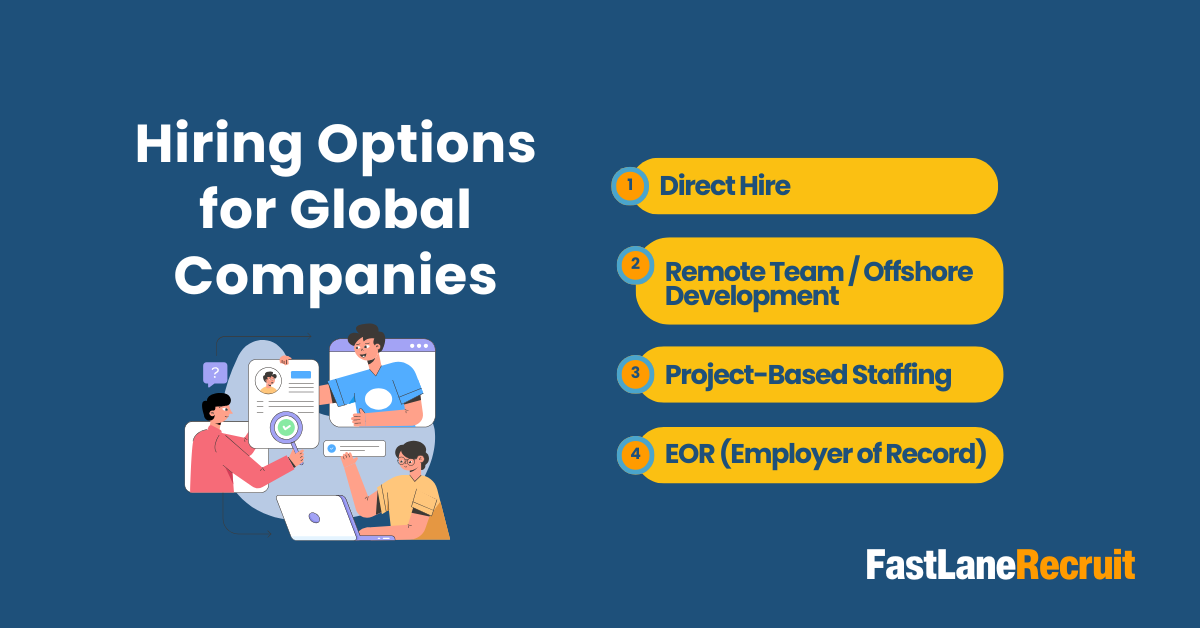
Direct Hire
What it is: Hiring full-time employees who are officially on a Malaysian payroll under your company or local entity. This means you handle all employment contracts, payroll, statutory contributions, and HR responsibilities.
Ideal for: Long-term projects where developers become an integral part of your company.
Example: A Singapore-based fintech company wanted a stable team to maintain and continuously improve their banking app. They directly hired a team of Malaysian full-stack developers to ensure continuity and alignment with their corporate culture.
Considerations: While direct hiring gives you full control, it also requires understanding local payroll regulations, statutory contributions like EPF/KWSP, SOCSO, and income tax (PCB/MTD), and employment compliance.
Remote Team / Offshore Development
What it is: Engaging developers who work remotely from Malaysia but are integrated into your existing team. This is typically managed through collaboration tools like Slack, Jira, or GitHub.
Ideal for: Companies needing flexibility, global collaboration across time zones, or additional resources without establishing a local entity.
Example: A European e-commerce company hired a team of Malaysian front-end and mobile developers to accelerate the launch of their app while maintaining project oversight from their headquarters.
Considerations: Communication, time zone differences, and project management are key. With remote teams, regular check-ins, clear task allocation, and agile processes help maintain productivity and quality.
Project-Based Staffing
What it is: Hiring developers specifically for a short-term project or specialized task. Once the project ends, the contract concludes.
Ideal for: Businesses that require specialized skills or additional capacity for a fixed duration, such as launching a new product or developing a proof-of-concept.
Example: A US-based startup needed AI/ML expertise to develop a predictive analytics module for a client platform. They engaged Malaysian developers on a project basis, saving on long-term employment costs while accessing highly specialized skills.
Considerations: This approach is cost-effective for short-term needs but requires a precise scope and clear deliverables to avoid delays or misunderstandings.
EOR (Employer of Record)
What it is: A third-party provider, like FastLaneRecruit, legally employs the developers on your behalf. They handle payroll, HR, statutory contributions, and compliance, while you direct day-to-day work and project management.
Ideal for: Companies seeking a hassle-free entry into Malaysia, avoiding the complexity of setting up a local entity or managing employment compliance directly.
Example: A UK fintech firm wanted to scale a Malaysian development team quickly without registering a company locally. By using an EOR service, they were able to hire 5 developers within weeks, fully compliant with Malaysian labor and tax laws, while retaining operational control over projects.
Tip: Using an EOR service like FastLaneRecruit allows global companies to focus on team productivity and project outcomes, while the EOR manages all compliance, payroll, and administrative responsibilities.
Understanding Malaysian Payroll and Compliance
Managing payroll correctly in Malaysia is critical for businesses of any size. With SMEs accounting for roughly 97% of all businesses in Malaysia, even small mistakes in salary payments, tax deductions, or statutory contributions can lead to penalties, fines, or legal issues. For global companies hiring Malaysian talent, understanding the payroll system is essential to ensure compliance and maintain employee trust.
Also Read: Malaysia’s Labour Laws for Hiring IT Support Specialists: EPF, SOCSO & Compliance
Key Payroll Components
Malaysian payroll involves several mandatory components. Employers are responsible for accurate calculations and timely remittance of all contributions and taxes.
| Component | Description | Responsible Party | Example |
| Monthly Salary | Basic pay, allowances, and any variable incentives | Employer | A software developer receives RM7,000 monthly base pay plus RM500 transport allowance. |
| EPF / KWSP | Employees’ retirement fund contribution (Employee: 11%, Employer: 13%) | Employer | For a RM7,500 salary, the employer contributes RM975 and deducts RM825 from the employee. More info: KWSP Official Guide |
| SOCSO | Social security coverage for workplace accidents, disability, and retirement | Employer | Mandatory contributions vary based on salary; for RM7,500, the employer contributes RM160 and employee RM28. See SOCSO Malaysia |
| EIS | Employment Insurance System providing benefits during unemployment | Employer | Employers contribute 0.2% of monthly wages; employees 0.2% as well. Learn more: EIS Official Guide |
| Income Tax / PCB / MTD | Monthly tax deduction remitted to LHDN on behalf of employees | Employer | The employer calculates tax based on LHDN tables and deducts it monthly. See LHDN PCB Guide |
| HRDF | Human Resources Development Fund; applies to companies with >10 employees for workforce training | Employer | A company with 15 employees pays 1% of monthly payroll to HRDF. More info: HRDF Malaysia |
Tip: Using payroll software or an EOR service like FastLaneRecruit can help automate these calculations, ensure timely contributions, and reduce the risk of errors.
Common Payroll Mistakes to Avoid
Even minor payroll mistakes can have serious consequences. Here are some common pitfalls and practical recommendations:
Inadequate Record Keeping
Failing to maintain accurate and accessible payroll records can lead to compliance issues. Always keep digital copies of payslips, contracts, timesheets, and contribution reports.
Example: A Malaysian SME switched from paper-based payroll to a cloud system, allowing employees and management to access payslips instantly and reducing administrative errors.
Incorrect Contribution Amounts
Miscalculating contributions to EPF, SOCSO, or EIS can result in penalties and back payments. Always verify calculations and stay updated with contribution rates.
Example: An international company miscalculated EPF contributions for a team of five developers. After an audit, they had to pay arrears plus fines. Using automated payroll software or EOR services could have prevented this.
Delays in Salary Payment
Paying salaries late can affect employee engagement and trust. Ensure your payroll cycle is consistent and timely, ideally at the same date each month.
Example: A Malaysian startup moved to automated payroll runs, reducing payment delays and improving staff satisfaction.
Also Read: Malaysia as a Competitive Hub for Offshore IT Support
Ignoring Tax Obligations
Employers are responsible for remitting PCB/MTD (Potongan Cukai Bulanan / Monthly Tax Deduction) on time to the Inland Revenue Board (LHDN). Delays or errors can trigger fines or audits.
Example: A remote development team in Malaysia had income tax miscalculations for multiple employees. An EOR service handled the remittance correctly, ensuring compliance with LHDN regulations.
Tip for Global Employers
For international companies, managing payroll and compliance in Malaysia can be complex. Partnering with an EOR service like FastLaneRecruit allows you to:
- Hire Malaysian software developers without setting up a local entity.
- Ensure statutory contributions and payroll taxes are calculated accurately.
- Focus on team management and project outcomes, while the EOR handles administrative compliance.
Legal Considerations for Software Developers in Malaysia
When hiring software developers in Malaysia, it’s important to understand the employment laws and regulations to avoid compliance issues.
Employees Earning Above RM4,000
Under the Employment Act 1955, employees with a monthly salary above RM4,000 may be exempt from certain provisions, including:
- Overtime rates for work on rest days or public holidays
- Allowances for shift-based work
- Termination, lay-off, or retirement benefits
Tip: For highly skilled developers, especially in tech roles, always clarify which employment benefits apply based on their salary level.
Gig Workers and Contractors
Gig workers, freelancers, or independent contractors may still fall under certain employment regulations depending on their:
- Level of supervision
- Working hours
- Compensation structure
Example: If a Malaysian developer works primarily under your supervision, uses your equipment, and earns most of their income from your company, they may legally be considered an employee. In such cases, you need to comply with payroll, EPF/SOCSO contributions, and income tax requirements.
Sabah and Sarawak Regulations
Malaysia’s Sabah and Sarawak regions follow separate labour ordinances. Employers hiring developers in these states must consult local employment regulations to ensure compliance with statutory contributions, benefits, and termination rules.
Reference: Sabah Labour Ordinance
Best Practices for Hiring & Onboarding Software Developers
Successfully building a software team in Malaysia requires clear processes and proactive planning. Here are some best practices:
Define Roles Clearly
Clearly outline technical requirements to match the developer’s expertise to your project needs, whether full-stack, front-end, mobile, cloud, AI/ML, or DevOps.
Example: A fintech startup needed AI/ML expertise for predictive analytics and mobile developers for their iOS/Android apps. Defining these roles upfront allowed them to hire the right talent efficiently.
Screen for English Proficiency
Many Malaysian developers are bilingual, but assessing English communication skills is crucial for smooth collaboration with international teams.
Tip: Transparency reduces misunderstandings and helps ensure compliance with the Employment Act 1955.
Also Read: How to Hire and Manage Offshore IT Support Teams in Malaysia
Use Transparent Contracts
Include clear details in employment agreements, covering:
- Job scope and responsibilities
- Compensation, allowances, and benefits
- Working hours and probation period
Tip: Transparency reduces misunderstandings and ensures compliance with the Employment Act 1955.
Leverage Remote Work Platforms
Remote collaboration tools like Slack, Jira, Trello, or GitHub help teams manage tasks, track progress, and communicate effectively across time zones.
Example: A European startup coordinated with a Malaysian development team using Trello and Zoom for daily stand-ups, completing a mobile app project two weeks ahead of schedule.
Consider EOR Solutions
Using an EOR (Employer of Record) service like FastLaneRecruit simplifies hiring by managing:
- Payroll and statutory contributions (EPF, SOCSO, EIS, HRDF)
- Employment compliance
- Tax deductions (PCB/MTD)
Example: A Singapore-based fintech startup scaled its mobile development team by hiring five Malaysian developers via an EOR service. They avoided the complexity of local company registration while ensuring full compliance with Malaysian employment laws.
How FastLaneRecruit Can Help
Expanding your software development team in Malaysia can be challenging for global companies. From understanding local payroll and employment laws to sourcing highly skilled developers, the process can be complex and time-consuming. FastLaneRecruit offers a reliable solution to simplify every step of hiring, onboarding, and managing Malaysian software developers.
Streamlined Hiring Process
FastLaneRecruit connects you with highly skilled Malaysian developers across full-stack, mobile, cloud, AI/ML, DevOps, and more. We match candidates to your project needs, ensuring the right fit for both skills and culture.
Example: A Singapore-based fintech company quickly hired a team of five Malaysian developers through FastLaneRecruit, reducing their recruitment timeline from months to weeks.
Compliance and Payroll Management
Our Employer of Record (EOR) service ensures that all statutory obligations in Malaysia are handled accurately and on time, including:
- EPF / KWSP retirement contributions
- SOCSO social security coverage
- EIS employment insurance
- PCB/MTD monthly tax deductions
- HRDF levies (for companies with more than 10 employees)
This allows you to focus on team productivity and project outcomes without worrying about legal compliance or administrative overhead.
Example: A European software startup scaled its cloud development team while FastLaneRecruit managed all payroll and compliance responsibilities, eliminating the need to establish a local entity.
Flexible Engagement Models
FastLaneRecruit offers multiple hiring options to suit your business needs:
- Direct Hire: Full-time employees on your payroll in Malaysia.
- Remote / Offshore Team: Developers working remotely while integrated with your existing team.
- EOR Solutions: Hassle-free entry into Malaysia, with payroll, compliance, and HR fully managed by FastLaneRecruit.
Tip: Leveraging our flexible engagement models lets you scale your team up or down quickly based on project demands.
Expert Support and Local Knowledge
Our team provides ongoing guidance on Malaysian employment law, payroll compliance, and HR best practices, ensuring smooth onboarding and continuous management of your team.
Example: A global e-commerce company hired Malaysian developers for a mobile app project. FastLaneRecruit guided them on statutory contributions, tax filings, and employment contracts, helping them avoid costly mistakes and compliance issues.
Conclusion
Hiring software developers in Malaysia offers global companies access to talented, cost-effective, and highly skilled teams. By combining strategic recruitment, a solid understanding of Malaysian payroll regulations, and EOR solutions, businesses can minimise risk, enhance productivity, and focus on growth.
FastLaneRecruit’s EOR service simplifies the process by managing payroll, compliance, and HR, allowing you to hire Malaysian developers quickly and efficiently. Whether you are building a remote team, expanding your IT capabilities, or engaging in project-based work, FastLaneRecruit provides a seamless solution.
Start Building Your Malaysian Software Team Today
Partnering with FastLaneRecruit allows you to access top Malaysian talent quickly, stay compliant, and scale efficiently. Whether you need full-time developers, a remote offshore team, or project-based specialists, we simplify the entire hiring and management process.
Contact FastLaneRecruit today to hire your next Malaysian software developer or to scale your offshore development team efficiently.
