
A Complete Guide for Global Companies
Hiring remote assistants in Malaysia has become an increasingly popular strategy for global businesses. Malaysia offers a highly skilled workforce, strong English proficiency, and a business culture compatible with international teams. Engaging remote talent here allows companies to expand operations efficiently and gain timezone advantages without compromising compliance.
However, hiring remotely also comes with legal, tax, and HR obligations that must be carefully managed. From employment contracts to payroll, visas, and data protection, companies need to navigate Malaysia’s regulations thoughtfully to ensure smooth operations and avoid risks. This guide provides a clear roadmap for global companies looking to hire remote assistants in Malaysia.
Content Outline
Key Summary
Clear Employment Contracts Are Essential
Well-structured employment contracts should define work location, hours, responsibilities, equipment, and termination terms to ensure compliance and avoid disputes.
Payroll and Statutory Contributions Must Be Compliant
Employers must manage payroll accurately and contribute to mandatory schemes like EPF, SOCSO, EIS, and income tax to stay compliant.
Visa and Work Permit Rules Matter
Foreign remote workers must have proper visas or permits. Tourist visas do not allow remote work, and long-term stays require approved passes.
Permanent Establishment Risks Should Be Managed
Remote employees can unintentionally create tax exposure. Limiting revenue-generating activities and using EOR services can reduce PE risk.
Data Protection Is a Legal Responsibility
Companies must comply with Malaysia’s PDPA by implementing secure systems, restricted access, and employee data protection agreements.
Employee Well-being Still Applies Remotely
Employers remain responsible for health and safety, including ergonomic workspaces, mental health support, and regular check-ins.
EOR Services Simplify Compliance
Using an Employer of Record helps companies hire remote assistants in Malaysia without setting up a local entity while ensuring full compliance.
Employment Contracts for Remote Assistants
A well-written employment contract is the backbone of a successful remote work arrangement. It protects both the company and the employee by clearly outlining expectations, responsibilities, and legal obligations. For companies hiring remote assistants in Malaysia, contracts should address several key areas to ensure compliance and smooth operations.
1. Work Location
Clearly define where the employee will work. This could be:
- Fully remote – working from home or another approved location permanently.
- Hybrid – splitting time between home and an office or coworking space.
- Flexible locations – allowing work from multiple locations, possibly including travel or short-term stays abroad.
If the employee’s work location changes, the contract should be updated to reflect the new arrangement. This prevents misunderstandings and ensures the company can maintain compliance with local labour laws.
2. Working Hours
Set clear expectations for working hours to maintain productivity and comply with Malaysian regulations:
- Specify start and end times, including breaks.
- Include rules for overtime if employees are non-exempt under the Employment Act 1955.
- Consider flexible scheduling if the remote assistant is working across different time zones.
Clear working hours help employees understand their commitments and make it easier for managers to track performance without unnecessary micromanagement.
3. Performance Expectations
Remote work can sometimes blur accountability, so it’s important to clearly define what success looks like:
- Outline deliverables and deadlines.
- Specify reporting methods, such as weekly updates or project management tools.
- Define Key Performance Indicators (KPIs) that measure productivity and contribution.
By setting these expectations in the contract, employees understand exactly what is required, and managers have a fair, measurable way to track performance.
4. Equipment and Expenses
Clearly state who is responsible for providing and maintaining work tools:
- Employer-provided equipment might include computers, phones, or software licenses.
- Clarify if employees are responsible for internet access or home office setup.
- Include allowances or reimbursements for business-related expenses, like utilities or ergonomic furniture.
Documenting these responsibilities helps prevent disputes and ensures employees have the tools they need to perform effectively.
Also Read: How to Build an Offshore Data Entry Team in Malaysia
5. Termination and Changes
Remote work arrangements may need to change over time:
- Include flexibility for terminating remote work agreements if business needs evolve.
- Specify procedures for transitioning employees back to the office if necessary.
- Outline steps for contract termination to comply with Malaysian labour law.
This section protects both parties and ensures there’s a clear process for adapting to changing circumstances.
Tip: Include a clause requiring employees to acknowledge their responsibilities for data protection and confidentiality when working remotely. This reinforces the importance of handling company information securely, especially when working outside a traditional office environment.
Payroll, Taxes, and Social Security Obligations
When hiring remote assistants in Malaysia, it’s essential to stay compliant with payroll, tax, and social security regulations. Non-compliance can lead to fines, penalties, or disputes with employees. Understanding these obligations ensures smooth operations, protects your business, and gives employees confidence in their benefits.
1. Employees Provident Fund (EPF)
The EPF is a mandatory retirement savings scheme in Malaysia. Both employers and employees contribute a percentage of the employee’s monthly salary:
- Employer contribution: Typically 12–13% of the employee’s monthly wage.
- Employee contribution: 11% of monthly wages, automatically deducted.
Contributing to EPF ensures employees are saving for retirement while also giving them access to benefits like housing and medical withdrawals under certain circumstances.
2. Social Security Organisation (SOCSO)
SOCSO provides insurance coverage for employees in the event of workplace injuries or accidents, as well as certain unemployment benefits.
- Employer contribution: Varies depending on the employee’s monthly salary.
- Employee contribution: Also varies by salary, usually a small percentage.
SOCSO protects both employers and employees by providing financial support in case of accidents or work-related incidents.
3. Employment Insurance System (EIS)
The EIS provides temporary financial support to employees who lose their jobs and helps fund re-employment services.
- EIS contributions are mandatory deductions, split between employer and employee.
- This system ensures employees have safety nets during unexpected unemployment.
4. Income Tax Obligations
Remote employees in Malaysia must pay income tax based on their tax residency status:
- Tax residency: Employees staying in Malaysia for more than 182 days in a year are considered tax residents.
- Progressive tax rates: Tax residents are subject to progressive income tax rates as outlined by LHDN Malaysia.
- Employers may be required to withhold personal income tax from employees’ salaries and remit it to the government.
Tip: For employees working remotely from abroad but for a Malaysian company, consult a tax professional to determine withholding obligations and avoid double taxation.
5. Double Taxation Agreements (DTA)
Malaysia has tax treaties with multiple countries to prevent employees from being taxed twice on the same income. Employers and employees should:
- Identify applicable treaties based on the employee’s home country.
- Apply treaty benefits correctly to reduce withholding tax and compliance risk.
- Engage local tax experts to ensure full compliance.
6. Example Payroll Table
| Employee Salary (MYR) | Employer Contribution (MYR) | Employee Contribution (MYR) |
| Base Salary 5,000 | EPF 650, SOCSO 45 | EPF 550, SOCSO 45 |
This example shows a standard calculation for a Malaysian remote assistant, including mandatory contributions. Percentages may vary slightly depending on salary and employment category.
Tip: Partnering with a local payroll provider or an Employer of Record (EOR) like FastLaneRecruit ensures all contributions are calculated and submitted correctly. This approach also saves time, reduces errors, and keeps your business compliant with Malaysian law.
Also Read: Payroll and Statutory Compliance for Hiring Data Entry Clerks in Malaysia
Visa and Work Permit Requirements
Hiring foreign remote workers in Malaysia comes with specific visa and work permit requirements. Ensuring your employees have the correct legal status is essential for compliance, avoiding fines, and protecting your company’s reputation.
1. Short-Term Stays (<90 Days)
Many foreign nationals can enter Malaysia visa-free or with a short-term tourist visa, depending on their nationality.
- Important: Tourist or visa-free entry does not legally allow remote work. Employees cannot work for foreign or Malaysian companies while on a tourist visa.
- Suitable only for very short business trips, meetings, or consultations, not for ongoing remote employment.
2. Long-Term Stays (≥90 Days) – DE Rantau Nomad Pass
For remote employees planning to stay longer than 90 days, Malaysia offers a Digital Nomad Visa known as the DE Rantau Nomad Pass. This visa allows foreign professionals to live in Malaysia while working remotely for overseas companies.
Key Requirements:
- Proof of employment or freelance work with a foreign company or client.
- Valid health insurance covering the duration of stay.
- Minimum annual income of USD 24,000 (approximately USD 2,000 per month).
- Clean criminal record and valid passport.
- Pass is valid for 12 months and can be renewed once for an additional 12 months.
This visa is ideal for digital nomads, freelancers, and remote workers who want to live in Malaysia while continuing to work for companies abroad.
3. Tax Residency Considerations
Employees staying in Malaysia for more than 182 days in a year are considered tax residents. This means:
- They may need to file Malaysian income tax on income earned locally or sourced in Malaysia.
- Employers may be required to withhold taxes from their salary and remit them to the Lembaga Hasil Dalam Negeri (LHDN).
- Staying aware of tax residency rules helps prevent double taxation issues, especially for international employees.
4. Compliance Best Practices
- Maintain accurate documentation of all visa approvals, residence permits, employment contracts, and health insurance coverage.
- Regularly check expiration dates and renewal requirements to avoid lapses in legal status.
- Engage local legal experts if your remote assistants’ roles involve client interaction, revenue generation, or management functions in Malaysia, as these could impact visa compliance and tax obligations.
Trusted Resource: Malaysia Digital Nomad Visa – DE Rantau Pass
Tip: Using an Employer of Record (EOR) service like FastLaneRecruit can simplify visa and compliance management. The EOR handles work permits, payroll, and tax obligations, so your business can focus on operations without navigating complex local regulations.
Also Read: Benefits of Outsourcing Data Entry Operations for Global Businesses
Permanent Establishment (PE) Risks
When hiring remote employees in Malaysia, companies need to be aware of Permanent Establishment (PE) risks. PE occurs when a foreign company is considered to have a taxable presence in Malaysia, which may trigger corporate tax obligations (currently 24%).
Even if your remote assistants are working from home, certain activities could unintentionally create a PE, such as:
- Negotiating or signing contracts on behalf of the company.
- Managing clients or generating revenue locally.
- Having employees make strategic business decisions from Malaysia.
How to Mitigate PE Risk
- Limit Local Revenue Activities:
Avoid assigning tasks that involve signing contracts, negotiating deals, or generating sales revenue in Malaysia. - Use an EOR Service:
An Employer of Record (EOR) like FastLaneRecruit employs your remote staff locally on your behalf. This ensures compliance without creating a legal entity in Malaysia, significantly reducing PE risk. - Consult Local Tax Experts:
For strategic roles or senior positions, engage Malaysian tax professionals to assess whether employee activities could trigger corporate tax liabilities.
Tip: Regularly review employee roles and responsibilities to ensure they align with your PE mitigation strategy.
Data Protection and Cybersecurity
Data security is essential when employees work remotely. Malaysia’s Personal Data Protection Act 2010 (PDPA) applies to all personal and company data, requiring employers to implement measures that protect information from unauthorized access or breaches.
Best Practices for Remote Work
- Secure Devices and Networks:
Ensure all employees use encrypted laptops, secure Wi-Fi connections, and Virtual Private Networks (VPNs) when accessing company systems. - Access Control:
Limit access to sensitive company data based on employee roles. Use multi-factor authentication (MFA) and require regular password updates. - Training and Awareness:
Conduct regular cybersecurity and data privacy training to keep employees informed about risks and proper handling of data. - Formal Agreements:
Require employees to sign remote work data agreements, which clearly outline their responsibilities for protecting company information. This emphasizes accountability and ensures legal compliance.
Tip: Periodically review your data protection policies and update them as technology and regulations evolve.
Also Read: Why Malaysia Is a Top Choice for Offshore Data Entry Teams
Health, Safety, and Employee Well-being
Even when employees work remotely, employers are responsible for ensuring their health, safety, and overall well-being. Supporting remote employees not only protects your team but also improves productivity and engagement.
1. Ergonomic Workspace
A comfortable and safe workspace reduces the risk of injuries such as musculoskeletal problems or eye strain.
- Provide guidelines on home office setup, including desk height, chair support, screen placement, and lighting.
- Offer financial assistance or allowances for ergonomic equipment like chairs, desks, or monitor stands.
- Encourage regular stretching or movement breaks to prevent fatigue.
2. Mental Health Support
Remote work can sometimes lead to isolation, stress, or burnout. Employers should support mental well-being through:
- Employee Assistance Programs (EAPs) providing confidential counseling or support services.
- Wellness initiatives such as mindfulness sessions, yoga classes, or wellness apps.
- Regularly checking in on employee workload and stress levels.
3. Regular Check-ins
Maintaining communication is essential for remote work success.
- Schedule weekly or bi-weekly one-on-one meetings with employees.
- Discuss workload, health, and any challenges they are facing.
- Use team meetings to encourage collaboration and maintain a sense of community.
4. Risk Assessments
Even home offices can have hazards. Conduct risk assessments to identify potential issues:
- Use self-assessment checklists for employees to evaluate their home workspace safety.
- Conduct virtual assessments via video call to spot ergonomic or environmental risks.
- Take corrective actions when hazards are identified, such as recommending new equipment or adjusting work practices.
Best Practices & Recommendations for Employers
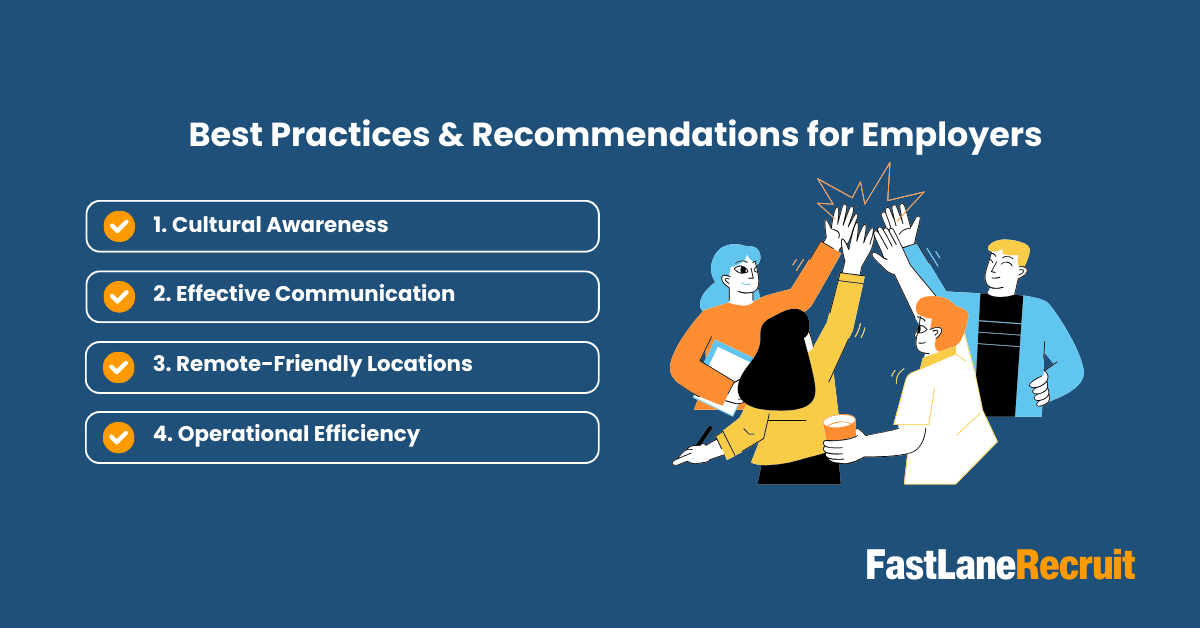
Creating a productive and harmonious remote work environment requires thoughtful planning and cultural understanding.
1. Cultural Awareness
Malaysia has a diverse and relationship-focused business culture:
- Respect hierarchical structures in decision-making. Senior management usually makes the final call.
- Be polite and avoid direct criticism; indirect communication helps maintain harmony.
- Observe religious and cultural norms, including prayer times and adjustments during Ramadan.
2. Effective Communication
Clear communication is key for remote teams:
- Schedule regular team meetings to maintain transparency and alignment.
- Use collaboration tools like Slack, Microsoft Teams, or project management software for consistent updates.
- Encourage open dialogue while respecting cultural nuances and time zones.
3. Remote-Friendly Locations
Certain locations in Malaysia are particularly well-suited for remote work:
- Kuala Lumpur: Modern infrastructure, coworking spaces, and fast internet.
- Penang: Tech and creative hub with vibrant lifestyle options.
- Cyberjaya: Known as Malaysia’s IT and startup hub with excellent digital connectivity.
- Johor Bahru: Close to Singapore, with growing infrastructure and lower living costs.
4. Operational Efficiency
Remote assistants can help global companies streamline operations and reduce costs:
- Handle administrative tasks, reporting, and client follow-ups.
- Extend coverage across time zones to ensure continuous operations.
- Allow in-house teams to focus on strategic work while remote assistants handle daily tasks.
Tip: Combining thoughtful HR practices, cultural awareness, and remote-friendly tools ensures your Malaysian remote team stays healthy, productive, and engaged.
Also Read: Benefits of Outsourcing Data Entry Operations for Global Businesses
Simplifying Compliance with FastLaneRecruit’s EOR Service
Global businesses can streamline hiring, payroll, tax, and HR compliance by partnering with FastLaneRecruit as an Employer of Record (EOR).
Benefits Include:
- Hiring Malaysian remote assistants without setting up a local entity
- Ensuring full compliance with employment laws, tax, and social security obligations
- Handling onboarding, payroll, and benefits administration
- Mitigating permanent establishment and legal risks
Contact FastLaneRecruit today to simplify hiring and compliance for Malaysian remote assistants.
Also Read: Data Entry Clerk Salary Guide 2026
Conclusion
Hiring remote assistants in Malaysia offers access to skilled talent, cost efficiencies, and timezone advantages for global businesses. However, navigating employment contracts, payroll, taxes, visas, data protection, and health obligations requires careful planning. By following best practices and leveraging services like FastLaneRecruit’s EOR, companies can ensure compliance, mitigate risks, and focus on growth while providing a safe and supportive environment for remote employees.
Simplify Hiring Malaysian Remote Assistants with FastLaneRecruit
Navigating employment, tax, and compliance requirements for remote assistants in Malaysia can be complex. FastLaneRecruit’s Employer of Record (EOR) service makes it simple: we handle payroll, taxes, social security contributions, visas, and legal compliance so you can focus on growing your business.
Get started today and let FastLaneRecruit be your trusted partner in building a remote team in Malaysia. Contact FastLaneRecruit for a FREE Consultation!