
As companies expand across borders, one challenge stays constant: managing people effectively. Payroll accuracy, employee data, onboarding, compliance, and HR reporting all need to run smoothly for businesses to scale with confidence.
Malaysia stands out as a top destination for HR Operations Analysts, especially for global companies building remote and regional teams. This shift is not accidental. It is driven by strong digital readiness, supportive government initiatives, a skilled workforce, and growing experience in regional HR shared services. For organizations seeking reliable HR operations support without setting up a full local entity, Malaysia offers a practical and future-ready solution.
Content Outline
Key Summary
Malaysia’s Digital Readiness
Strong government initiatives like MyDIGITAL and MDEC support cloud-based HR systems, analytics, and secure data practices for efficient HR operations.
Experienced Regional HR Workforce
Malaysia hosts many regional HR Shared Service Centres, providing multilingual professionals familiar with APAC and global HR processes.
Essential Role of HR Operations Analysts
They manage HR systems, payroll, compliance, reporting, and workflow improvements, ensuring smooth HR operations for global and remote teams.
Remote Team Support
Malaysia-based HR teams provide consistent HR services across time zones, maintaining accurate data, streamlined onboarding, and reliable reporting.
Advanced HR Tools
HR Operations Analysts utilize HRMS, ATS, analytics tools, and employee self-service platforms to reduce manual work and improve operational efficiency.
Compliance and Workforce Development
Strong knowledge of PDPA, continuous upskilling programs, and familiarity with global HR standards make Malaysian HR professionals highly reliable.
Offshore Hiring via EOR
FastLaneRecruit’s Employer of Record (EOR) model allows global companies to hire HR talent in Malaysia without entity setup, ensuring compliance, payroll management, and operational control.
The Growing Role of HR Operations Analysts in Global Teams
As companies build teams across different countries and time zones, the way HR works has changed. Today, HR is no longer only about policies or employee handbooks. It is also about making sure daily HR operations run smoothly, accurately, and on time. This is where HR Operations Analysts play an important role.
HR Operations Analysts focus on the day-to-day execution of HR processes. They make sure employee data is accurate, systems are updated, and HR activities are carried out consistently across the organization. While HR leaders set strategies and policies, HR Operations Analysts ensure those plans are implemented properly.
What HR Operations Analysts Typically Do
Manage HR systems and employee records
They maintain HR platforms where employee information is stored, updated, and organized. This includes personal details, job information, and employment changes, ensuring data stays accurate and secure.
Support payroll and benefits administration
HR Operations Analysts help coordinate payroll processes, benefits enrollment, and employee entitlements. Their work helps reduce errors and ensures employees are paid correctly and on time.
Track compliance requirements
They assist with keeping HR processes aligned with local employment rules, company guidelines, and data protection requirements. This is especially important when teams are spread across different locations.
Prepare HR reports and workforce insights
By collecting and organizing HR data, they support reporting on headcount, turnover, attendance, and other workforce metrics. These insights help leaders make informed decisions.
Improve HR workflows using digital tools
HR Operations Analysts look for ways to streamline processes by using HR software and automation. This helps reduce manual work, speeds up approvals, and improves the overall employee experience.
Why This Role Matters for Remote and Global Teams
As HR becomes more technology-driven, companies rely on HR Operations Analysts to keep systems connected and processes consistent. For remote and distributed teams, this role ensures that employees receive the same level of HR support, no matter where they are located.
In short, HR Operations Analysts help turn HR plans into action, making them an essential part of modern, global HR teams.
Also Read: Building a High-Performing Offshore HR and Payroll Management Team in Malaysia (Singapore Edition)
Why Malaysia Stands Out for HR Operations Roles
Malaysia has steadily built an environment that supports modern HR operations. From digital readiness to workforce capability, several factors make the country a strong choice for HR Operations Analysts supporting global and remote teams.
1. Strong Digital and HR Infrastructure
Malaysia has made consistent progress in digital transformation across both the public and private sectors. National initiatives such as MyDIGITAL, along with support from agencies like MDEC (Malaysia Digital Economy Corporation), encourage organizations to adopt digital platforms, cloud solutions, and secure data practices.
This digital-first environment allows HR professionals to work confidently with:
- Cloud-based HR management systems
- Applicant tracking and recruitment platforms
- HR analytics and workforce reporting tools
As a result, HR Operations Analysts in Malaysia are comfortable working in technology-driven HR environments, which is essential for supporting distributed teams.
Government reference:
Malaysia Digital Economy Blueprint (MyDIGITAL) – Official Government Portal
https://www.malaysia.gov.my
2. Experience with Regional HR Shared Services
Malaysia is a well-established location for regional HR Shared Service Centres. Many multinational companies manage HR operations for multiple countries from Malaysia, covering tasks such as employee data management, payroll coordination, reporting, and HR system support.
Malaysia fits this model well due to:
- A multilingual workforce that supports regional communication
- Familiarity with HR processes across Southeast Asia and beyond
- Experience working with APAC and global stakeholders
This exposure makes HR Operations Analysts in Malaysia highly adaptable and capable of supporting international HR workflows with consistency and accuracy.
3. Continuous Workforce Upskilling and Training Support
Skills development is a national priority in Malaysia. Through HRD Corp (Human Resources Development Corporation), employers are encouraged to invest in training programs that improve workforce capabilities.
This includes learning areas such as:
- HR systems and platforms
- Data handling and reporting
- Digital process improvement
Ongoing upskilling ensures HR Operations Analysts stay aligned with evolving global HR standards and tools.
Government reference:
HRD Corp Official Website: https://www.hrdcorp.gov.my
4. Familiarity with Global HR Systems and Processes
HR professionals in Malaysia often work with internationally recognized HR tools and platforms. This exposure comes from supporting multinational employers and regional teams.
As a result, HR Operations Analysts are typically familiar with:
- Global HR policies and reporting structures
- Standardized onboarding and offboarding processes
- Cross-border workforce coordination
This familiarity helps reduce onboarding time for global companies and supports smoother collaboration with international HR teams.
Also Read: Building a High-Performing Offshore HR and Payroll Management Team in Malaysia (Hong Kong Edition)
5. Strong Focus on Compliance and Data Protection
Malaysia places importance on employee data protection and responsible data handling through regulations such as the Personal Data Protection Act (PDPA).
HR Operations Analysts are trained to:
- Handle employee data securely
- Follow structured HR documentation processes
- Support compliance-related reporting
This compliance awareness is especially valuable for global organizations that must maintain consistent HR governance across different regions.
6. Supportive Environment for Remote and Hybrid Work
Remote and hybrid work models are increasingly common in Malaysia, especially in roles that support regional or global teams. This has strengthened the workforce’s ability to collaborate across time zones and digital platforms.
HR Operations Analysts are accustomed to:
- Working with remote managers and teams
- Using collaboration tools and HR software
- Supporting employees across multiple locations
This makes Malaysia a practical and reliable base for HR operations supporting distributed workforces.
Summary: A Strong Foundation for Global HR Operations
Malaysia’s position as a hub for HR Operations roles is built on digital readiness, skilled talent, regional experience, and continuous learning. These strengths allow HR Operations Analysts in Malaysia to support global teams efficiently, accurately, and consistently.
For international companies building remote HR functions, Malaysia offers a dependable and future-ready talent environment.
How HR Operations in Malaysia Support Remote Teams
As companies operate across borders, time zones, and regions, strong HR operations are essential to keep everything running smoothly. HR Operations Analysts based in Malaysia play a key role in supporting remote and distributed teams by ensuring consistency, accuracy, and clear processes across the organization.
Below is how they typically support global teams in practice:
| HR Function | How It Supports Remote Teams |
| HR Systems Management | HR Operations Analysts maintain centralized HR systems that store employee data for teams across multiple locations. This ensures records are accurate, updated, and accessible to authorized stakeholders, reducing confusion and errors. |
| Payroll Coordination | They help coordinate payroll activities by tracking salary changes, leave records, and benefits information. This supports timely and accurate payroll processing while aligning with local employment requirements. |
| HR Reporting | By preparing regular HR reports on headcount, turnover, attendance, and workforce trends, they provide leaders with clear visibility into remote teams and help support better workforce planning decisions. |
| Compliance Tracking | HR Operations Analysts assist in tracking compliance-related tasks, such as documentation, policy acknowledgements, and employment records. This helps organizations stay aligned with local regulations while managing remote teams responsibly. |
| Process Improvement | They continuously look for ways to improve HR workflows by reducing manual steps and using digital tools. This includes streamlining onboarding, offboarding, approvals, and HR documentation for a smoother employee experience. |
Why This Matters for Global and Remote Teams
For remote teams, consistency is critical. HR Operations Analysts in Malaysia help ensure that employees, regardless of location, experience clear processes, timely support, and reliable HR services. Their work reduces administrative friction, improves accuracy, and allows HR leaders to focus on people strategy rather than operational issues.
HR operations based in Malaysia provide the structure and reliability that remote teams need to perform effectively and scale with confidence.
Also Read: Building a High-Performing Offshore HR and Payroll Management Team in Malaysia (Australia Edition)
Digital HR Tools Commonly Used in Malaysia
As HR functions become more technology-driven, HR Operations Analysts in Malaysia regularly work with a range of digital tools that support efficient and consistent HR operations. These tools help manage employee information, streamline processes, and improve visibility across remote and distributed teams.
HR Management Systems (HRMS)
HR Management Systems act as a central source of truth for employee information. HR Operations Analysts use these systems to store and manage:
- Employee personal and job details
- Employment changes such as promotions or role updates
- Leave balances and basic HR records
By keeping all information in one system, HR teams can reduce data errors and ensure consistency across different locations and teams.
Applicant Tracking Systems (ATS)
Applicant Tracking Systems support structured and transparent recruitment processes. These systems help HR Operations Analysts:
- Track candidates from application to onboarding
- Coordinate with hiring managers more efficiently
- Maintain organized and compliant hiring records
For companies hiring remotely or across regions, ATS platforms make recruitment easier to manage and more consistent.
HR Analytics and Reporting Tools
HR analytics tools help turn HR data into useful insights. HR Operations Analysts use these tools to:
- Prepare workforce reports such as headcount and turnover
- Track trends related to attendance or employee movement
- Support planning decisions with accurate data
This data-driven approach allows leadership teams to make informed decisions about workforce planning and growth.
Also Read: 2026 Hong Kong Salary Guide
Employee Self-Service Platforms
Employee self-service platforms give employees direct access to common HR tasks. Through these platforms, employees can:
- Apply for leave and check leave balances
- View payslips and employment documents
- Update personal information and receive HR announcements
For remote teams, self-service tools improve accessibility and reduce the need for manual HR support.
How These Tools Support Remote Teams
Together, these digital HR tools help reduce manual work, improve process clarity, and ensure consistent HR support across locations. They allow HR Operations Analysts in Malaysia to manage global teams efficiently while maintaining accuracy, transparency, and a positive employee experience.
Key Considerations When Working with HR Talent in Malaysia
When building or supporting HR operations in Malaysia, global companies benefit most when they approach talent planning with clarity and structure. The right setup helps ensure smooth collaboration, compliance, and long-term success.
Also Read: 2026 Singapore Salary Guide
Choose Professionals Familiar with Regional HR Operations
HR Operations talent in Malaysia often supports teams across multiple countries. Choosing professionals with experience in regional or international HR environments helps ensure they understand cross-border workflows, reporting needs, and coordination across time zones. This familiarity reduces onboarding time and improves collaboration with global HR leaders.
Use Integrated HR Systems to Avoid Data Silos
Remote teams rely heavily on accurate and accessible data. Using integrated HR systems, rather than disconnected tools, helps keep employee information consistent across locations. Centralized systems reduce duplication, improve reporting accuracy, and make it easier for HR teams to support remote employees efficiently.
Ensure Compliance with Malaysia’s Personal Data Protection Act (PDPA)
Employee data protection is an important consideration when working with HR teams in Malaysia. Global businesses should ensure that HR processes align with the Personal Data Protection Act (PDPA), which governs how personal data is collected, stored, and used.
Clear data-handling processes, secure systems, and proper documentation help build trust and support responsible HR operations.
Official reference:
Personal Data Protection Department Malaysia: https://www.pdp.gov.my
Provide Ongoing Training to Align with Global HR Standards
HR tools, regulations, and best practices continue to evolve. Supporting ongoing training ensures HR professionals stay updated on new systems, reporting requirements, and global HR standards. This helps maintain consistent service quality across regions and strengthens long-term team performance.
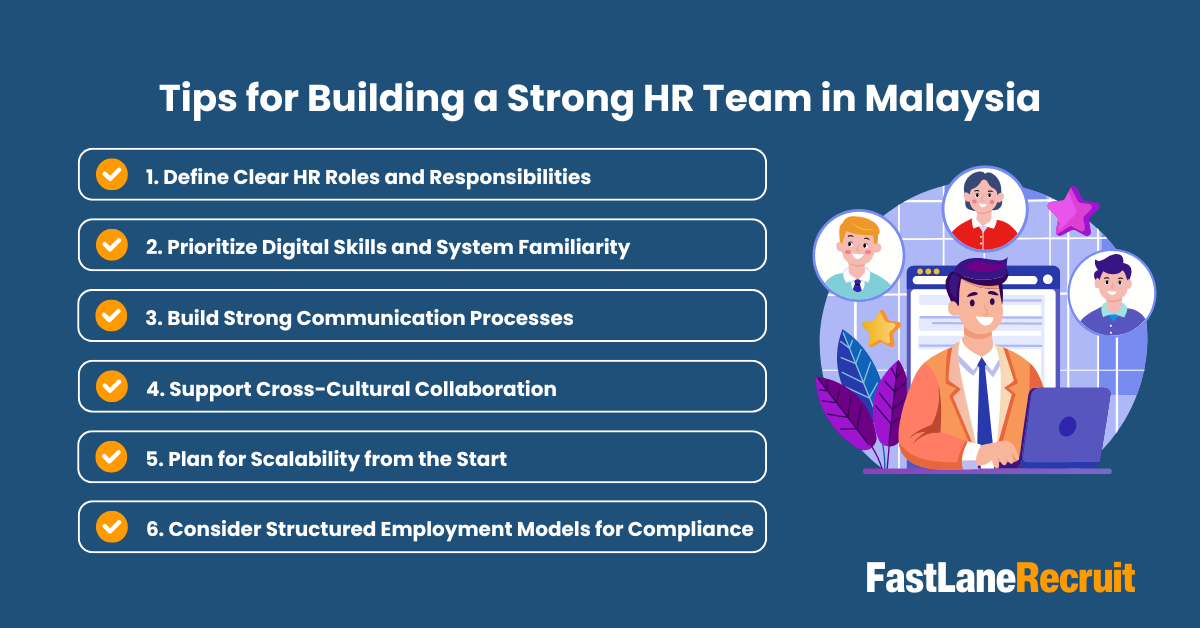
Tips for Building a Strong HR Team in Malaysia
Building an effective HR team in Malaysia goes beyond hiring the right people. It also involves setting clear expectations, providing the right tools, and creating an environment that supports collaboration with global teams.
1. Define Clear HR Roles and Responsibilities
Start by clearly defining the scope of each HR role. For HR Operations Analysts, this may include system management, reporting, payroll coordination, or compliance support. Clear role definitions help avoid overlap and improve accountability.
2. Prioritize Digital Skills and System Familiarity
When building your HR team, look for candidates who are comfortable working with HR systems and digital tools. Familiarity with HR platforms, data reporting, and digital workflows allows teams to adapt quickly and support remote operations effectively.
3. Build Strong Communication Processes
Remote HR teams rely on clear communication. Establish regular check-ins, documentation standards, and shared workflows to keep everyone aligned. This ensures smooth coordination between Malaysia-based HR teams and global stakeholders.
Also Read: 2026 Australia Salary Guide
4. Support Cross-Cultural Collaboration
Malaysia’s workforce is experienced in working with international teams. Encouraging open communication, shared best practices, and cultural awareness helps strengthen collaboration and build trust across regions.
5. Plan for Scalability from the Start
As businesses grow, HR needs evolve. Building flexible processes and using scalable HR systems makes it easier to expand the team or support additional regions without major restructuring.
6. Consider Structured Employment Models for Compliance
For companies without a local presence, using structured employment solutions, such as an Employer of Record, can simplify hiring, payroll, and compliance while allowing HR teams to focus on operational excellence.
With the right planning and approach, Malaysia offers a strong foundation for building reliable, future-ready HR teams. Combining skilled HR talent with clear processes, digital tools, and compliance awareness allows global businesses to support remote teams with confidence.
Practical Example: Hiring an Offshore HR Team in Malaysia
To understand how an offshore HR team in Malaysia can support global businesses, let’s look at a practical example.
Scenario: Supporting a Multi-Country Workforce
A global technology company operates teams across Southeast Asia and Australia. As the business expands, its workforce becomes more distributed, spanning multiple countries, time zones, and departments.
The company faces several challenges:
- Maintaining consistent HR processes across all locations
- Ensuring clear visibility into workforce data
- Providing reliable support for onboarding, payroll coordination, and reporting
Managing these tasks separately in each country often leads to inefficiencies, duplicated work, and inconsistent employee experiences.
Approach: Hiring an Offshore HR Team in Malaysia
To streamline operations, the company decides to hire a dedicated offshore HR team in Malaysia.
Centralized HR systems and reporting
HR Operations Analysts in Malaysia manage HR systems, ensuring employee records are accurate, standardized, and easily accessible. They prepare regular HR reports to provide leadership with a clear view of headcount, workforce trends, and cross-region movement.
Payroll coordination with local compliance
The offshore HR team coordinates payroll inputs, timelines, and approvals across different countries. This ensures payroll is processed accurately while complying with local employment regulations, reducing risks for the organization.
Standardized HR data for better decision-making
Employee information is structured consistently across Southeast Asia and Australia. This enables leadership to compare data across regions and make informed decisions regarding workforce planning, budgeting, and talent development.
Outcome: Benefits of an Offshore HR Team
By hiring an offshore HR team in Malaysia, the company achieves measurable improvements:
- Faster onboarding
New hires across multiple countries follow a standardized, efficient process, minimizing delays and confusion. - Fewer data errors
Centralized systems and standardized workflows reduce manual errors and inconsistencies. - Better workforce insights
Leadership gains real-time, accurate data to guide strategic planning and resource allocation. - Improved employee experience
Employees benefit from timely HR support, clear communication, and consistent processes, regardless of location.
Why Hiring Offshore HR Talent in Malaysia Works
This offshore model allows global companies to maintain local compliance while leveraging the skills and experience of HR Operations Analysts in Malaysia. It offers a cost-effective, scalable, and efficient solution to support regional and remote teams without the complexities of setting up multiple local HR offices.
By tapping into Malaysia’s talent pool, organizations can build a strong, flexible HR function that supports growth across borders, enabling global teams to operate smoothly and strategically.
FastLaneRecruit’s Employer of Record (EOR) for Offshore HR Support
For global companies, hiring HR talent in Malaysia can be a strategic move, but managing employment, payroll, contracts, and compliance independently can quickly become complex. Traditional offshore arrangements often require establishing a local entity, navigating legal requirements, and handling administrative burdens, which can slow down growth.
This is where FastLaneRecruit’s Employer of Record (EOR) service offers a practical and structured solution.
How EOR Works
With FastLaneRecruit’s EOR model, you can hire skilled HR Operations Analysts in Malaysia without setting up a local entity. FastLaneRecruit becomes the legal employer while you retain operational control over your team. This means:
- Employment and Payroll Management: FastLaneRecruit handles salaries, statutory contributions, benefits, and all local payroll requirements.
- Compliance Assurance: Employment contracts, labor law compliance, and HR reporting are fully managed to meet Malaysia’s regulations.
- Operational Focus: You can concentrate on your team’s daily work, strategic initiatives, and business outcomes, while administrative burdens are minimized.
Also Read: 2026 Malaysia Salary Guide
Why Global Companies Choose FastLaneRecruit
FastLaneRecruit helps international businesses streamline their HR operations and expand remote teams with confidence. Key advantages include:
- Access to Skilled Talent in Malaysia: Quickly connect with HR Operations Analysts experienced in regional and global workflows.
- Simplified Compliance and Risk Management: FastLaneRecruit ensures your employment practices meet local legal and statutory requirements.
- Scalable Team Growth: Easily expand your regional or remote HR team without the complexities of entity setup or local infrastructure.
Ideal Use Cases for EOR
Global companies can leverage EOR services in several scenarios:
- Expanding HR Operations Regionally: Build a Malaysia-based team that supports multiple countries in Southeast Asia.
- Testing New Markets: Enter Malaysia without committing to full entity setup.
- Supporting Remote or Distributed Teams: Ensure compliance and payroll efficiency while managing a team across different locations.
The FastLaneRecruit Advantage
With FastLaneRecruit, building or expanding HR operations in Malaysia is faster, simpler, and risk-free. You get reliable, compliant, and skilled HR professionals while maintaining operational control. This allows your global business to focus on growth, productivity, and employee engagement rather than administrative complexities.
Conclusion
Malaysia’s rise as a hub for HR Operations Analysts is driven by people, skills, and systems, not just economic growth. With strong digital adoption, shared services experience, and government-backed workforce development, Malaysia offers global companies a dependable foundation for HR operations.
For businesses building remote teams, Malaysia represents a balanced, future-ready choice.
Ready to Build Your HR Operations Team in Malaysia?
Expanding your HR operations team in Malaysia doesn’t have to be complicated. With FastLaneRecruit’s Employer of Record (EOR) services, you can hire skilled HR Operations Analysts quickly and confidently without the need to set up a local entity or manage complex compliance requirements.
FastLaneRecruit takes care of employment contracts, payroll, statutory contributions, and local labor regulations, allowing you to focus on growing your business and supporting your remote teams effectively.
Whether you’re looking to scale a regional HR team, support distributed employees, or optimize HR workflows across multiple locations, FastLaneRecruit makes the process fast, simple, and fully compliant.
Take the next step today, talk to FastLaneRecruit and start building your remote HR operations team in Malaysia with ease, confidence, and efficiency.
